Texas Rules for Riding Under a Power Line
It's easy to look at a wide-open stretch of land, perhaps a cleared path snaking under a towering set of power lines, and think, "What a perfect place to take the ATV or UTV for a spin!" But hold your horses, because those utility corridors, while seemingly inviting, come with a complex web of rules, permissions, and very real dangers that many Texas riders overlook. This guide is here to shed light on the often-confusing world of riding your off-highway vehicle (OHV) under power lines in the Lone Star State, helping you understand where you can and cannot go, and how to stay safe if you do find yourself on an authorized utility easement.
Understanding Utility Easements in Texas
Before you even think about putting your tires on that tempting stretch of dirt under a power line, it’s crucial to understand what you’re looking at. In Texas, power lines, pipelines, and other utilities typically run through what are called easements. These aren't just random open spaces; they are legal agreements that grant a utility company the right to use private or public land for specific purposes.
What is a Utility Easement?
Imagine a long, narrow strip of land that cuts across multiple properties. This strip is often where you see those giant metal towers or wooden poles carrying electricity, or perhaps where natural gas pipelines are buried. The landowner still owns the property, but they have granted an easement to the utility company. This means the utility company has the legal right to access, build, maintain, and repair their infrastructure on that specific strip of land. Think of it like this: the utility company has a key to that particular room, even though someone else owns the entire house.
These easements are absolutely critical for our modern infrastructure. Without them, it would be impossible to deliver electricity, natural gas, or internet services across vast distances. They're usually kept clear of trees and other obstructions to prevent interference with the lines, reduce fire hazards, and allow easy access for maintenance crews. It's this cleared, often unimproved, nature that makes them look so appealing to off-road enthusiasts. However, that appearance can be deceiving when it comes to riding your ATV or UTV there.
Who Owns the Land Underneath?
This is where much of the confusion lies. While the utility company has rights to the easement, they typically don't own the land outright. The land itself usually belongs to a private individual, a rancher, a developer, a corporation, or a government entity like a city or county. This distinction is vital because it dictates who you need permission from if you want to ride there.
If the power lines cross private property, you would need the explicit permission of the landowner to ride your OHV on that land, even if it's within the utility easement. The utility company cannot grant you permission to ride on land they don't own, and frankly, they usually won't. Their primary concern is maintaining their infrastructure and ensuring public safety, not providing recreational trails. If the easement crosses public land, such as a state park, county land, or a right-of-way, you would need to check with the specific government agency that manages that land for their rules and regulations regarding OHV use. Assuming open access just because there's a cleared path is a surefire way to find yourself in trouble, potentially facing trespass charges.
Legalities and Permissions for Accessing Easements
Navigating the legal landscape of utility easements can feel like trying to find your way through a mesquite thicket. It’s not as straightforward as public roads or designated [Texas OHV Parks by Region], and mistakenly assuming access can lead to fines, confiscation of your machine, or even more serious legal consequences.
Trespassing on Private Property
The most common legal issue riders face when venturing onto utility easements without permission is trespassing. In Texas, operating an OHV on private property without the express consent of the owner is illegal. Even if a utility easement cuts across a ranch, that land is still private property. The utility company's right to access and maintain their lines doesn't extend to granting the general public recreational access.
Landowners in Texas are notoriously protective of their property rights, and for good reason. They worry about liability if someone gets hurt on their land, damage to crops or fences, litter, and disruption to livestock or wildlife. Simply seeing a "path" and assuming it's fair game is a dangerous assumption. Many ranchers, for instance, might use these cleared areas for their own ranching operations – perhaps they need to move cattle or access a distant pasture with their own UTV. Your presence could interfere with their work or worse, put their animals at risk. Always, always seek permission directly from the landowner. A [Texas Bill of Sale for an ATV] won't protect you from trespass charges.
Public Land and Agency Regulations
If a utility easement happens to cross public land, such as a municipal water district property, a county-owned parcel, or perhaps even a limited access area managed by the Texas Parks and Wildlife Department, the rules can vary wildly. Some public entities might allow OHV use on certain designated trails, but it’s rare for a utility easement itself to be officially sanctioned as a public riding trail.
You’ll need to do your homework and contact the specific agency responsible for that public land. For example, the rules for riding under power lines near a [Lake Meredith and the Texas Panhandle] might be completely different from those near a city park in Central Texas. Don't assume that because it's public land, it's automatically open to OHV use. Often, public lands have strict rules about motorized vehicle access, limiting it to paved roads or specific, clearly marked trails. Riding a utility corridor might be considered going off-trail, which is often prohibited.
The Role of Utility Companies
Utility companies generally have a neutral stance on recreational use of their easements, meaning they don't encourage it, and they don't police it unless it directly interferes with their operations or creates a safety hazard. Their primary concern is maintaining their infrastructure and ensuring the safety of their employees and the public. They are not in the business of creating or managing recreational trails.
In fact, some utility companies may explicitly post "No Trespassing" signs along their easements, not because they own the land, but to prevent liability issues and to deter activities that could damage their equipment or put people in harm's way. If you encounter utility workers on an easement, they likely have the authority to ask you to leave, especially if your presence is seen as a safety risk or an impediment to their work. Ignoring such a request could escalate into a more serious encounter with law enforcement.
Safety Considerations for Riding Under Power Lines
Beyond the legal questions, safety is a paramount concern when riding anywhere near high-voltage lines or buried pipelines. The very nature of these corridors presents unique hazards that are often invisible until it’s too late.
Electrical Hazards
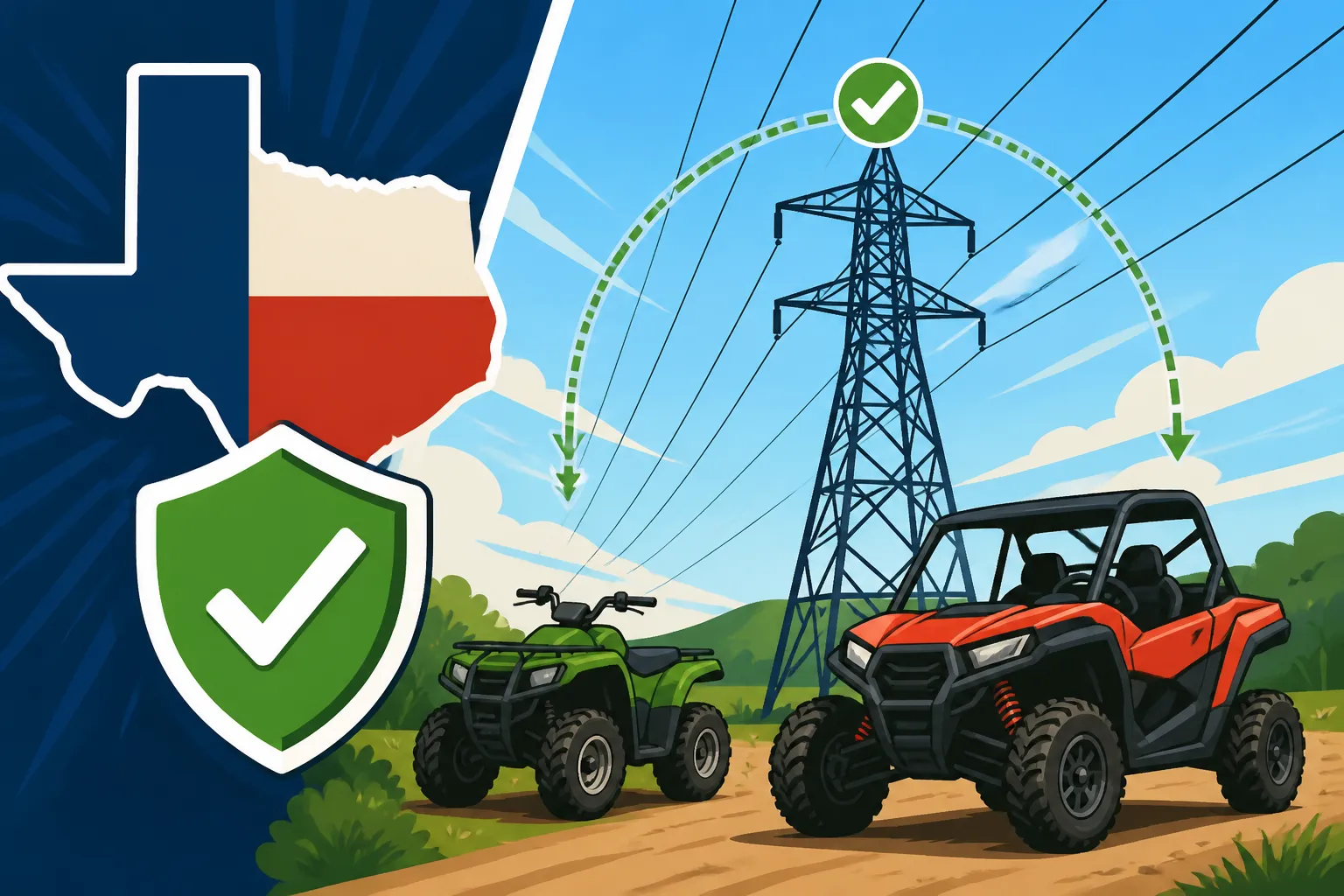
This is, without a doubt, the most significant and potentially deadly risk. Overhead power lines carry immense amounts of electricity, and proximity alone can be dangerous. It's not just direct contact that's a threat. Electricity can arc, or jump, through the air to a nearby object if it's close enough. Imagine if you're riding a UTV, and a SuperATV lift kit has made your machine taller – you could inadvertently get too close to a low-hanging line, or the antenna on your machine could arc. This risk is compounded by:
- Broken or Downed Lines: A storm, an accident, or even natural wear and tear can cause power lines to fall. A downed line might still be energized, and simply driving over it or near it can be fatal. Always assume a downed line is live and stay far away.
- Flashovers: High humidity or heavy rain can sometimes cause "flashovers," where electricity arcs from a power line to a nearby object or to the ground. This is more common with extremely high voltage lines.
- Underground Lines: While power lines are visible overhead, many utility corridors also have buried lines or pipelines. Digging into these, even with a small shovel for a stuck tire, can be catastrophic, leading to explosions (gas lines) or electrocution (buried electrical cables). Always treat these areas with extreme caution.
Uneven Terrain and Obstacles
Utility easements are not designed as recreational trails. While they are cleared of trees, they are often not graded or maintained for smooth riding. This means you can encounter a wide range of challenging and dangerous terrain:
- Deep Ruts and Erosion: Maintenance vehicles can create deep ruts, especially after rain, which can easily swallow a tire and cause a rollover. Erosion can also create sudden drop-offs or washouts.
- Hidden Obstacles: Rocks, stumps, exposed roots, and even discarded equipment parts can be hidden under tall grass or brush. A [Texas ATV VIN Inspection Requirements] won't tell you about the terrain you're about to encounter!
- Soft Soil and Mud: Certain areas, particularly around towers or where maintenance work has been done, can have very soft, unstable soil or deep mud, leading to machines getting stuck or tipping over.
- Drainage Ditches and Culverts: Utility companies often install drainage features to protect their infrastructure. These can be difficult to see and present significant hazards for OHVs.
- Fencing and Gates: While a utility company has easement rights, landowners still often fence their property. You might encounter closed or locked gates, or even cattle guards, which can be tricky to navigate on an OHV.
Maintenance Equipment and Activity
Remember, these are active work zones. Utility companies regularly send crews out to inspect, maintain, and repair their lines and equipment. This means you could encounter heavy machinery, parked vehicles, open trenches, or active work being performed at any time.
- Blind Spots: Large utility vehicles and equipment can have significant blind spots. If you're riding in an area where crews are working, they might not see you.
- Active Work Zones: Riding into an active work zone is not only dangerous but can also interfere with critical infrastructure maintenance. It's best to avoid any area where you see utility crews operating.
- Unexpected Changes: An easement that was clear last week might have new equipment, freshly dug trenches, or piles of materials this week. Conditions can change rapidly without warning.
Practical Tips for Navigating Utility Corridors
While the general advice is to avoid riding on utility easements unless you have explicit, confirmed permission, there might be specific, rare instances where you are legally authorized to do so – perhaps if it's part of a private lease or a designated multi-use trail that happens to follow an easement. In such cases, extreme caution and preparedness are essential.
Always Secure Permission
Let’s reiterate: do not ride on a utility easement without clear, explicit permission. This means talking to the actual landowner, not just assuming. If it's private land, get it in writing if possible. If it's public land, consult the managing agency for specific maps or regulations. Never rely on the assumption that "everyone else does it." This is probably the most crucial step you can take to avoid legal headaches and ensure safety. A simple phone call or a knock on a door can save you a world of trouble. Trying to [Replacing a Lost Texas OHV Title] is one thing, dealing with a legal dispute over trespassing is entirely another.
Prioritize Visibility and Awareness
If you are riding on an authorized utility easement, make yourself as visible as possible. This is not only for other riders, but for utility workers and potentially other legitimate users of the corridor.
- Whip Flags: Install a bright, tall whip flag on your OHV. This is especially important for [Sand Rails on a Texas Title] or UTVs that might be harder to see over obstacles or terrain undulations. A flag extends your visual profile and helps others spot you from a distance. SuperATV and similar brands offer a variety of durable whip flags and mounts.
- Lights: Even in daylight, keep your headlights and taillights on. This increases your visibility, especially in shaded areas or when approaching crests. Consider adding auxiliary lights for better visibility, especially if the weather is overcast or dusty.
- Slow Down: Utility corridors often have blind curves, sudden drops, and hidden obstacles. Reduce your speed significantly to give yourself more time to react to unexpected hazards, other vehicles, or personnel.
- Scan for Hazards: Constantly scan the ground ahead for ruts, rocks, debris, and changes in terrain. Also, regularly look up for low-hanging lines, and listen for the sounds of heavy equipment.
Prepare Your Machine and Yourself
Riding in less-maintained utility corridors can be taxing on both your OHV and your body. Prepare accordingly.
- Maintenance: Ensure your machine is in top working order. Check tires, brakes, fluids, and suspension. A breakdown in a remote part of an easement can leave you stranded.
- Recovery Gear: Carry recovery gear appropriate for the conditions, such as a winch (many SuperATV UTVs come with or can be easily fitted with one), tow straps, and a shovel. You never know when you might encounter deep mud or need to clear a fallen branch.
- First Aid Kit: A comprehensive first aid kit is non-negotiable. Bumps, scrapes, and more serious injuries are always a possibility on challenging terrain.
- Communication: Cell service can be spotty in rural Texas. Consider carrying a satellite communicator or a two-way radio if riding in a group.
- Appropriate Gear: Always wear proper safety gear, including a helmet, eye protection, gloves, long pants, and sturdy boots. The hazards under power lines demand maximum protection. Review [Texas Helmet Law for ATV Riders] and other safety gear recommendations.
Respect the Environment and Infrastructure
If you are granted permission to ride on an easement, treat it with respect. This means staying on designated paths (if any), not damaging fences or gates, and leaving no trace.
- Stay on Existing Paths: Don't create new trails or widen existing ones. Stick to areas that are already disturbed to minimize your impact.
- Pack It In, Pack It Out: Carry out everything you carry in, including all trash. Leaving litter can quickly lead to permissions being revoked for everyone.
- Do Not Tamper with Equipment: Under no circumstances should you touch, climb on, or interfere with any utility equipment, poles, or lines. These are dangerous and off-limits.
- Report Issues: If you notice a downed line, damaged equipment, or any other hazard, report it immediately to the relevant utility company and, if necessary, to the landowner.
Utility easements can look like open invitations to explore, but they come with significant legal and safety caveats. Always prioritize permission and safety, and if in doubt, choose a designated and regulated riding area instead. Your life, and the continued goodwill of Texas landowners, depends on it.
| Consideration | Legal Status | Safety Hazards | Riding Best Practices |
|---|---|---|---|
| Land Ownership | Typically private or public, not utility company | N/A | Secure explicit landowner permission |
| Easement Rights | Utility access only, not public recreation | N/A | Do not assume recreational access |
| Trespassing | Illegal without consent; potential fines/charges | N/A | Get permission in writing if possible |
| Overhead Lines | N/A | Electrocution from direct contact/arcing | Maintain safe distance, especially with taller machines/accessories |
| Underground Lines | N/A | Explosion (gas), electrocution (electric) | Avoid digging; be aware of buried infrastructure |
| Terrain | Unmaintained for recreation | Ruts, erosion, hidden obstacles, soft soil | Slow speed, constant scanning, appropriate tires |
| Maintenance Crews | Active work zones | Heavy equipment, blind spots, active work | Yield to utility vehicles, avoid active work areas |
| Visibility | N/A | Collisions with workers/other users | Use whip flags, headlights/taillights, wear bright gear |
| Environmental Impact | N/A | Damage to property, flora, fauna | Stay on existing paths, pack out trash, respect boundaries |
Disclaimer
This article is for general informational purposes only and does not constitute professional advice. Laws, prices and regulations vary by location and change over time. Consult a qualified professional for guidance on your specific situation.