Texas Rules for Riding a Canal Bank
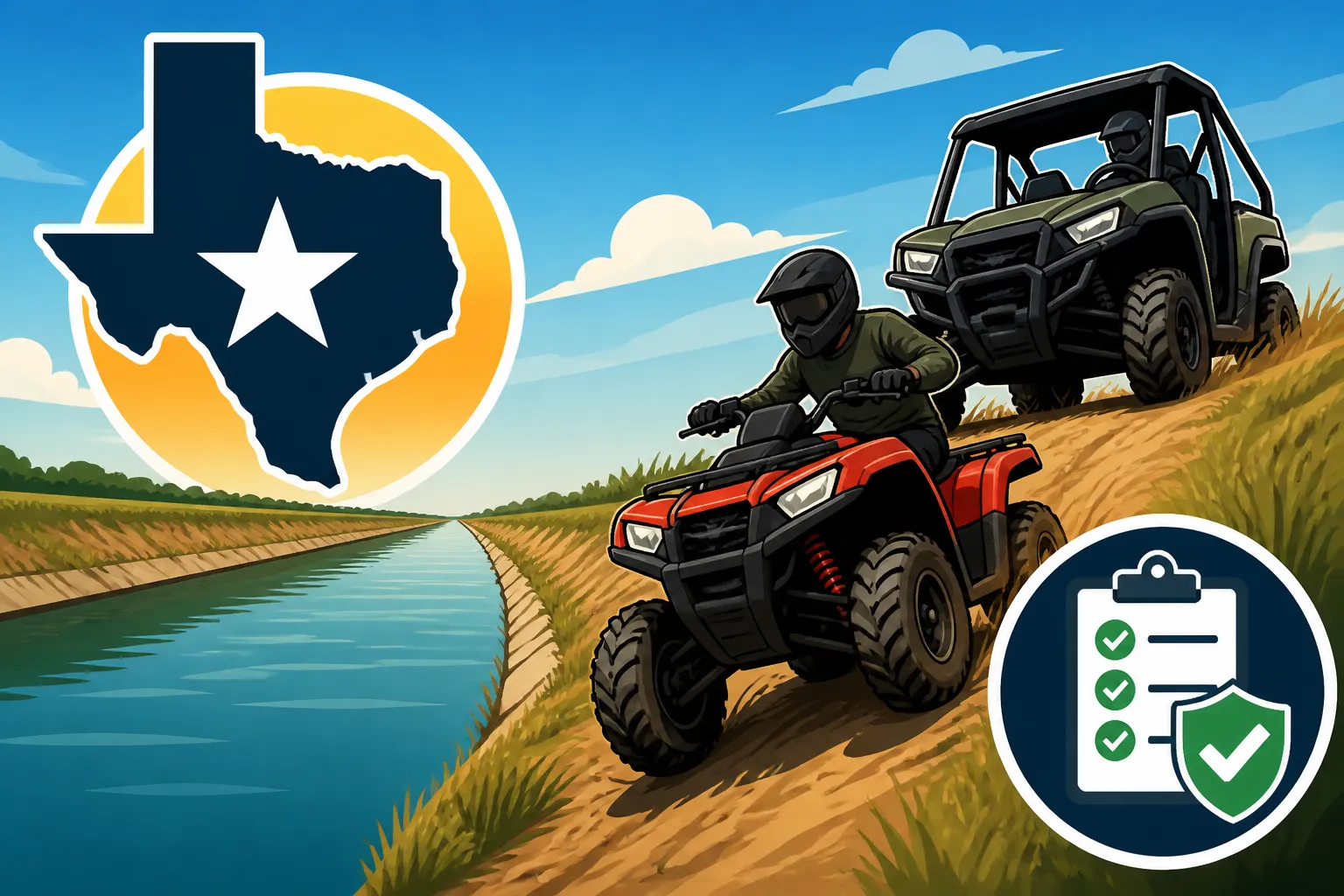
It can be incredibly frustrating to see what looks like a perfectly open stretch of land, perhaps a wide dirt path alongside a winding canal, and think it'd be a great place to take your ATV or UTV for a spin. You see them all over Texas, those long, straight stretches, and it’s natural to wonder if you can just jump on and go. But the truth about riding on canal banks in Texas is often far more complex and legally restrictive than it appears. This guide is here to clear up the confusion, lay out the rules, and help you understand why those inviting paths are usually off-limits, and where you can legally and safely enjoy your off-highway vehicle.
The General Rule: No Public Access to Canal Banks for OHVs
Let's cut right to the chase: for the vast majority of canal banks in Texas, public recreational riding on ATVs and UTVs is simply not allowed. It’s a hard pill to swallow when you're looking for new places to explore, but these areas serve critical functions and are typically under specific ownership and management that restricts general access. Thinking of them as public roads or trails can lead you down a path of trouble, both legally and for your own safety.
Who Owns and Manages Canal Banks?
When you see a canal bank, whether it's a small irrigation ditch out in West Texas or a massive flood control channel near a major city, it's almost always owned and managed by a specific entity. These aren't just random patches of dirt. Often, they belong to water districts, irrigation districts, municipal flood control authorities, or even private landowners. These organizations and individuals have very specific responsibilities related to the canals themselves. For example, an irrigation district in the Rio Grande Valley needs its canals clear and stable to deliver water to crops. A flood control district in Houston or Dallas relies on its channels to manage stormwater and prevent devastating floods.
The land along these canals, the "banks," is integral to their operation. It's used for maintenance, inspection, and as an access point for emergency repairs. Imagine a massive pump failing during a drought, or a levee breach during a hurricane. These banks are the critical pathways for heavy equipment and personnel to get to the problem areas quickly. They are engineered to hold water, prevent erosion, and often have underground utilities or unstable soil conditions that aren't apparent from the surface. Because of these vital roles, access is tightly controlled, and allowing recreational vehicles can directly interfere with their purpose and compromise their integrity.
Why OHV Riding Is Restricted on Canal Banks
The restrictions on OHV riding on canal banks stem from a blend of practical, safety, and legal concerns. For starters, the infrastructure itself is vulnerable. The constant passage of ATVs and UTVs, especially heavy side-by-sides, can erode the banks, damage critical levees or berms, and even compromise the stability of the canal's lining. This isn't just about a few ruts; it can lead to costly repairs and potentially catastrophic failures during heavy rains or flood events. Think about how much damage a single heavy rain can do to an unpaved road – now imagine that impact on a structure designed to contain water.
Beyond structural integrity, there are significant safety hazards. Canal banks often have steep drop-offs, hidden culverts, uneven terrain, and slippery surfaces near the water's edge. They are not designed with recreational riders in mind. You might encounter maintenance equipment, gates, fences, or other obstacles without warning. Plus, the legal liability for the landowner or managing entity is immense if someone gets injured while illegally riding on their property. This is a huge factor in why access is so strictly limited. They're trying to protect their assets, their operations, and frankly, you from yourself. Environmentally, unauthorized riding can disturb fragile ecosystems, damage vegetation that helps prevent erosion, and introduce pollutants into the water system.
Permitted Riding: When and How You Might Access a Canal Bank
While the general rule is "no," there are extremely limited circumstances where you might find yourself legally riding an OHV on a canal bank in Texas. These aren't common occurrences, and they always require explicit, verifiable permission. It's not a "better to ask for forgiveness than permission" situation; it's a "you absolutely must have permission first" scenario.
Riding on Private Land with Permission
The most common scenario where you might legally ride an OHV on a canal bank is if that canal bank is entirely situated on private land, and you have express permission from the landowner. This means the land where the canal is located is part of a private ranch, farm, or other property, and the owner has given you the green light. But even then, "permission" usually needs to be specific. A general invitation to "come ride the ranch" doesn't automatically extend to sensitive areas like canal banks. You need to ask directly: "Can I ride my UTV on the canal banks?"
Ideally, this permission should be in writing, specifying the dates, times, and exact areas you are allowed to ride. Verbal permission can be misinterpreted or forgotten, leading to misunderstandings or even accusations of trespassing. If the land is leased by someone other than the owner, ensure you have permission from both the leaseholder and the actual property owner, if required by their agreement. This is crucial because, without proper permission, even if you think you’re in the clear, you could still be subject to [Texas Trespass Rules for Riders]. Some landowners might grant permission for specific tasks, like inspecting fences or herding cattle, but not for purely recreational joyrides.
Authorized Use by Operators or Contractors
Another scenario for OHV use on canal banks involves the very people who manage and maintain these waterways. Employees of water districts, irrigation authorities, or contractors hired for specific projects often use ATVs, UTVs, or other specialized off-highway equipment as part of their job. They might be inspecting infrastructure, performing repairs, monitoring water levels, or conducting environmental assessments. These individuals are operating under official authorization and are typically trained in navigating the specific hazards of canal banks.
For example, a crew from a local water control and improvement district might use a rugged UTV, perhaps outfitted with accessories from SuperATV designed for utility work, to access a remote section of a canal for dredging or erosion control. This kind of access is strictly for work purposes and is not considered public recreational access. It doesn't open the door for anyone else to ride there. They have specific permits, training, and often specialized vehicles that are equipped for the unique demands and potential dangers of the terrain. Just because you see a utility vehicle on a canal bank doesn't mean you can follow suit. Their presence underscores the fact that these are active work zones, not recreational trails.
Understanding the Risks and Consequences of Illegal Canal Bank Riding
Ignoring the rules and riding on a canal bank without authorization isn't just a minor infraction; it carries significant legal and safety consequences that can quickly turn a fun outing into a major headache. The risks involved are far greater than simply getting told to leave.
Legal Ramifications: Trespassing and Fines
The most immediate and common legal consequence of unauthorized riding on a canal bank is trespassing. In Texas, trespassing is generally a Class C misdemeanor, which can carry a fine. However, depending on the specific circumstances—like if you damage property, enter with a weapon, or are repeatedly warned—it can escalate to a Class B or even Class A misdemeanor, which involves much higher fines and potential jail time.
Beyond just the trespassing charge, you could face civil lawsuits for property damage. If your OHV causes erosion, damages a fence, breaks an access gate, or otherwise interferes with the canal's function, the owner or managing entity can sue you to recover repair costs. These costs can easily run into the thousands of dollars, far exceeding any fine you might pay. Imagine if your joyride causes a temporary irrigation disruption to a farmer's crops – the financial liabilities could be staggering. Your machine could even be impounded. The hassle of dealing with law enforcement, court dates, and potential legal fees can quickly overshadow any perceived thrill of riding where you shouldn't.
Safety Hazards and Environmental Impact
Beyond the legal penalties, canal banks are inherently unsafe for recreational OHV use. They are often constructed with steep, unstable slopes that are prone to collapse, especially after rain. You might encounter hidden pipes, exposed rebar, or maintenance equipment, like the heavy-duty attachments from SuperATV used for clearing overgrown vegetation, that can pose serious collision risks. The ground itself can be deceptively soft or muddy near the water, leading to rollovers or getting stuck in hazardous situations. Drowning is a real danger if your machine slips into the canal.
Environmentally, the impact of unauthorized OHV riding can be significant. Repeated tire tracks disrupt native vegetation, leading to increased erosion and sedimentation in the canal. This can harm aquatic life, degrade water quality, and clog irrigation systems. Your machine could leak fuel or oil into the waterway, causing pollution that takes significant effort and expense to clean up. Wildlife habitats can be disturbed, and sensitive areas can be irrevocably damaged. Responsible off-roading involves protecting the environment, and canal banks are particularly fragile ecosystems that aren't meant for recreational vehicle traffic.
Finding Legal and Safe Places to Ride Your OHV in Texas
Since canal banks are largely off-limits, the best way to enjoy your ATV or UTV in Texas is to seek out designated riding areas. Texas has a fantastic network of OHV parks and trails that offer safe, legal, and often challenging terrain for riders of all skill levels. These places are designed for you to have fun without the stress of worrying about trespassing or damaging critical infrastructure.
Public and Private OHV Parks in Texas
Texas boasts a variety of public and private OHV parks that cater specifically to ATV and UTV enthusiasts. These parks are usually well-maintained, have marked trails, and offer a range of amenities. Places like [Barnwell Mountain Recreation Area] in Gilmer, managed by the Texas Motorized Trails Coalition, offer thousands of acres of trails, from easy scenic routes to extreme rock crawling. It’s a dedicated space where you can push your machine and your skills. Another popular spot is [Hidden Falls Adventure Park at Marble Falls], which provides a diverse riding experience with everything from wooded trails to open rocky areas.
These parks often require an entrance fee or membership, and they'll always require a [Texas OHV Decal Explained] for your machine. This decal helps fund the maintenance and development of OHV trails across the state, so it’s money well spent. Many parks also have camping facilities, showers, and other amenities, making for a great weekend getaway. By riding in these designated areas, you’re not only staying legal, but you’re also contributing to the off-road community and ensuring that future generations have places to ride. You'll find specific rules at each park, often including requirements for spark arresters, helmets, and sometimes even flags, but these are all in place for your safety and to preserve the riding experience.
Following Texas OHV Laws and Best Practices
When you head out to a legal riding area, remember that general Texas OHV laws still apply, alongside any specific park rules. This includes requirements for a [Texas OHV Safety Certificate Requirements] for riders under specific ages, and always wearing a helmet, as per [Texas Helmet Law for ATV Riders]. Eye protection is a must, and if you're riding a UTV, seatbelts should always be worn. These safety measures aren't just suggestions; they're critical for preventing serious injuries.
Before you go, it's always a good idea to check the park's website for current conditions and rules, especially after heavy rain, as some trails might be temporarily closed to prevent damage. Be sure your machine is in good working order, with proper tire pressure, brakes, and fluid levels. Carry a first-aid kit, plenty of water, and a way to communicate in case of an emergency. Riding with a group is always safer than riding alone. By following these best practices, you ensure a fun, safe, and legal adventure every time you hit the trails. And if you're looking to gear up your machine for the rugged Texas terrain, consider the wide range of heavy-duty parts and accessories available from companies like SuperATV, designed to enhance performance and durability on legitimate off-road trails.
Here's a quick comparison of the distinctions between legal and illegal access to canal banks:
| Feature | Legal Access (Rare) | Illegal Access (Common Problem) |
|---|---|---|
| Source of Permission | Explicit, written permission from landowner/authority | None, assumed, or misinterpreted |
| Purpose of Ride | Official work, property inspection, specific tasks | Recreational joyriding, exploring, seeking new trails |
| Knowledge of Hazards | Trained, aware of specific dangers, appropriate gear | Unaware of hidden culverts, unstable banks, deep water |
| Legal Status | Authorized, no trespassing | Trespassing, potential property damage charges |
| Consequences | Safe, productive use | Fines, civil lawsuits, impoundment, injury, environmental damage |
| Environmental Impact | Minimized through trained operation | Erosion, pollution, habitat disruption |
| Safety Considerations | Controlled environment, safety protocols in place | High risk of accidents, rollovers, drowning |
Disclaimer
This article is for general informational purposes only and does not constitute professional advice. Laws, prices and regulations vary by location and change over time. Consult a qualified professional for guidance on your specific situation.