The Roll Cage Exemption From a Texas Helmet
Oh, the Texas sun beating down, the wind in your hair – it sounds idyllic, doesn't it? But when you're out on your ATV or UTV, especially if you venture onto certain public access points, the question of helmets inevitably comes up. Many riders find the idea of having to wear a helmet, especially in a comfortable side-by-side, a real drag, and they've heard whispers about a "roll cage exemption." It's true that Texas law carves out an exception, but like most things involving regulations and fun, it's not as simple as it sounds. This guide will dive deep into what that roll cage exemption truly means, helping you understand when you can legally ride helmet-free and, more importantly, when you absolutely still need to buckle up your brain bucket.
Texas Helmet Laws: The Baseline for OHV Riders
Let's get down to brass tacks about helmets in Texas. For many riders, the idea of having to wear a helmet can feel restrictive, especially if you're just cruising slowly on your property. But when you're talking about off-highway vehicles (OHVs) and public access, safety becomes a serious legal consideration. Texas law has very clear guidelines, and understanding the general rule is the first step before we even get to the exceptions.
Who Needs a Helmet and When?
The core of Texas's ATV and UTV safety regulations mandates helmet use for many riders, particularly those who are younger or operating on public lands or certain public roads. The law is primarily concerned with protecting riders from serious injury, especially head trauma, which is a common and often devastating outcome of OHV accidents. It’s not just about what vehicle you’re on, but also where you’re riding and who is doing the riding.
Specifically, the general rule is that anyone under the age of 15 operating an ATV or UTV on public land, or any public road where OHV use is permitted, must wear a helmet. This is a non-negotiable safety measure designed to protect our youngest riders who might not have the experience or reaction time of an adult. Furthermore, even if you're an adult, if you're riding an ATV – a traditional quad-style machine without a roll cage – on public property or approved public roads, you're generally expected to wear a helmet. This applies whether you're at an [OHV park near Dallas] or simply crossing a county road where permitted.
It's a common misconception that if you're over a certain age, helmets are entirely optional everywhere. While private property riding often has more relaxed enforcement, the moment you touch public land, a public trail, or a roadway, those state regulations kick in. This means even a seasoned rider can find themselves facing a fine if they're caught on a public thoroughfare without appropriate head protection, especially if they are on a traditional ATV. The bottom line is, if in doubt, put the helmet on.
The Rationale Behind the Helmet Rule
The state of Texas, like many others, doesn't just make these rules up to be a bother. The helmet law for OHV riders is rooted deeply in public safety and the grim statistics associated with off-road vehicle accidents. Head injuries are notoriously severe, leading to long-term disabilities or even fatalities. Helmets, when properly worn and certified, are incredibly effective at mitigating these risks, absorbing impact forces and distributing them away from the skull.
Think about the dynamic nature of off-road riding: uneven terrain, sudden stops, potential rollovers, and collisions with obstacles or other vehicles. These aren't low-speed, low-impact activities. An ATV, by its very design, exposes the rider to the elements and potential impacts without the protective shell of a car. A UTV, while offering more perceived safety with its side-by-side seating and roof, can still present significant risks, especially in a rollover situation or if an occupant is ejected.
The law aims to reduce the burden on emergency services and healthcare systems, and more importantly, to prevent irreversible personal tragedies. It's not about stifling fun; it's about ensuring that riders, particularly the most vulnerable, can enjoy their passion with a reasonable degree of protection. This is why you'll see strict rules enforced at places like Barnwell Mountain Recreation Area or Hidden Falls Adventure Park, where safety is paramount for continued enjoyment of the trails.
Deciphering the Roll Cage Exemption
Now, let's get to the part many UTV owners are curious about – the roll cage exemption. This is where Texas law acknowledges the inherent design differences between a traditional ATV and a side-by-side or other OHV that incorporates a protective structure. However, "exemption" doesn't mean "carte blanche" to ride without thinking about safety. It comes with specific conditions and implications.
The Letter of the Law: What the Statute Says
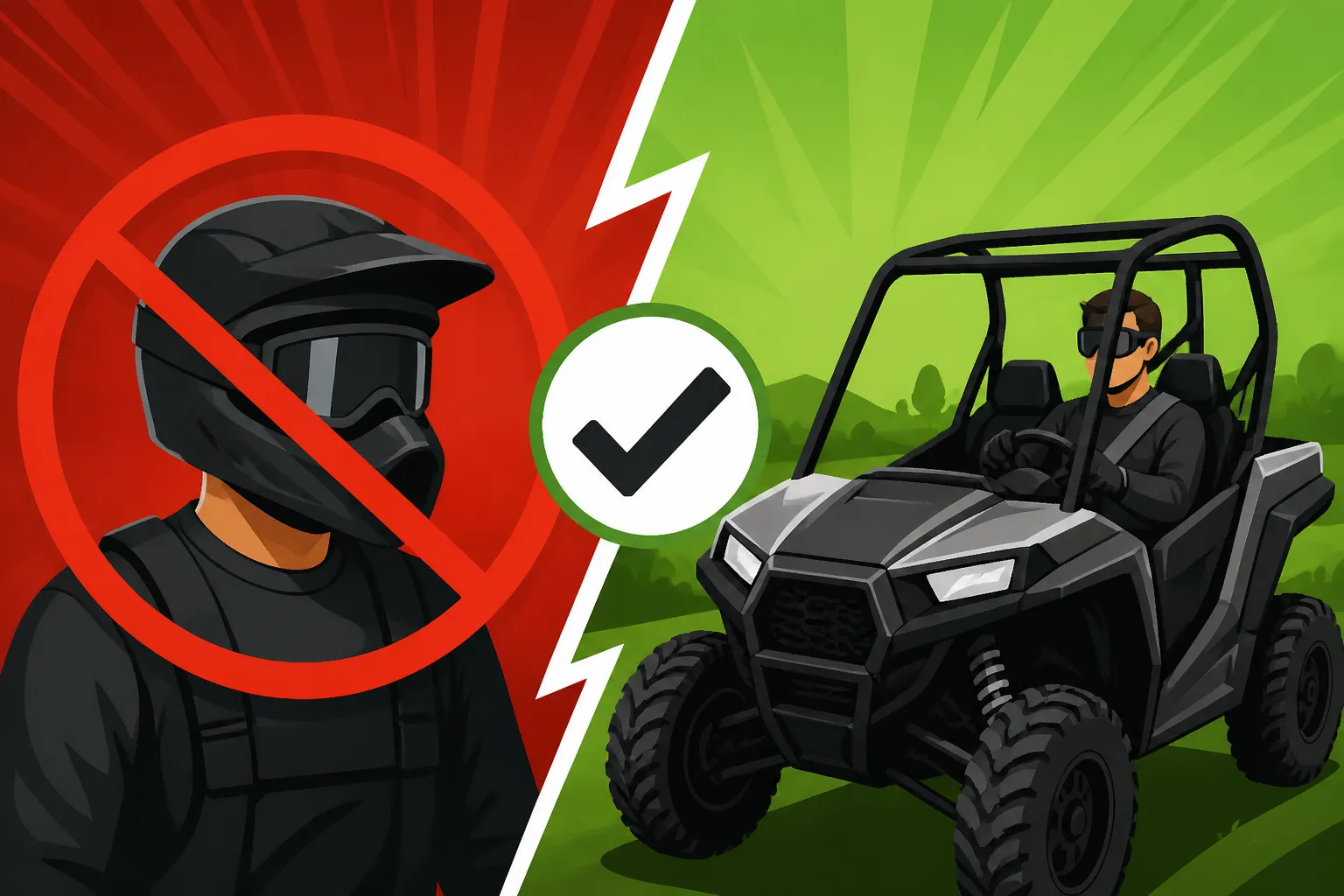
Texas Transportation Code, specifically Chapter 663, outlines the regulations for off-highway vehicles. Within these statutes, there's a particular provision that addresses helmet use for occupants of OHVs equipped with certain safety features. The law essentially states that a person operating or riding in an OHV is not required to wear a helmet if the vehicle is equipped with a roll cage or an enclosed cab.
This language is critical because it explicitly ties the exemption to the vehicle's design and the occupant's position within that design. It's not just about having a roll cage; it's about the occupant being enclosed by it. This distinction is crucial for understanding whether your particular UTV or off-road vehicle actually qualifies. This provision recognizes that a well-designed roll cage, combined with other restraints, offers a level of protection comparable to or exceeding that of a helmet in certain scenarios.
It's also important to remember that this specific exemption primarily applies to UTVs and other multi-passenger OHVs, not traditional ATVs. An ATV, by its very nature, does not have a roll cage or an enclosed cab, and therefore, the general helmet rule still applies to them. So, if you're riding a quad, this exemption generally won't apply to you, regardless of how many accessories you might have added.
Interpreting "Occupant Enclosed by a Roll Cage"
This phrase, "occupant enclosed by a roll cage," is where many riders get hung up, and it's vital for proper interpretation. It means more than just having a roll bar somewhere on the vehicle. For the exemption to apply, the roll cage must surround the occupant in a way that provides substantial protection in the event of a rollover or impact. It implies a degree of structural integrity and design that encases the seating area.
Think about how a factory-designed UTV is built. The roll cage usually forms a complete protective frame around the passenger compartment, often including a roof and sometimes even doors or netting. The intent is to prevent ejection and to protect occupants from crushing injuries. For an occupant to be considered "enclosed," they should be seated within the protective perimeter of this structure. This definition typically extends to side-by-sides, which are often specifically designed with these safety cages.
However, it's not a blanket pass for every modification. For instance, if you have a custom-built buggy or a sand rail, the design of its roll cage would need to genuinely meet this protective standard. Simply adding a decorative bar or a partial cage that doesn't fully encompass the occupant's space might not be enough to satisfy the legal definition. This is where understanding the spirit of the law, which is occupant safety, becomes paramount.
What Constitutes a Qualifying Roll Cage or Enclosed Cab?
So, you've got a side-by-side, and it has a roll cage. Great! But what kind of roll cage or enclosed cab truly satisfies the Texas exemption? This isn't just about appearances; it's about the engineering and safety features that truly protect you. It’s important to be realistic about what counts and what doesn't, especially when considering aftermarket modifications.
Manufacturer-Designed vs. Aftermarket Additions
When the law speaks of a roll cage or enclosed cab, it generally refers to a protective structure that is either factory-installed or an aftermarket addition that meets specific safety standards. For most modern UTVs, like those from Polaris, Can-Am, or Honda, the integrated roll cage is part of their fundamental design and typically qualifies without question. These cages are engineered to rigorous standards, often using specific types of tubing and mounting points designed to withstand significant forces during an accident.
Aftermarket additions, however, can be a grey area. If you're looking to enhance the safety or aesthetics of your UTV, companies like SuperATV offer a wide range of roll cage extensions, full replacement cages, and enclosed cab systems. When choosing an aftermarket option, it's crucial that it's designed to genuinely enhance occupant safety, not just look cool. A quality aftermarket roll cage should be built with similar engineering principles to a factory cage, utilizing robust materials and secure attachment points.
A crucial point to consider is whether your aftermarket addition maintains or improves upon the original vehicle's safety intent. A poorly constructed or improperly installed roll cage, even if it "looks" like it encloses the occupant, might not provide the necessary protection in a real-world incident. Always prioritize safety-certified or reputable brands for such modifications. If it's merely a sunshade or a light bar mount that offers no structural integrity, it certainly won't count as a protective roll cage in the eyes of the law or, more importantly, in an accident.
The Role of Seat Belts and Other Restraints
It's absolutely vital to understand that the roll cage exemption doesn't work in isolation. The protection offered by a roll cage is inextricably linked to the use of proper occupant restraints, primarily seat belts. If you're in a UTV with a roll cage but you're not buckled in, the roll cage does very little to prevent you from being ejected from the vehicle during a rollover or collision. In fact, you could be thrown against the cage, causing significant injury.
Texas law, recognizing this, often pairs the roll cage expectation with the requirement for occupants to be secured. Think about the [Texas Seat Belt Rules in a Side-by-Side]. For most UTVs, factory-installed seat belts (often three-point harnesses) are standard equipment. For the roll cage exemption to truly apply for your safety and, by extension, legal compliance, you and your passengers must be using these restraints. This is not just a suggestion; it's a critical component of occupant safety in any caged vehicle.
So, while the roll cage itself exempts you from a helmet, it assumes you're making full use of the other integrated safety features. If you're riding with passengers, especially children, ensuring everyone is properly belted in is paramount. The roll cage and seat belt system work as a unified safety strategy, and neither is fully effective without the other.
Does a Windshield Make a Difference?
The presence of a windshield can certainly enhance the "enclosed cab" feeling of your UTV, protecting you from dust, debris, and the elements. However, from a legal standpoint regarding the helmet exemption, a windshield typically doesn't alone determine whether a vehicle qualifies as having a roll cage or an enclosed cab. The primary factor remains the structural integrity of the overhead and surrounding protection.
While a full enclosure with a windshield, roof, and doors provides the most comprehensive protection from external factors, the core of the exemption hinges on the roll cage structure itself. Many UTVs, even those with robust roll cages, might only come with a half windshield or no windshield at all from the factory, or riders might opt for a removable one. These vehicles, if they have a qualifying roll cage and occupants are restrained, would still likely meet the exemption criteria.
That being said, a windshield does add another layer of safety by protecting against flying objects, which can cause significant injury to the face and eyes. While [Texas Eye Protection Requirement for Riders] might not always be explicitly enforced for all roll-caged UTV occupants, it's always a good idea to protect your vision. So, while a windshield isn't strictly required for the helmet exemption, it's a smart addition for overall safety and comfort, especially if you're hitting dusty trails or riding at speed.
Real-World Scenarios and Practical Implications
Understanding the legal text is one thing, but applying it to your actual riding experiences in Texas is another. The reality of off-road vehicle use involves a mix of private land, public trails, and sometimes even brief jaunts on permissible roadways. Let's look at how the roll cage exemption plays out in these common situations.
Riding on Public Roads vs. Private Land
The biggest distinction for any OHV rule, including the helmet exemption, is whether you're on public or private land. On private property, the owner sets the rules. If you're riding on your own ranch or a friend's land, and there's a roll cage, whether you wear a helmet is generally a personal choice (though safety always dictates you should consider it). The state's helmet laws, including the roll cage exemption, primarily apply when you venture onto areas regulated by the state or local government.
However, the moment your wheels touch a public road or public land where OHVs are allowed, the state's rules, including [Texas Helmet Law for UTV Drivers], kick in. This could be a county road that has been designated for OHV use, a state park trail, or an area within a national forest. If your UTV has a qualifying roll cage and you are properly restrained by seat belts, you are generally exempt from the helmet requirement on these public surfaces. This is a significant relief for many UTV owners who find helmets cumbersome in their enclosed vehicles.
It's crucial to remember that even if you're exempt from a helmet, other rules for road use still apply. You still need to understand [Texas Rules for Riding a 35 mph Road] or [Texas Rules for Riding a Farm Road], for instance. The helmet exemption doesn't mean you can disregard speed limits, traffic laws, or other equipment requirements like working headlights or taillights if you're on a public thoroughfare.
Passengers, Children, and the Exemption
When it comes to carrying passengers, especially children, the roll cage exemption needs careful consideration. If your UTV has a qualifying roll cage and appropriate seating with seat belts, adult passengers generally fall under the same exemption as the driver. They too would not be required to wear a helmet if properly secured within the protective structure.
However, the rules for children can be more nuanced. While the roll cage exemption technically applies to any occupant within a qualifying structure, Texas has specific age-based helmet requirements for OHVs. The general rule is that anyone under 15 operating or riding an OHV on public land must wear a helmet. While a UTV with a roll cage is covered by the exemption for adults, it's always advisable to ensure younger riders, especially those under the typical adult height and weight, are as protected as possible. Many parents choose to have their children wear helmets even within a roll cage for an added layer of safety, especially for very young children whose head protection might be less robustly supported by the roll cage and seatbelt system in certain impact scenarios.
Additionally, remember the [Texas Passenger Rules on an ATV] are very different from UTVs. ATVs are typically designed for one rider only, and carrying passengers, especially children, is dangerous and often illegal on public land. UTVs, by contrast, are designed for multiple passengers, assuming they are secured in manufacturer-designed seating.
What Law Enforcement Looks For
When a Texas Game Warden, Sheriff's Deputy, or other law enforcement officer encounters you riding your UTV on public land or a permissible roadway, they're not just looking for a helmet. They are assessing the overall safety and legality of your operation. If you're relying on the roll cage exemption, here's what they'll likely be checking:
- Presence of a Roll Cage/Enclosed Cab: Is there a substantial, protective structure surrounding the occupant compartment? Is it factory-installed or a reputable aftermarket addition like a heavy-duty cage from a company like SuperATV?
- Occupant Restraints: Are all occupants, including the driver and passengers, properly secured with factory or equivalent seat belts? This is critical. A roll cage without seat belts is largely ineffective.
- Occupant Position: Are all occupants riding within the confines of the roll cage? Riding with legs outside the cage or standing up while moving would likely negate the exemption.
- Vehicle Type: Is it actually a UTV or side-by-side, which is typically designed with a roll cage, or a traditional ATV for which the exemption generally does not apply?
- Location: Are you on a public road or land where OHVs are permitted, and thus subject to state law? On private land, their enforcement power regarding helmet use is limited.
Officers are generally looking for common sense safety. If you present a clearly safe setup where the roll cage and seat belts are being used as intended, you'll likely have no issues regarding the helmet exemption. However, if any of these elements are missing or appear unsafe, you could still be ticketed under the general [Texas Helmet Law for UTV Drivers] or other related safety violations.
Common Myths and Critical Clarifications
The topic of street-legal OHVs and helmet exemptions in Texas is rife with misunderstandings. Many riders hear bits and pieces of information and weave them into an incorrect understanding of the law. Let's clear up some of the most persistent myths and make sure you have the accurate picture.
The "Street Legal" Misconception
One of the biggest and most dangerous myths is that having a roll cage or meeting the helmet exemption automatically makes your UTV "street legal." This is absolutely not true, and it's a critical distinction for every Texas OHV owner to grasp. Texas has very specific and generally restrictive laws regarding operating OHVs on public roads. While certain limited exceptions exist – like crossing at an intersection, riding on specific farm roads, or within designated master-planned communities – a UTV is, for all intents and purposes, not considered street legal in the same way a car or motorcycle is.
The roll cage exemption simply addresses the helmet requirement when you are legally operating your UTV on a public road where OHVs are permitted, or on public OHV trails. It does not grant your UTV license plates for general road use, nor does it override the fundamental [Why Texas Will Not Register an OHV for the Road]. You cannot just add turn signals, a horn, and a windshield to your side-by-side and expect to drive it down IH-35.
Even if you're in a county that has opted to allow OHV use on certain public roads, like some of the [Red River Counties] or those [Under Thirty-Seven Thousand People], you still have to abide by local ordinances and state statutes regarding speed, time of day, and specific road types. Getting caught driving your UTV on an unauthorized public road, even with a roll cage and all your safety gear, can result in a significant fine and potential impoundment. Always check local laws and signage, and assume your UTV is not street legal for general transportation.
Roll Cages Aren't a License to Be Reckless
Another misconception is that because you have a roll cage and don't need a helmet, you can somehow take more risks or ride more aggressively. This couldn't be further from the truth. A roll cage is a protective measure, designed to mitigate injury in an accident; it is not an invitation to push the limits of safety or your machine's capabilities. The same principles of responsible riding, safe speeds, and awareness of your surroundings still apply, regardless of whether you're wearing a helmet or not.
In fact, the perceived safety of a roll cage can sometimes lead to overconfidence, encouraging riders to attempt maneuvers or traverse terrain that might be beyond their skill level or the vehicle's design limits. Remember, a roll cage protects primarily from crushing injuries in a rollover, but it doesn't prevent other types of accidents. It won't stop you from colliding with a tree, flipping over a blind crest, or losing control on a sharp turn.
Ultimately, the roll cage exemption in Texas is a recognition of the increased structural safety provided by certain OHV designs. It removes one specific requirement (the helmet) under specific conditions. It does not, however, remove the fundamental responsibility of every rider to operate their machine safely, respectfully, and in accordance with all other applicable laws. Always prioritize safe driving practices, whether you're rock crawling at Katemcy Rocks or just cruising a lease road on your ranch.
Texas OHV Safety Features: A Comparative Look
To wrap things up, let's put some of these safety requirements and exemptions into perspective. The type of OHV you ride – whether it's an ATV, a UTV with a basic roll cage, or one with a fully enclosed cab – significantly impacts the safety features you rely on and the regulations that apply to you.
| Feature/Requirement | Traditional ATV (Quad) | UTV with Basic Roll Cage | UTV with Enclosed Cab (Full Windshield, Doors) |
|---|---|---|---|
| Helmet Required? | Yes (generally, especially public land/road) | No (if occupant enclosed by cage & belted) | No (if occupant enclosed by cage & belted) |
| Roll Cage | No (open design) | Yes (standard) | Yes (standard, often more integrated) |
| Seat Belts | Not applicable (straddle seating) | Yes (essential for safety & exemption) | Yes (essential for safety & exemption) |
| Primary Impact Protection | Rider's gear, skill, quick reactions | Roll cage, seat belts, skill | Roll cage, seat belts, skill, weather/debris |
| Protection from Ejection | Minimal (relies on rider holding on) | High (if belted) | High (if belted) |
| Weather Protection | None | Minimal (open sides) | High |
| Common Passenger Capacity | One (driver only) | Two to Six | Two to Six |
This table highlights why the roll cage exemption exists. A UTV, by its very design, offers a different level of passive safety than a traditional ATV, largely due to the roll cage and seat belt system. However, this doesn't diminish the need for personal responsibility and adherence to all other safety and legal guidelines. Even with a fully enclosed cab, remember that you are still operating a powerful off-road machine, and respect for its capabilities and the terrain is always paramount. Stay safe out there, Texas riders!
Disclaimer
This article is for general informational purposes only and does not constitute professional advice. Laws, prices and regulations vary by location and change over time. Consult a qualified professional for guidance on your specific situation.