The 6-Foot Orange Flag Texas Requires
It's incredibly frustrating to be out on your ATV or UTV, trying to get some work done on the ranch or navigate a permissible stretch of road, only to realize you might be breaking a rule you didn't even know existed. Texas has specific requirements for off-highway vehicles, and one of the most commonly overlooked—yet crucial—safety measures is the 6-foot orange flag. This guide is going to walk you through exactly what that flag is, why it's needed, and where you'll be expected to display it to keep you and your machine compliant and safe.
Why Texas Requires the 6-Foot Orange Flag for OHVs
You might think, "My ATV is bright, and I'm a careful driver, why do I need a flag waving above it?" The truth is, the Texas requirement for a 6-foot orange flag isn't about calling attention to your personal style; it's a vital safety measure designed to protect you and everyone else sharing roads or areas where OHVs are permitted. The vast, open spaces and diverse terrain of Texas, from dense brush to sprawling agricultural fields, create unique visibility challenges that this simple flag helps to overcome.
Enhancing Visibility in Rural Settings
Imagine you're driving your side-by-side down a county road, perhaps moving from one section of your ranch to another, or assisting a neighbor with a task. The road might have rolling hills, thick brush along the edges, or even tall crops like corn or cotton growing right up to the fence line. A traditional vehicle, like a truck or car, sits high enough for its driver to see over many of these obstructions, or at least for its roofline to be visible. Your ATV or UTV, while powerful, often has a much lower profile. This is where the flag becomes your literal beacon.
That 6-foot height requirement isn't arbitrary. It's designed to ensure that the top of the flag is visible over common rural obstacles. A flag waving six feet above the ground, especially when mounted on a UTV that might already be six feet tall, can reach twelve feet into the air. This elevated visibility allows an approaching driver in a full-size pickup truck, or even another OHV coming from the opposite direction, to see that flag before they see your machine itself. This early warning can prevent collisions, especially on blind curves, over hillcrests, or in areas where dust from unpaved roads might obscure your presence. It's all about giving other drivers those precious extra seconds to react, which can make all the difference between a close call and a serious accident.
Specific Agricultural and Emergency Use Cases
The primary instances where you'll encounter the 6-foot orange flag requirement are tied to specific exemptions that allow OHVs onto public roads for limited purposes. Texas generally restricts ATVs and UTVs from public roadways, but there are crucial exceptions, particularly for agricultural operations and emergency services. For example, if you're using your quad for farm work and need to cross or briefly operate on a public road, the flag becomes mandatory. This falls under the rules for [Riding an ATV for a Texas Agricultural Operation].
Consider a farmer needing to take their UTV down a country road for up to 25 miles, moving feed or checking fences. Or a volunteer firefighter quickly heading to a scene on their side-by-side, within a 10-mile radius. In these scenarios, the OHV is temporarily sharing space with regular traffic that isn't expecting to see a lower-profile off-road machine. The flag serves as an unambiguous indicator that an OHV is present, signaling its unique operational context to other drivers. Without this clear visual cue, the risk of a driver failing to see an ATV or UTV until it's too late would be significantly higher. It's a proactive measure that prioritizes safety in these specific, permitted road uses.
What the 6-Foot Orange Flag Looks Like
When we talk about the "6-foot orange flag," it's not just any old flag you might wave at a parade. Texas law has some pretty clear guidelines on what constitutes a proper flag for your OHV, focusing on visibility and durability. It’s all about making sure that the flag does its job effectively – catching the eye of other drivers and making your presence known, especially when you're operating on or crossing public roads.
Dimensions and Color Requirements
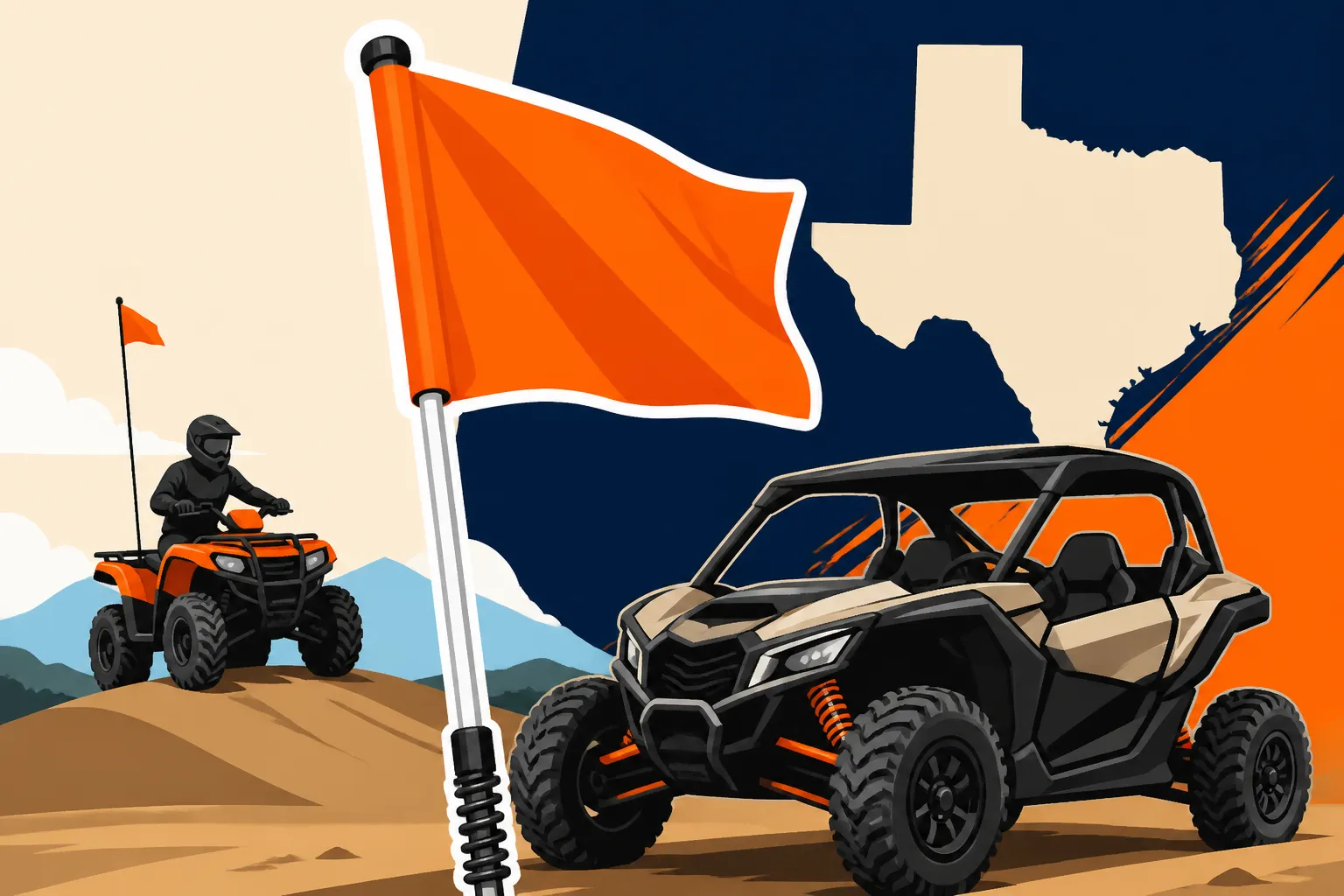
The most critical aspect of the flag is its height: it must be mounted so that its uppermost point is at least six feet from the ground. This isn't just the pole itself being six feet; it's the total height once installed on your ATV or UTV. So, if your UTV is already five feet tall, you’d need a flag pole that extends at least one foot above it. Many riders opt for poles that are much taller than this minimum, especially on smaller ATVs, to truly maximize visibility. You often see telescoping poles or fiberglass whips that offer adjustable height.
As for the flag itself, the law specifies an "orange" flag. This typically means a bright, neon, or fluorescent orange color. This specific hue is chosen because it stands out starkly against natural backgrounds like green trees, brown fields, or even grey asphalt. It's a color universally associated with caution and visibility in many outdoor and work settings. While there isn't usually a strict size requirement for the fabric flag part itself, most are triangular or rectangular, measuring roughly 12-18 inches on a side. The key is that it must be large enough to be easily seen from a distance and clearly discernable as an indicator flag.
Materials and Mounting Considerations
The typical 6-foot orange flag you'll see in Texas is actually a combination of a sturdy pole and a weather-resistant fabric flag. The pole is often made of fiberglass, a flexible material that can withstand wind, bumps, and the vibrations of off-road travel without snapping. Some might be a rigid aluminum, but flexibility is often preferred to prevent damage. The flag material itself is usually nylon or another durable, weather-proof synthetic fabric that can handle sun, rain, and dust without quickly fading or tearing. After all, what good is a flag if it's shredded or sun-bleached to a pale yellow?
Mounting the flag securely is just as important as the flag itself. You need a bracket that can attach firmly to your ATV or UTV, whether it's on a roll cage, a bumper, or a cargo rack. These brackets should be robust enough to hold the pole steady at speed and over rough terrain. Many aftermarket accessory companies, like SuperATV, offer a range of durable flag mounts, from simple bolt-on clamps to quick-release options. It’s important to choose a mounting point that allows the flag to clear all parts of your machine and any cargo, ensuring it truly reaches the 6-foot minimum height from the ground and isn't obstructed. Remember, the flag needs to be seen, not just present.
| Component | Requirement/Description | Common Materials |
|---|---|---|
| Height | Uppermost point must be at least 6 feet from the ground when mounted on the OHV. | N/A (measurement) |
| Color | Bright orange, often fluorescent or neon for maximum visibility. | Nylon, polyester, other durable synthetics |
| Flag Shape | Typically triangular or rectangular. | N/A (shape) |
| Pole | Must be sturdy enough to maintain height and withstand travel. | Fiberglass (flexible), aluminum (rigid) |
| Mounting | Securely attached to the OHV, allowing flag to reach minimum height. | Steel, aluminum brackets/clamps |
Where the Orange Flag Rule Applies in Texas
It's easy to assume that if you're riding your ATV or UTV off-road, you're always operating within the law. However, Texas's regulations are nuanced, and the 6-foot orange flag rule specifically targets scenarios where OHVs interact with areas typically reserved for other vehicle traffic or where visibility is critically important. Knowing exactly where and when this flag is required can save you from a fine and, more importantly, keep you safe.
Public Roads Under Specific Exemptions
The most common place you'll absolutely need that orange flag is when your OHV is operating on a public road under one of Texas's few statutory exemptions. Generally, ATVs and UTVs are explicitly not street legal in Texas, as outlined in [Are ATVs Street Legal in Texas?]. However, the law carves out exceptions for specific uses, primarily for agricultural purposes, utility work, and certain emergency services. For instance, if you're a rancher moving equipment or livestock on an ATV, you might be allowed to travel up to 25 miles on a public road, but only with that flag prominently displayed. The flag serves as an explicit warning to other motorists that a low-profile, slow-moving off-highway vehicle is present.
This also applies to situations like volunteer firefighters responding to calls within a 10-mile radius of their station, or utility workers maintaining rights-of-way. In these scenarios, the OHV is not a regular road vehicle, and its appearance on a public thoroughfare is temporary and for a specific, permitted purpose. The flag is a non-negotiable safety feature in these instances, ensuring that despite the temporary nature of the road use, your machine is as visible as possible to prevent accidents.
Designated Riding Areas and Parks
Beyond public roads, some privately owned or publicly managed off-highway vehicle parks and riding areas in Texas have their own rules regarding visibility flags, which may mirror or even exceed the state's 6-foot orange flag requirement. While the state's official code might focus more on road use, many parks recognize the inherent safety benefits of high-visibility flags, especially in dusty conditions, areas with dense brush, or trails with significant elevation changes.
For example, popular destinations like Barnwell Mountain Recreation Area or Hidden Falls Adventure Park, while not necessarily enforcing the exact 6-foot orange flag rule from the Texas Transportation Code, often have their own "whip and flag" rules. These typically require a tall, brightly colored flag (often orange, red, or yellow) to be mounted on your machine. This is particularly crucial in areas where dust can reduce visibility to near zero, or where blind turns are common. Always check the specific rules of any park or riding area before you visit. They often post these requirements clearly on their websites or at the entrance gates. Ignoring these park-specific rules could lead to you being turned away or, worse, being involved in a preventable accident.
Specific County and City Ordinances
While the statewide law governs the general use of OHVs on public roads, some individual counties or cities might have their own local ordinances that either reinforce or add to the state's requirements, particularly in areas where OHVs are allowed on specific local streets. This is less common for the 6-foot orange flag rule, which is tied directly to the state's exceptions for road use. However, it’s always prudent to be aware of local rules.
For example, some smaller, rural communities might have specific zones where golf carts or other similar vehicles are allowed on certain streets, and these ordinances sometimes include flag requirements for visibility. While a golf cart isn't typically defined as an OHV in the same way an ATV is, the underlying principle of enhanced visibility for slower, lower-profile vehicles on public ways remains consistent. Always check with the local county clerk's office or city hall if you plan on operating your OHV on any public thoroughfare within their jurisdiction, even if you believe you meet a statewide exemption. It's better to be overly prepared than to face unexpected legal troubles or safety hazards.
Equipping Your OHV with the Right Flag
Alright, so you know why you need it and where you need it. Now comes the practical part: actually getting your ATV or UTV set up with the correct 6-foot orange flag. This isn't just about slapping something on; it's about choosing the right components, ensuring proper installation, and understanding how to maintain it for consistent safety and compliance.
Choosing the Best Flag and Pole for Your Ride
When you're outfitting your machine, you'll quickly realize there's a variety of flag whips and poles available. For the Texas requirement, you're looking for something that clearly states it can achieve that 6-foot height from the ground. Many riders opt for fiberglass whip flags because they offer a good balance of flexibility and strength. They can bend and sway without breaking when hitting branches or enduring high speeds, which is important for longevity in rugged environments.
Consider the environment you ride in most often. If you frequently navigate tight trails with low-hanging branches, a highly flexible pole will be your friend. If you're mostly in open fields, a more rigid pole might suffice, as long as it's durable. Look for flags made from bright, fade-resistant nylon or polyester. Some even come with reflective strips, which, while not required, can significantly boost your visibility during dawn, dusk, or in foggy conditions. Brands like SuperATV often have well-regarded flag whips and mounting solutions designed to withstand aggressive off-road use, making them a solid choice for durability. Don't cheap out here; a flimsy flag that breaks or fades quickly defeats the entire purpose of the requirement.
Secure Mounting and Placement
Once you have your flag and pole, the next crucial step is proper mounting. The goal is to get the flag's top at least six feet from the ground, ensuring it's not obstructed by your machine's roof, cargo, or anything else. The roll cage on a UTV is often an ideal mounting point, offering a sturdy frame to attach a bracket. For ATVs, you might look at the rear cargo rack or a reinforced bumper.
You'll need a robust mounting bracket. These often come in universal clamp styles that can fit various tube diameters, or specific bolt-on designs for certain machines. Ensure the bracket is tightened securely to prevent the pole from vibrating loose or spinning. A common mistake is to mount the flag too low or in a place where it's easily snagged or hidden. Think about how others will see it: from the front, back, and sides, especially when you're cresting a hill or emerging from behind a visual obstruction. Some riders even install a second flag on the opposite side of their machine for redundant visibility, though one is the legal minimum. Always double-check the height from the ground after installation, with the machine on flat ground.
Maintenance and Pre-Ride Checks
A flag isn't a "set it and forget it" item. To ensure it remains effective and compliant, regular maintenance and pre-ride checks are essential. Before every ride where the flag might be required, give it a quick once-over:
- Check the Pole: Look for cracks, bends, or signs of fatigue in the fiberglass or metal. A damaged pole could snap, turning your safety flag into a dangerous projectile or simply rendering it useless.
- Inspect the Flag: Is the fabric still intact? Is it faded? A tattered or sun-bleached flag won't provide the high visibility needed. Replace it if it's no longer bright orange or is significantly torn.
- Verify Mounting: Give the pole a gentle tug. Is the bracket still tight? Are all bolts secure? Vibrations from riding can loosen fasteners over time. If your flag comes loose on the trail, it's not just a nuisance; it's a safety hazard and a legal non-compliance.
- Confirm Height: While you don't need to measure it every time, a quick visual confirmation that the flag is still reaching its required height is a good habit. Adjust if necessary.
By making these quick checks a part of your routine, you ensure that your 6-foot orange flag is always ready to do its job, keeping you visible and safe on those specific Texas roads and trails where it's required.
Common Misconceptions and FAQs About the Texas Orange Flag
Despite its clear purpose, the 6-foot orange flag requirement for ATVs and UTVs in Texas often comes with a fair share of questions and misunderstandings. It's not always intuitive, especially for new riders or those coming from states with different regulations. Let's clear up some of the most common points of confusion to ensure you're always riding informed and compliant.
Is the Flag Always Required on an OHV in Texas?
This is perhaps the most common question, and the answer is a resounding "no." The 6-foot orange flag is not required for all off-highway vehicle use in Texas. If you're riding exclusively on private land with the owner's permission, or within a designated OHV park that doesn't have its own flag rules (though many do!), then the state's 6-foot orange flag requirement typically does not apply. The law is very specific about when it's needed: primarily when an OHV is operating on or crossing a public road under one of the specific exemptions for agricultural, utility, or emergency use.
Think of it this way: the flag is a safety device for shared public spaces where your OHV might encounter conventional vehicles. It's not a blanket requirement for all off-road recreation. However, because many popular OHV parks have adopted similar flag requirements for general safety reasons (e.g., in dusty conditions or for blind spots), it's a good habit to always check the specific rules of your riding location. You don't want to get to a gate, ready for a great day of riding, only to be turned away because you're missing a simple, inexpensive safety item.
Does a Small Flag on My Antenna Count?
Absolutely not. This is a crucial distinction. Many people confuse the small, decorative flags often seen on vehicle antennas or smaller ATV whips with the specific 6-foot orange flag required by Texas law. A little club flag or a fun banner on your antenna, while perhaps adding a bit of personality to your ride, does not meet the legal requirement for several reasons:
- Height: The primary issue is height. Most antenna flags do not achieve the mandatory six feet from the ground. The whole point of the 6-foot rule is to get the flag high enough to be seen over obstacles.
- Size and Color: While many small flags might be orange, their diminutive size means they don't provide the same level of visibility as a proper, larger flag mounted on a dedicated whip. The combination of height, color, and size is what makes the regulated flag effective.
- Purpose: The small antenna flag is often decorative. The 6-foot orange flag is a critical safety and warning device.
If you are operating your OHV on a public road under an exemption, only a flag meeting the specific requirements, including the critical 6-foot height, will suffice. Anything less could leave you vulnerable to a citation for [Texas Fines for Illegal ATV Road Use] and, more importantly, compromise your safety.
What Happens if I Don't Have the Flag When It's Required?
Operating your ATV or UTV on a Texas public road without the required 6-foot orange flag, when one is explicitly mandated, is a violation of the Texas Transportation Code. This typically falls under a Class C misdemeanor. While the exact penalty can vary, Class C misdemeanors generally carry a fine, which can range anywhere from minimal to several hundred dollars. It's a non-moving violation in the traditional sense for a car, but it's a clear violation of OHV operational rules.
Beyond the legal penalties, the real consequence is the increased safety risk. The flag isn't just a bureaucratic hoop to jump through; it genuinely makes you more visible to other road users. Not having it means you are putting yourself and others at a higher risk of collision, especially in rural areas with limited sightlines, heavy dust, or tall vegetation. Law enforcement officers, particularly county deputies and state troopers, are generally aware of these specific OHV road use rules and will enforce them to prevent accidents. It's a small item to buy and maintain, but it carries significant importance for safety and compliance.
Disclaimer
This article is for general informational purposes only and does not constitute professional advice. Laws, prices and regulations vary by location and change over time. Consult a qualified professional for guidance on your specific situation.