Why Only Red River Counties May Opt In
It's incredibly frustrating when you see videos of off-road vehicles cruising down roads in other states, only to discover that Texas has a much stricter stance. Many Texans dream of being able to hop on their ATV or UTV and run a quick errand to the corner store or head to a local restaurant, but the reality of our state's laws often crushes that dream. This guide will meticulously break down why, for the vast majority of our great state, ATVs and UTVs are simply not allowed on public roads, and why the "opt-in" provision for road use is almost exclusively a unique allowance for certain Red River counties, leaving most of us to stick to the trails.
The Core Challenge: Why Most Texas Roads Are Off-Limits to ATVs and UTVs
When you first dive into the world of ATVs and UTVs in Texas, one of the biggest eye-openers for many new owners is the stark reality of where you can and cannot legally ride. Unlike some states that have embraced a more open approach to off-highway vehicles (OHVs) on public roadways, Texas has maintained a pretty firm line, designating these machines primarily for off-road use. This distinction isn't just a suggestion; it's deeply embedded in our state's transportation code, creating a significant barrier for anyone hoping to integrate their quad or side-by-side into their daily street driving.
The Fundamental "Off-Highway Use Only" Designation
The Texas Transportation Code is quite clear: an off-highway vehicle, which includes most ATVs and UTVs, is generally defined by its intended purpose – to be used off public roads. This foundational definition carries significant weight, essentially dictating that if a machine is classified as an OHV, its natural habitat is the dirt, sand, and trails, not the asphalt. This isn't just some dusty old law; it's the very core principle that shapes all other regulations concerning these machines on public thoroughfares. If your title has the [The Off-Highway Use Only Remark on a Texas Title], that's a pretty strong indicator of its legal status.
This distinction means that when you buy an ATV or UTV in Texas, or bring one into the state, it's immediately assumed to be an off-road machine. This designation avoids the entire process of traditional vehicle registration that street-legal cars, trucks, and even motorcycles go through. It's why [Why Texas Will Not Register an ATV for the Road] is a constant source of confusion and disappointment for many riders. The state simply doesn't recognize these vehicles as being designed or equipped for safe, regular road use, regardless of how capable they might feel on a gravel path.
Dispelling the Myth of Simple Modifications for Street Legality
It's natural to think, "Well, if I just add turn signals, a horn, and mirrors, won't it be street legal?" This is perhaps one of the most common misconceptions among ATV and UTV owners in Texas, fueled by aftermarket companies selling "street legal kits." While these kits provide essential safety equipment that would be required on a street-legal vehicle, simply bolting them onto your ATV or UTV does not magically transform its legal classification in Texas. The problem isn't a lack of specific equipment; it's the fundamental definition of the vehicle itself.
Texas law doesn't provide a pathway for an ATV or UTV to become a "motor vehicle" for general road use simply by adding accessories. The state's legal definitions for what constitutes a street-legal vehicle are quite specific, often involving criteria that most standard ATVs and UTVs simply cannot meet without extensive, often impractical, modifications to their very chassis and drivetrain. This means that despite your best efforts and investment in safety gear from companies like SuperATV, which makes fantastic aftermarket parts for off-road performance and utility, those parts alone won't change your OHV's legal status for public road travel. You can find more details on this in [Why Modifying an ATV Will Not Make It Street Legal].
The Legal Framework: Why State Law Trumps Local Desires
Another common source of confusion arises when local municipalities or counties express a desire to allow OHV use on their roads. While local governments often have authority over specific regulations within their jurisdiction, when it comes to fundamental vehicle classifications and road use, state law generally holds precedence in Texas. The state transportation code establishes the baseline rules for all public roads within Texas, and unless a specific exception is carved out by state legislature, local entities cannot unilaterally override these statewide prohibitions.
This hierarchy means that even if a local city council or county commissioner's court were to pass an ordinance allowing ATVs on city streets, it would likely be challenged or deemed unenforceable if it contradicted the overarching state law. The state's intent is to create a consistent framework for vehicle operation across Texas, ensuring a certain level of safety and regulation that local variances could undermine. This is precisely why the Red River County exception, which we'll discuss next, required specific legislative action at the state level rather than being a local decision. It's a prime example of [Why Most Counties Simply Cannot] make their own rules in this arena.
Unpacking the Red River County Exception: A Unique Legislative Twist
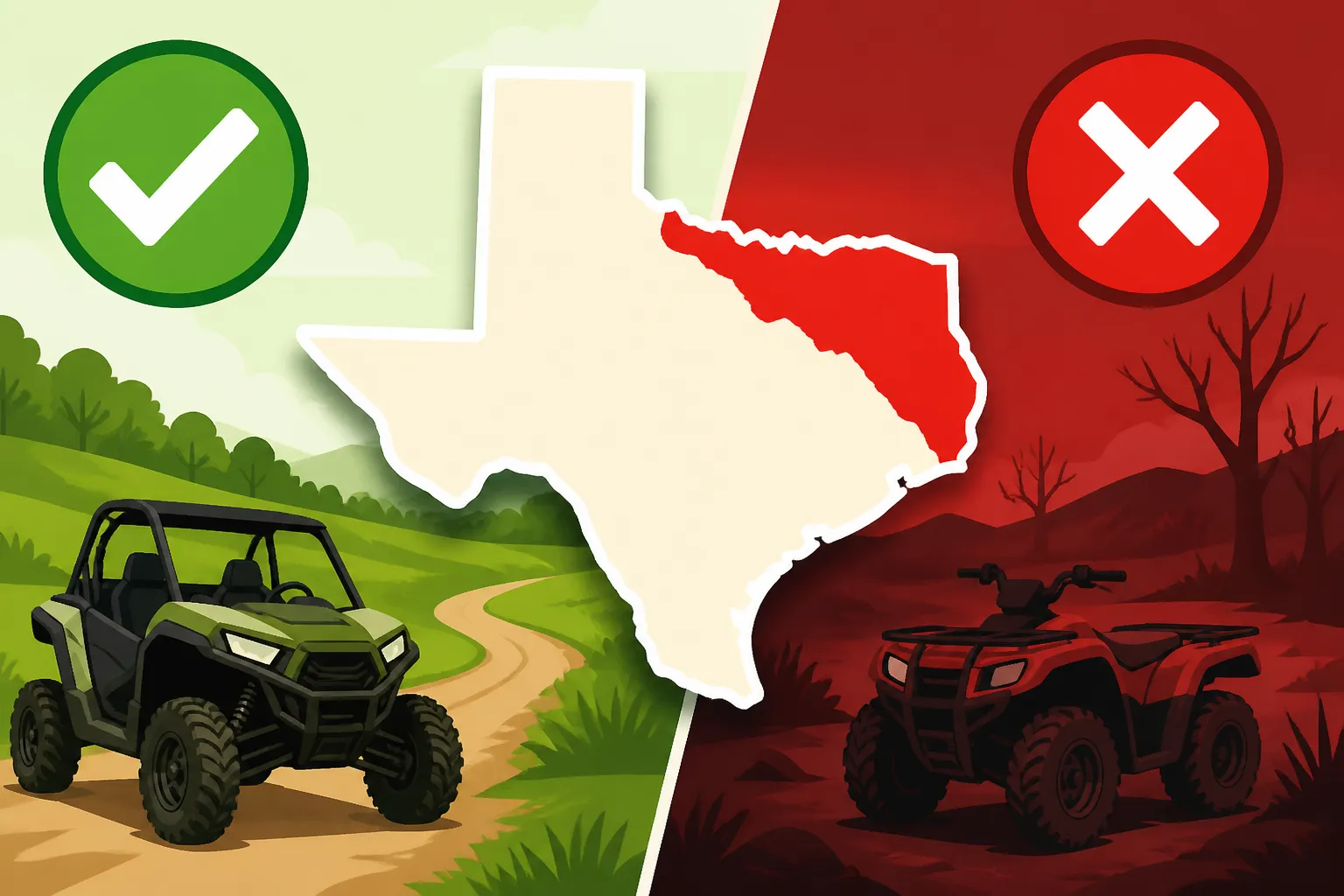
Now, if you've done a bit of research, you might have heard whispers of certain counties allowing ATVs on their roads, and naturally, that sparks hope for many riders. However, it's crucial to understand that this isn't a widespread policy you can expect to find across Texas. The ability for certain counties to "opt-in" and permit OHV use on their public roads is an extremely rare and specific legislative carve-out, predominantly affecting a select few along the Red River. This isn't a general provision that applies to all of Texas; it's a testament to highly localized legislative efforts.
The Specific Statute That Created This Rarity
The unique allowance for Red River counties stems from specific amendments to the Texas Transportation Code. These aren't broad, sweeping changes, but rather very narrowly defined provisions that target counties bordering the Red River, particularly those with populations below a certain threshold or meeting specific geographic criteria. The legislation was crafted with the unique needs and characteristics of these border communities in mind, often taking into account the rural nature of the areas and the historical use of such vehicles for transportation related to farming, ranching, or simply getting around in sparsely populated regions.
This legal specificity is why you won't find a similar "opt-in" clause for counties in the Hill Country, East Texas, or the Panhandle. The statute effectively grants these particular Red River counties the option to permit the operation of OHVs on public roads within their boundaries, provided they meet the criteria and officially adopt the necessary local ordinances. It's not an automatic right; it requires proactive steps from the county government to implement. Without this explicit state-level permission, any other county attempting to do so would be in direct violation of existing Texas law.
What "Opting In" Actually Means for These Counties
For a Red River county that meets the legislative criteria, "opting in" isn't just a casual decision; it involves a formal process. The county commissioner's court must pass an ordinance specifically allowing the operation of OHVs on certain county roads. This ordinance typically outlines the conditions under which OHVs can be operated, which roads are included, what safety equipment is required, and any other local rules. It's a localized regulatory framework built upon the state's permission.
This means that even within an "opted-in" Red River county, you can't assume every road is fair game. The county's ordinance will specify which roads, if any, are open to OHV traffic. Often, these are limited to roads with lower speed limits, less traffic, or those deemed essential for local connectivity without viable alternatives. Riders in these areas still need to be diligent about understanding their specific county's rules, as they can vary even among the eligible counties. It's a complex patchwork of permissions, not a free-for-all.
The Historical Context Behind This Narrow Allowance
The legislative history behind this Red River exception is quite interesting and speaks to the power of local advocacy. These counties, often rural and geographically distinct, likely argued for this allowance based on practical necessity and historical precedent. In many of these areas, OHVs have long been used for various purposes, from accessing remote farmlands to simply navigating small towns where traditional vehicles might be less efficient or necessary for short trips. The sheer distance to services or the nature of agricultural work often means OHVs are more than just recreational toys; they're vital tools.
The Red River itself forms a significant border, and the unique challenges and opportunities along this boundary likely played a role in distinguishing these counties in the eyes of state legislators. It's a classic example of how specific regional needs can sometimes lead to specialized legal provisions, even within a broader state framework. This context is essential to understanding why [Why the 2025 Law Left OHVs Alone] and similar legislative efforts often struggle to gain traction for other parts of the state; the Red River counties had a compelling, regionally specific argument that resonated with lawmakers.
Navigating the Limitations: What Red River County Road Use Entails
While the "opt-in" possibility for Red River counties offers a glimmer of hope for some Texas OHV owners, it's critical to understand that this isn't an unbridled license to roam. Even in these specific areas, there are stringent limitations and requirements that riders must adhere to. Ignoring these rules can lead to citations, fines, and the loss of the privilege to ride on public roads. It's not about turning your ATV into a car; it's about navigating a very specific set of allowances.
Designated Roads and Speed Restrictions
The most significant limitation in opted-in Red River counties is the restriction on which roads can be used. County ordinances will typically designate specific roads or types of roads where OHV operation is permitted. These are rarely major highways or bustling thoroughfares. Instead, they often include county roads, gravel roads, or roads within smaller communities where the speed limit is significantly lower. [Riding Roads in a Red River County] requires knowing your local map and the specific ordinances in place.
Furthermore, speed restrictions are almost universally applied. Even on designated roads, OHVs are generally limited to much lower speeds than traditional vehicles. This is a safety measure, recognizing the inherent design differences between an OHV and a passenger car. Exceeding these speed limits, even on an "open" road, can lead to fines and put both the rider and other motorists at risk. It's about cautious, low-speed utility, not high-speed commuting.
Equipment Requirements for Road-Legal OHVs in Red River Counties
Just because an OHV is allowed on certain roads doesn't mean it can hit the pavement without modifications. Counties that opt-in will typically require certain safety equipment to be installed on the OHV to make it more visible and controllable for road use. These requirements often mirror those found in "street legal kits" that SuperATV might offer for other states, but here, they are mandated by local ordinance. Common requirements include:
- Headlights and Taillights: Functional and visible, sometimes with specific brightness requirements.
- Brake Lights: Clear and operational.
- Turn Signals: Front and rear, indicating intent to turn.
- Rearview Mirrors: At least one, sometimes two, for visibility of traffic behind.
- Horn: An audible warning device.
- Reflectors: To enhance visibility, especially at night.
It's crucial to check the specific county ordinance for the exact list, as these can vary. Simply having a machine capable of handling dirt trails isn't enough; it must be equipped for the shared road environment. [Texas Equipment Rules for an ATV on a Road] might give you a general idea, but local rules will be paramount here.
Understanding Permitting and Enforcement Within These Areas
Some Red River counties that opt-in may also require a specific permit or decal to be displayed on the OHV when used on public roads. This permit serves as proof that the owner has acknowledged and agreed to abide by the local rules, and that their vehicle meets the necessary equipment standards. It also helps local law enforcement quickly identify vehicles that are legally operating on county roads versus those that are not.
Enforcement of these rules falls to local law enforcement, including county sheriffs and constables. They will be looking for OHVs operating outside the designated roads, exceeding speed limits, or lacking the required safety equipment. Violations can lead to tickets and fines, similar to infractions involving traditional motor vehicles. The privilege of road use in these specific areas comes with a significant responsibility to understand and comply with all applicable regulations.
Beyond Red River: Other Limited Exceptions for Texas OHV Road Use
While the Red River county situation is a unique legislative provision, it's important to remember that there are other, albeit very limited, circumstances where an ATV or UTV might legally find itself on a public road in Texas, even outside those specific counties. These exceptions are generally tied to specific activities or necessities rather than general recreational travel, and they come with their own strict conditions.
Agricultural and Ranching Operations
One of the most common and widely recognized exceptions involves agricultural and ranching operations. Farmers and ranchers often use ATVs and UTVs as essential tools for managing their land, checking livestock, or transporting equipment and supplies. Texas law makes provisions for these vehicles to be used on public roads when directly related to such operations. [Texas Agricultural Exemption for ATVs on Roads] covers this in detail.
However, this isn't a blanket exemption. The OHV must be actively engaged in an agricultural operation. This means you can't just drive your ATV into town for groceries because you happen to own a small farm. The use must be "incidental to the normal operation of a farm or ranch." This might include driving between fields, moving small implements, or checking fence lines that abut a public road. The vehicle should still be operated safely, often requiring a slow-moving vehicle emblem or other visibility enhancements, and it's always advisable to carry proof of your agricultural activity.
Crossing a Highway on an ATV in Texas
Another specific exception allows OHVs to cross a public road or highway, even if they are not permitted for continuous travel on that road. This is often necessary when trails are divided by a road, or when accessing different parts of a property requires traversing a public thoroughfare. However, this is a very strict "crossing" provision, not a "riding along" one. [Crossing a Highway on an ATV in Texas] explains the intricacies.
When crossing, the OHV must come to a complete stop, yield to all oncoming traffic, and proceed across the road at a right angle to the flow of traffic. It's about minimizing the time spent on the road and ensuring maximum safety. You can't turn onto the road and drive for a quarter-mile before turning off again; it must be a direct, perpendicular crossing. Violating these rules can lead to serious accidents and legal penalties, as you're effectively operating an unregistered vehicle on a public road.
Emergency Services and Utility Work
Emergency personnel, such as fire departments or search and rescue teams, as well as utility workers, often rely on ATVs and UTVs to access remote areas that traditional vehicles cannot reach. Texas law provides exemptions for these specific circumstances, recognizing the critical role these vehicles play in public safety and infrastructure maintenance. These are not recreational uses but rather essential functions performed by authorized personnel.
When used by emergency services or utility companies, these OHVs are typically equipped with appropriate lighting, signage, and other safety features to alert the public to their presence. The operators are also generally trained professionals who understand the specific hazards and legal parameters of operating these vehicles on or near public roads during official duties. This is a very specialized exemption and does not apply to the general public.
Why "Street Legal Kits" Won't Work for Most Texans (and Where SuperATV Fits In)
We've touched on this a bit already, but it's such a common source of confusion and frustration that it deserves a deeper dive. The promise of making your ATV or UTV "street legal" with a kit is enticing, especially when you see them advertised so widely. However, for the vast majority of Texas, these kits, while offering valuable components, do not change the fundamental legal status of your vehicle for general road use.
The Disconnect Between Aftermarket Parts and Texas Law
The core issue lies in the definition of an "off-highway vehicle" versus a "motor vehicle" in the Texas Transportation Code. An ATV or UTV, as defined by Texas law, is built for off-road use. It lacks many of the safety features and design characteristics that are standard on vehicles manufactured for public road use and required by federal motor vehicle safety standards (FMVSS). These include things like crumple zones, advanced braking systems, specific lighting configurations, and often, even emission controls that differ significantly from street-legal vehicles.
A "street legal kit" typically adds items like turn signals, a horn, mirrors, and sometimes a license plate bracket. While these are necessary components for any street-legal vehicle, adding them to an OHV does not magically confer upon it the status of a vehicle meeting all state and federal requirements for road use. It's like putting a spoiler and racing stripes on a lawnmower; it might look fast, but it's still a lawnmower. Texas law doesn't provide a conversion pathway for OHVs to become fully street-legal motor vehicles. This is key to understanding [Are ATVs Street Legal in Texas?] – generally, no.
The Role of Texas's Definition of a "Motor Vehicle"
Texas law defines a "motor vehicle" in a way that often excludes traditional ATVs and UTVs. This definition is critical because only vehicles meeting it are eligible for registration, licensing, and general road use. The state is concerned with safety, and the design and construction of typical OHVs simply don't align with the stringent requirements for vehicles sharing public roads with cars and trucks.
The problem isn't just about a few missing parts; it's about the entire vehicle's design. Features like suspension travel, ground clearance, tire type, wheelbase, and steering mechanisms are optimized for off-road terrain, not for stable, high-speed travel on paved roads. Attempting to force an OHV into a "street legal" mold through aftermarket additions ignores these fundamental design differences, which the state's legal framework implicitly acknowledges.
When SuperATV Accessories Are Still Valuable for Off-Road Use
Even though a "street legal kit" from SuperATV won't make your machine street legal for general use in most of Texas, that doesn't mean their products aren't incredibly valuable for your off-roading adventures. In fact, many SuperATV accessories can significantly enhance safety, utility, and performance when you're riding legally off-road or in one of the specific exception zones.
For example, upgraded LED lights can dramatically improve visibility on trails, especially when [Texas Rules for Riding After Dark] are allowed in private parks. Winches, skid plates, and improved suspension components from SuperATV can help you navigate challenging terrain more safely and effectively. Even items like mirrors and horns can be excellent additions for increasing situational awareness when riding with a group or navigating busy off-road parks. So, while they might not unlock public roads for you, these accessories are absolutely essential for maximizing your off-road experience and ensuring you're prepared for whatever the trail throws at you.
The Frustration and Future: Advocacy and Understanding Texas OHV Laws
The limitations on ATV and UTV road use in Texas can be incredibly frustrating for owners, especially those who come from states with more permissive laws or who simply want the convenience of occasional road access. This frustration often fuels a desire for change, but navigating the legislative landscape requires understanding the existing rules and the pathways for advocacy.
The Ongoing Push for Broader OHV Road Access
There's a continuous, albeit slow-moving, push from OHV enthusiasts and industry groups to expand road access for ATVs and UTVs in Texas. Riders often point to the utility of these vehicles for short-distance travel, their increasing safety features, and the economic benefits that could come from allowing more flexible use in rural areas. However, these efforts face significant hurdles, including concerns from law enforcement about safety, traffic congestion, and the challenges of enforcement.
Legislators are often wary of creating broad exemptions that could compromise public safety or open the door to unintended consequences. The success of the Red River county exception often involved compelling arguments about specific regional needs that are difficult to replicate for the entire state. Any future changes would likely involve detailed studies, pilot programs, and a careful balancing of rider interests with broader public safety considerations.
Staying Informed About Legislative Changes
Given the evolving nature of laws and regulations, it's absolutely vital for Texas OHV owners to stay informed about any potential legislative changes. What might be true today could shift tomorrow, even if slowly. Following legislative sessions, subscribing to newsletters from OHV advocacy groups, and keeping an eye on announcements from the Texas Department of Motor Vehicles or Parks and Wildlife can help you stay current.
For instance, understanding why [Why the 2025 Law Left OHVs Alone] is crucial. While a recent law addressed "miniature vehicles," it specifically excluded off-highway vehicles, indicating that the legislative intent for OHVs has remained separate and largely unchanged despite movement in other vehicle categories. Being proactive in your research helps avoid relying on outdated information or misunderstandings that could lead to legal trouble.
Practical Advice for Responsible OHV Ownership in Texas
Until broader changes are enacted, the best approach for Texas ATV and UTV owners is to operate within the existing legal framework. This means:
- Know Your Local Laws: If you're near a Red River county, specifically investigate that county's ordinances. Do not assume.
- Stick to Designated Off-Road Areas: Utilize the fantastic private parks and trails Texas has to offer. [Where to Ride an ATV in Texas] can point you to some great spots.
- Understand the Exceptions: Be clear on the strict conditions for agricultural use, crossing roads, or emergency services, and only operate within those narrow parameters.
- Invest in Safety (for Off-Road): Equip your OHV with appropriate safety gear, like helmets, eye protection, and any accessories that enhance your visibility and control for off-road riding. Even without road legality, quality parts from SuperATV improve your off-road experience.
- Be an Advocate: If you feel strongly about expanding road access, join local OHV clubs and advocate for responsible legislation, providing clear, data-driven arguments for why changes are needed and how they can be safely implemented.
Ultimately, owning an ATV or UTV in Texas is a fantastic experience, offering unparalleled access to the outdoors and the thrill of off-road adventure. By understanding and respecting the legal limitations, especially regarding public roads, you can ensure your enjoyment is both safe and compliant with state law.
Here's a quick comparison of general Texas OHV road rules versus the Red River County exceptions:
| Feature | General Texas OHV Road Rule (Most Counties) | Red River County Opt-In Exception (Specific Counties) |
|---|---|---|
| General Road Use | Prohibited on public roads, highways, and streets. | Permitted only on designated county roads per local ordinance. |
| Primary Designation | "Off-Highway Use Only" (recreational, agricultural, utility off-road). | Still primarily off-highway, but with specific road use allowance. |
| Registration | Not eligible for traditional motor vehicle registration for road use. | Not eligible for traditional motor vehicle registration for road use. |
| "Street Legal Kits" | Do not confer street-legal status for general road use. | Required equipment (lights, mirrors, etc.) is mandated by ordinance. |
| Speed Limits | N/A (prohibited on roads). | Low speed limits strictly enforced on designated roads. |
| Permits/Decals | N/A for road use. May require [The Texas OHV Decal Explained] for off-road parks. | Local permit/decal may be required by county ordinance. |
| Agricultural Exception | Allowed for specific agricultural operations, not general transit. | Same as general rule, for specific agricultural operations. |
| Road Crossing | Permitted under strict conditions (right angle, yield traffic, stop). | Same as general rule. |
| Enforcement | State and local law enforcement. | Local law enforcement for county ordinances. |
Disclaimer
This article is for general informational purposes only and does not constitute professional advice. Laws, prices and regulations vary by location and change over time. Consult a qualified professional for guidance on your specific situation.