When a Texas Buyer Adds the OHV Plate
One of the most common points of confusion for new or even experienced off-highway vehicle (OHV) owners in Texas is figuring out exactly when and how that little OHV license plate gets attached to their machine. Many assume it's an automatic part of the titling process, or that it just "comes with" the vehicle when they buy it. This guide is here to clear up that mystery, detailing precisely when a Texas buyer adds the OHV plate and why it’s always a proactive choice on their part.
Understanding the Texas OHV Plate: Not Your Typical Registration
Before we dive into when you get the plate, it's crucial to understand what the Texas OHV plate actually is – and, perhaps more importantly, what it isn't. This isn't like your car's license plate; it's not a general registration that permits road travel. In fact, it explicitly signals the opposite.
The Texas Off-Highway Vehicle (OHV) plate, often a small, distinctively colored metal plate, is a special marker for your quad, side-by-side, or other qualified off-highway vehicle. Its primary purpose is to identify your machine for use on designated public OHV trails and parks across the state. Think of it as a permit to play in specific areas, rather than a universal identification. It helps state agencies track machines using these facilities and, importantly, the fees collected from these plates often contribute directly to the maintenance and development of those very trails. For many, it’s a surprise to learn that Texas does not offer traditional "registration" for OHVs in the way it does for cars or trucks; the plate is the closest equivalent for official identification. If you're curious about this unique system, we’ve covered it in depth in [The Texas Off-Highway Vehicle License Plate].
The Buyer's Choice: Electing to Add the Plate
Here's the critical takeaway: the Texas OHV plate is never automatically issued with your title. It's always an optional request made by the buyer at the time of titling their machine. This might seem counterintuitive, especially if you're used to purchasing vehicles where registration and plates are part of the standard package. However, for OHVs in Texas, it truly puts the power in your hands.
When to Request the Plate
So, when should a buyer request the OHV plate? The answer hinges entirely on your intended use for the machine. If you plan to ride your newly acquired ATV or UTV on any public lands, trails, or parks in Texas that are open to OHVs, then you absolutely need this plate. Parks like Barnwell Mountain Recreation Area or Hidden Falls Adventure Park, along with the Sam Houston National Forest OHV Trail, will require you to display a valid Texas OHV plate. Attempting to ride without one can result in fines and, at the very least, being turned away at the gate. Therefore, if your vision involves exploring state-managed trails or recognized OHV parks, requesting the plate during your initial titling process is the most logical and convenient approach. It saves you a separate trip later on.
When You Might Delay Requesting It
Conversely, there are scenarios where a buyer might choose not to request the OHV plate right away, or even at all. If your OHV will exclusively be used on private land – say, your own ranch, a friend's property, or a hunting lease – then the OHV plate is not legally required. It's a common misconception that all OHVs need this plate; the requirement is tied to public land use. In these cases, you might decide to simply title your machine and forgo the plate, at least for the time being. Perhaps you're buying a quad solely for agricultural purposes on your property, hauling feed, or checking fences. For these machines, the public land plate offers no benefit. However, it’s worth noting that if your circumstances change and you later decide to hit the public trails, you can always obtain the plate at a later date, though it will require another visit to the county tax office.
The Process of Adding the OHV Plate During Titling
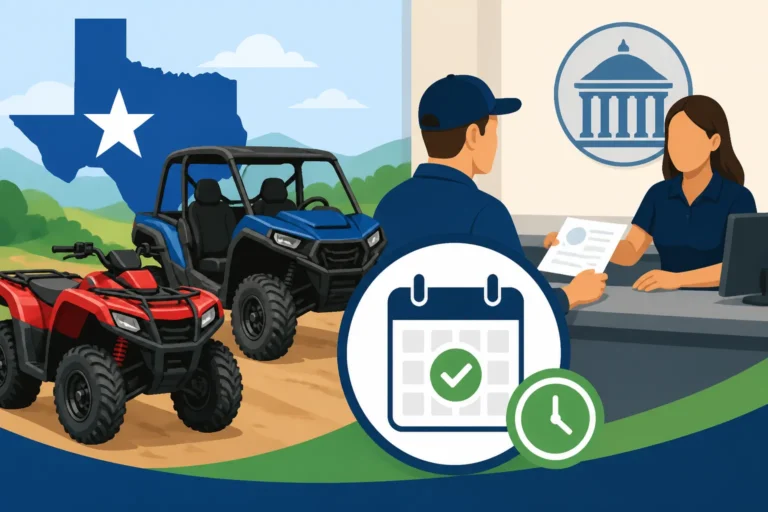
The pivotal moment for adding the Texas OHV plate comes when you visit your local county tax assessor-collector’s office to title your off-highway vehicle. This is the one-stop shop for getting your ownership official and making sure you have all the necessary credentials for legal use.
Making the Specific Request at the Counter
When you go to the county tax office to [Titling an ATV in Texas], you'll be primarily focused on submitting your completed [The Texas Title Application Every OHV Buyer Files], also known as Form 130-U, along with your proof of ownership (like a bill of sale or previous title) and proof of identity. During this process, you must specifically tell the clerk that you wish to purchase an OHV license plate for your machine. It’s not something they automatically offer or assume you want. They will then add the plate fee to your total transaction cost. It’s a simple addition, but one that requires your explicit instruction. This is often the point where people realize the plate isn't automatically included, leading to a second trip if they forget to ask.
The Associated Costs and Fees
The cost of the Texas OHV plate itself is set by statute, ensuring a consistent price across counties, though additional local fees may apply to the overall titling transaction. The state has a cap on this plate fee, designed to keep access affordable. This fee is separate from the title application fee, the sales or use tax you'll pay, and any other county-specific charges. When you're budgeting for your OHV purchase, it's wise to factor in all these costs. For a detailed look at the fees, including [What the Counter Charges for the Plate], check out our post on [Texas OHV License Plate Cost]. You'll find that [The $10 Cap on a Texas Plate] keeps the plate itself quite inexpensive compared to the other costs involved in acquiring an OHV.
Here’s a simplified breakdown of typical fees you might encounter when titling an OHV and requesting a plate in Texas:
| Item | Description | Cost Shape (Check Current Figures) |
|---|---|---|
| Title Application Fee | State fee for processing your title | Flat, modest fee |
| OHV Plate Fee | State fee for the actual OHV license plate | Capped, very low fee |
| Sales Tax / Use Tax | Percentage of purchase price (or presumptive value for private sales) | Percentage of value |
| Notary Fee (if needed) | For certain documents, if not already notarized | Small, per document fee |
| County Admin Fee | Local administrative costs, varies by county | Small, flat fee |
Remember, these are general descriptions, and exact amounts can vary. Always confirm current fees with your specific [Titling at a Texas County Tax Office] before your visit.
Common Misconceptions and Buyer Considerations
When it comes to OHV plates in Texas, there are a few lingering myths and important details every buyer should be aware of. Understanding these can save you a lot of headache and potential disappointment down the road.
The Plate Does Not Transfer with the Machine
A very common misunderstanding is that the OHV plate "sticks with" the machine when you buy it from a private seller. This is absolutely not the case. The Texas OHV plate is tied to the owner's specific request and becomes invalid when the machine changes hands. The seller is actually supposed to remove their plate when they sell the machine, and the buyer, if they intend to use it on public land, must apply for a new one. This means if you buy a used ATV with a plate still attached, that plate is technically no longer valid for you. You, as the new owner, must make your own request for a new plate during the titling process. We delve deeper into this in [Why a Buyer Cannot Reuse the Seller's Plate].
It's Not Required for All OHVs
As mentioned earlier, the plate is only required for OHVs operating on public land. If your machine is strictly for private property use, you are not legally obligated to obtain one. However, it's often a good idea to still title your machine, even if you don't get the plate. A title serves as definitive proof of ownership, which is crucial for resale, insurance, or in case of theft. When you're going through the purchase process, especially from a private seller, creating a clear [A Texas Bill of Sale for an ATV] is paramount, regardless of whether you're getting a plate. Services like LawDepot offer templates that can help you draft a solid bill of sale, ensuring all the critical details of the transaction are legally documented. This protects both the buyer and the seller.
Getting the Plate Later If You Change Your Mind
Life circumstances change, and so might your riding habits. Perhaps you bought an OHV for ranch work and never intended to hit the trails, but now your friends are inviting you to a weekend trip at Barnwell Mountain. Don't worry, you're not out of luck! You can always go back to your county tax assessor-collector’s office at a later date and request the OHV plate for a machine you've already titled. You'll need your title and identification, and you'll pay the plate fee. It's an extra trip, but it's completely feasible.
Special Considerations for Out-of-State Purchases
If you're bringing an OHV into Texas from another state, the process of titling and potentially adding the OHV plate is slightly different, primarily due to use tax requirements. Texas levies a use tax on vehicles brought into the state that were purchased out-of-state and on which Texas sales tax was not collected. This tax must be paid or accounted for before you can receive a Texas title, and by extension, request your OHV plate. Understanding [Texas Use Tax on an Out-of-State OHV] is essential if you're in this situation, as the Comptroller's office will need to verify payment before your county office can finalize your title and plate request. Again, having meticulous purchase documentation, potentially facilitated by a resource like LawDepot, can smooth this process considerably.
The "Off-Highway Use Only" Remark
Finally, it's worth noting that your Texas OHV title will typically bear a distinctive "Off-Highway Use Only" remark. This isn't just a casual note; it's a legal declaration that the vehicle is not designed or certified for highway use. This remark is crucial because it clarifies the machine's legal status and reinforces why it can't be registered like a street-legal vehicle. This is also covered in [The Off-Highway Use Only Remark on a Texas Title] if you want to understand its full implications.
Ultimately, adding the Texas OHV plate is a straightforward part of the titling process, as long as you know to ask for it. It empowers you to enjoy the vast and varied public OHV riding opportunities across the Lone Star State. By being proactive and understanding the requirements, you can get your machine titled, plated, and ready for adventure with minimal fuss.
Disclaimer
This article is for general informational purposes only and does not constitute professional advice. Laws, prices and regulations vary by location and change over time. Consult a qualified professional for guidance on your specific situation.