Getting a Plate on Request in Texas
Navigating the unique world of off-highway vehicle (OHV) ownership in Texas can feel like a maze, especially when it comes to understanding what kind of "plate" or "registration" you actually need. Many folks pull their hair out trying to figure out how to make their ATV or UTV "street legal," only to discover that's almost impossible in the Lone Star State for most machines. But here's the good news: there is a way to get an official identification for your off-road machine, and it's called the OHV plate, often issued "on request." This guide will walk you through exactly what this plate is, who needs it, how to get it, and what it truly means for your riding adventures across Texas.
Understanding the Texas Off-Highway Vehicle Plate
When you hear talk of "plates" for vehicles, your mind probably jumps straight to those standard-sized rectangular tags you see on cars and trucks, implying full street legality. For off-highway vehicles in Texas, it's a completely different ball game. The OHV plate is a specific identifier that acknowledges your machine's primary purpose is off-road, while still providing a legal means of identification when needed.
What Exactly Is This "Plate on Request"?
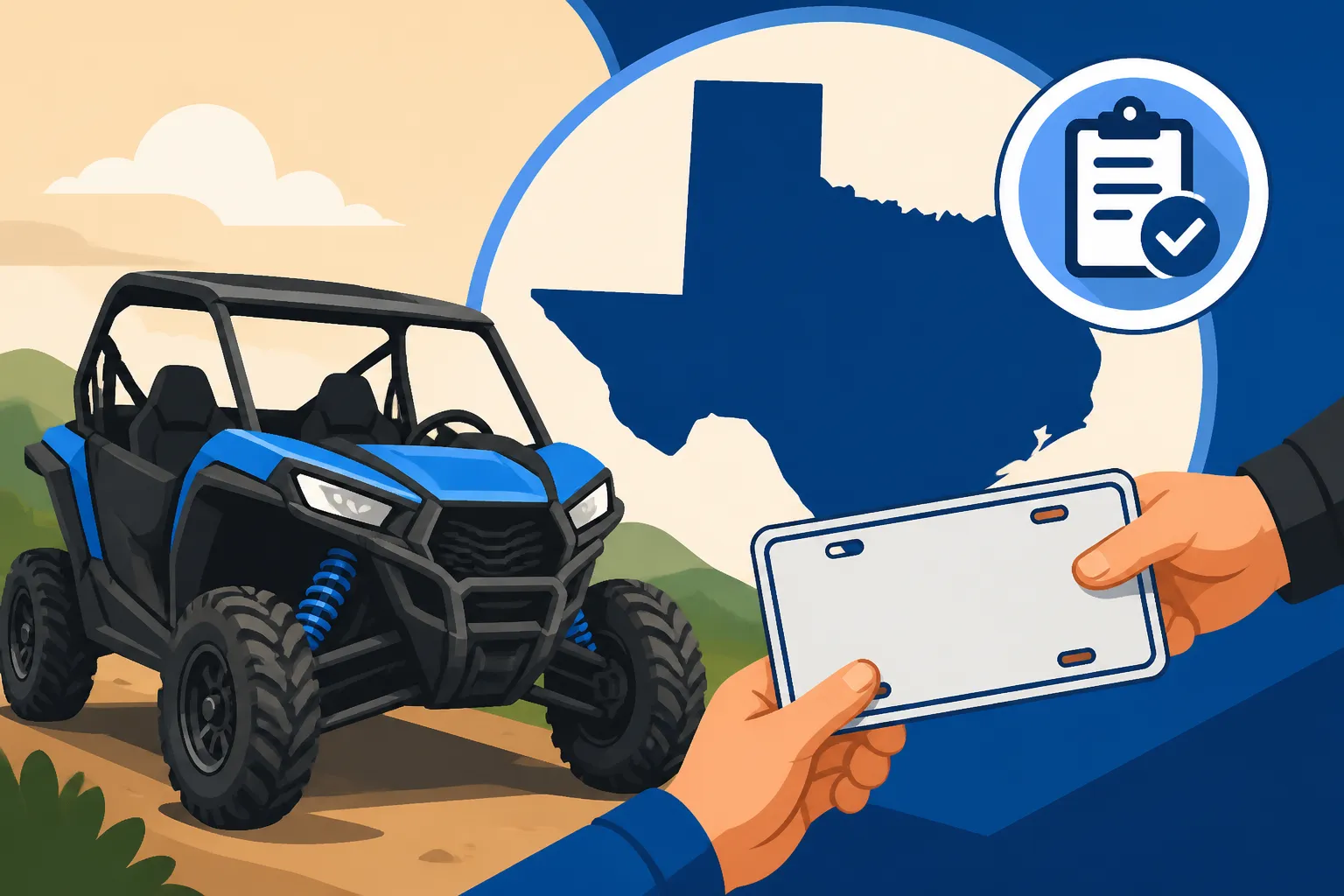
The "plate on request" refers to the specific Off-Highway Vehicle (OHV) plate that Texas offers. It's not a registration that grants you free rein on public roads like a car or motorcycle plate would. Instead, it's a small, distinct plate designed to fit better on ATVs, UTVs, and other similar machines. Its existence is a nod to the fact that while these machines aren't for the highway, they still need official identification for various purposes. Think of it as a unique ID badge for your off-road toy. It helps law enforcement identify your machine if it's stolen, or confirms its legal status if you're crossing a road under one of the state's limited exceptions.
Unlike traditional vehicle plates, which are generally about proving you've registered and paid annual fees to drive on public roads, the OHV plate is purely about recognition and identification within the framework of off-highway use. It’s an optional plate, but one that many riders find incredibly useful and even necessary depending on where and how they ride.
Why Texas Offers a Plate But No Full Registration for OHVs
This is where a lot of the confusion stems from, and it's a common frustration for new and experienced riders alike. Texas law makes a clear distinction between titling a vehicle and registering it. When it comes to OHVs, Texas requires a title for most machines, establishing legal ownership, but it explicitly does not offer traditional road registration. You see, the state considers ATVs and UTVs as off-highway machines, fundamentally unsuited for the public road system. They lack standard safety features, signal lights, and braking systems typically found on street-legal vehicles.
Therefore, while you absolutely need to go through the process of [Titling an ATV in Texas] to establish ownership and pay sales tax, you won't find an option to "register" it for the street. The OHV plate fills a very specific niche: it's an identification marker that aligns with the state's stance that these vehicles are for off-road use. It signifies that your machine is officially recognized by the state as an OHV and has a legitimate paper trail, without ever pretending it's a street-legal vehicle. It’s a practical compromise for a state with vast rural and recreational lands. This setup is why you'll often hear that [Why Texas Titles But Never Registers an OHV].
The "Off-Highway Use Only" Remark
To further drive home the point that your ATV or UTV isn't destined for highway cruising, Texas titles for off-highway vehicles come with a very clear, and sometimes quite literal, stamp: "Off-Highway Use Only." This isn't just a suggestion; it's a legal declaration printed right on your official ownership document. It serves as a permanent reminder to you, and any future owners, of the machine's intended use and legal limitations.
This remark is crucial because it immediately clarifies the vehicle's status to anyone reviewing the title – be it law enforcement, a county clerk, or a potential buyer. It's a key piece of information that prevents misconceptions about the machine's capabilities or legal permissions. When you see this on your title, you understand unequivocally that even with an OHV plate, your machine is not to be used on public roads except for very specific, narrow exceptions defined by state law. It's designed to stop you from trying to do things like obtain street-legal insurance or annual inspections that simply don't apply to these machines. [The Off-Highway Use Only Remark on a Texas Title] isn't there to annoy you; it's there to prevent misunderstandings and ensure compliance with Texas vehicle codes.
Who Needs and Who Can Get This Plate?
It's easy to assume that if you're not riding on public roads, you don't need any official identification for your OHV. However, Texas law, and the realities of off-road riding, often make the OHV plate a very smart choice, if not an outright requirement. Understanding when and why you might need one is key to being a responsible rider.
The Mandate for Public Land Access (and Why You Want It Anyway)
For many Texas riders, the primary reason to get an OHV plate is for access to public lands. While Texas has relatively limited public OHV riding areas compared to some other states, places like the Sam Houston National Forest OHV Trail or specific state parks may require your machine to be titled and have this identification. The plate signifies that your OHV is legitimate and has gone through the basic state processes. Without it, you might be denied access or face citations, even if you have the required OHV decal (which is a separate thing entirely!).
Beyond mandated access, the plate offers practical benefits. If your machine is ever stolen, having an official, state-issued plate number significantly aids law enforcement in identification and recovery efforts. It's another layer of verification, similar to a VIN, but one that is more readily visible and recognized by the public. Furthermore, if you ever need to briefly cross a public road under one of Texas's specific exceptions (like crossing a low-speed county road or within a master-planned community), having the OHV plate attached can make interactions with law enforcement much smoother, as it provides instant proof of your machine's official, albeit limited, status. It signals that you're a responsible owner who has gone through the proper channels.
What Texas Counts as an Off-Highway Vehicle
The definition of an Off-Highway Vehicle in Texas is fairly broad and covers most of the popular machines you'll encounter on trails. Generally, it includes:
- All-Terrain Vehicles (ATVs): These are the classic "quads" designed for single riders, with handlebars for steering and straddle seating.
- Utility Task Vehicles (UTVs) or Recreational Off-Highway Vehicles (ROVs): These are the popular "side-by-sides" with steering wheels, bench or bucket seating, and often a small cargo bed. They can carry passengers and gear.
- Sand Rails: Lightweight, open-wheeled vehicles often custom-built for sand dunes.
- Other machines: The definition can also encompass certain dirt bikes, dune buggies, and other vehicles primarily designed for off-road operation.
It's important to differentiate these from other vehicles that might seem similar but fall under different categories. For example, golf carts, neighborhood electric vehicles (NEVs), and miniature vehicles have their own distinct titling and registration rules, and often different plate types. The OHV plate is specifically for those machines identified by the state as off-highway vehicles under relevant sections of the Transportation Code. Knowing [What Texas Counts as an Off-Highway Vehicle] ensures you're applying for the correct plate for your machine.
Eligibility and Machine Requirements
Getting an OHV plate in Texas is relatively straightforward, but there are a few core requirements for both the owner and the machine itself. First and foremost, your off-highway vehicle must be legally titled in Texas. This means you've completed the title application process, paid any applicable sales or use taxes, and received an official Texas Certificate of Title. If you've just bought a new machine, you'll be doing this as part of the initial titling process. If you bought a used machine that was previously titled in another state, you'll need to transfer that title to Texas. Without a Texas title, you won't be able to request an OHV plate.
There aren't specific equipment requirements for the plate itself. That means you don't need to add turn signals, mirrors, or specific lighting to get the OHV plate. However, it's critical to understand that if you plan to ride on public lands or utilize any of the limited road-crossing exceptions, those activities do have their own equipment rules. For instance, some public trails might require a spark arrester, and crossing a road will likely require headlights and taillights, even if your machine didn't need them to get its OHV plate. The plate is about identification, not about street-legal equipment. The state wants to know what your machine is, not necessarily how it's equipped for every scenario, although your safety gear for riding is always your responsibility.
The Process of Requesting Your OHV Plate
Once you understand what the OHV plate is and why you might need it, the actual process of obtaining it is fairly simple. It largely ties into the existing procedures for titling your off-highway vehicle.
Where to Apply for the Plate
The good news is you don't need to hunt down a special agency for your OHV plate. The primary location for applying for your OHV plate is the same place you go for all your vehicle titling needs: your local county tax assessor-collector's office. This is the government office that handles all vehicle titles, registrations, and plates in your specific county.
When you purchase a new or used OHV, you'll typically visit this office to file your title application. It's highly recommended to request the OHV plate at the same time you apply for the title. This streamlines the process, as the clerks are already processing your ownership documents. While you can request the plate at a later date if your machine is already titled, doing it concurrently saves you a second trip and ensures you're compliant from the get-go. Many people find it helpful to call their specific county office beforehand to confirm their hours and any unique local requirements, although the statewide forms and fees are generally consistent. This is also where you'd go if you ever needed a replacement plate, should yours get damaged or lost on the trail. [Titling at a Texas County Tax Office] often means handling the OHV plate as well.
Necessary Documents for the Plate Request
When you head to your county tax office to request your OHV plate, you'll need a specific set of documents to prove ownership and complete the transaction. The cornerstone of this process is the Application for Texas Title and/or Registration, commonly known as Form 130-U. You'll fill out this form with all the details of your OHV, your personal information, and indicate that you are applying for an OHV plate. This form is a multi-purpose document used for all sorts of vehicle transactions in Texas, so make sure you fill out the sections relevant to your OHV. You can usually download this form from the Texas Department of Motor Vehicles website or pick one up at the county office.
In addition to Form 130-U, you'll need:
- Proof of ownership: If it's a new machine, this will be your Manufacturer's Certificate of Origin (MCO). If it's a used machine, you'll need the properly signed-over Texas title from the previous owner, or an out-of-state title if you're bringing the machine into Texas. If you're a private seller and need to ensure all your documents are in order, platforms like LawDepot can offer templates for a Texas bill of sale to help formalize the transaction for the buyer, even though the state primarily looks at the MCO or prior title for ownership proof.
- Proof of identity: A valid driver's license or state-issued ID card.
- Proof of sales tax payment (or exemption): If you purchased the machine from a dealer, they would have collected the sales tax. If you bought it from a private seller or out of state, you'll need to show proof that you've paid or are prepared to pay the Texas use tax directly to the Comptroller.
Having all these documents organized before you go will make the process much smoother and faster. Missing even one piece of paperwork can lead to your application being rejected. So, always double-check your checklist before heading to the counter. Remember that [The Texas Title Application Every OHV Buyer Files] is the key document here. For detailed guidance, ensure you're [Filling Out Texas Form 130-U for an OHV] correctly.
Understanding the Cost of the OHV Plate
One of the pleasant surprises for many OHV owners in Texas is the cost of the "plate on request." Unlike annual vehicle registrations that can add up over the years, the Texas OHV plate is a statutory fee, and it's quite affordable. The law caps the fee for this specific plate. While I can't give you an exact figure, rest assured that [The $10 Cap on a Texas Plate] ensures it remains a very low, one-time expense.
This fee is distinct from the titling fees, which cover the administrative costs of processing your ownership documents, and it's also separate from any sales or use tax you pay on the purchase price of your machine. When you apply for your title and request the plate, the county tax assessor-collector will collect these fees simultaneously. They'll hand you the small, distinctive OHV plate right then and there. What makes this even better for riders is that, once you have it, you typically don't need to renew it annually. [Why a Texas OHV Plate Never Expires] means it's a one-and-done payment, keeping your ongoing riding costs down. So, while [What the Counter Charges for the Plate] is a nominal fee, it's an investment in clear identification and compliance for the lifetime of your machine.
Common Questions and Misconceptions About the OHV Plate
The Texas OHV plate, being distinct from standard vehicle plates, often generates a lot of questions. It's crucial to clear up common misunderstandings to ensure you're riding safely and legally.
Plate Placement and "Display" for OHVs
Unlike cars and trucks that have designated spots for license plates, the smaller size and varied designs of ATVs and UTVs mean there's no single, universally mandated location for the OHV plate. The goal, however, remains the same: it needs to be securely affixed and reasonably visible. You won't be expected to drill into structural components or obstruct critical cooling vents.
Common placement areas include:
- On the rear grab bar of an ATV.
- Affixed to the rear cargo rack or bumper of a UTV.
- Mounted to a flat surface on the rear of the machine that won't interfere with suspension travel or cargo.
The key is to choose a spot where the plate won't easily be ripped off by brush, rocks, or mud during typical off-road riding. You want it to withstand the rigors of the trail while still being readable. Many riders use a small bracket or even zip ties in conjunction with bolts to secure it firmly. While there's flexibility, remember that it's an official identification, so treating it with care and ensuring its visibility is part of being a responsible owner. [Texas OHV Plate Application] forms don't specify placement, but common sense and durability should guide you.
What the OHV Plate Doesn't Do
This is perhaps the most critical point to understand about the Texas OHV plate: it is not a "street legal" registration. This is a common and dangerous misconception. Many riders hope that by getting this plate, they can now legally cruise down highways or city streets. This is absolutely not the case. The OHV plate confirms your machine is recognized as an off-highway vehicle, and that's precisely why it's kept off the highway. It indicates "off-highway use only" status, not permission for road travel. Trying to ride your plated ATV or UTV on public roads for anything other than very specific, limited, and legally defined exceptions (like crossing a low-speed road at a 90-degree angle) can lead to serious fines and legal trouble.
Furthermore, the OHV plate is also separate from the Texas OHV Decal. The decal is an annual sticker required by the Texas Parks and Wildlife Department for riding on certain public lands and trails that receive state grants. Even with your OHV plate, you might still need to purchase and display this annual decal if you intend to ride in these specific areas. Think of the plate as your machine's ID card and the decal as a park entry permit. They serve different but sometimes complementary purposes. Finally, while having the plate might offer some peace of mind, Texas does not require insurance for off-road use of ATVs or UTVs. However, it is always a wise idea to carry liability insurance for your OHV, especially if you ever ride on property you don't own.
Selling an OHV with a Plate and Plate Transfer
When it comes time to sell your off-highway vehicle in Texas, the OHV plate is a unique beast compared to standard vehicle plates. For cars and trucks, sellers typically remove their license plates and either surrender them or transfer them to a new vehicle. With the Texas OHV plate, the situation is different. The plate is considered an identifier for that specific machine and generally stays with the machine when it is sold.
This means that if you sell your ATV or UTV, the OHV plate should remain affixed to it. The new owner then takes the machine, with the plate, and completes the title transfer in their name. They don't need to apply for a new OHV plate unless the existing one is lost, stolen, or severely damaged. This simplifies things for the buyer, as they inherit the machine's official identification. This concept is why you'll see information on [A Texas Plate That Stays With the Machine]. The intent is to provide consistent identification for the OHV itself throughout its lifespan in Texas. For documentation during a private sale, a clear bill of sale, perhaps generated using a template from a service like LawDepot, can protect both buyer and seller by outlining the terms, including the transfer of the OHV plate along with the machine.
Why Some Counties May Handle It Differently
While Texas state law dictates the existence and requirements for the OHV plate, the actual experience of getting one can sometimes vary slightly from one county tax assessor-collector's office to another. This isn't due to different laws, but rather different levels of familiarity with OHV-specific transactions.
Local Variations in County Procedures
Texas is a vast state, and not every county sees the same volume of OHV titling and plating requests. In counties with a thriving off-road culture, the clerks might be well-versed in handling Form 130-U for an ATV or UTV, including the request for an OHV plate. They've processed hundreds, if not thousands, of them. However, in a very rural county where OHV ownership is less common, or in a bustling urban county where cars and trucks dominate the workflow, a clerk might not process an OHV plate request very often.
This can sometimes lead to minor procedural differences or a need for the clerk to double-check their internal guidelines. For example, some offices might have a specific counter for OHV-related questions, while others might treat it like any other vehicle title transaction. You might also find variations in how they prefer documents to be organized, or how quickly they can process your request. It's not a deviation from the law, but rather a reflection of local office practices and employee experience.
What to Do if You Encounter Confusion
If you find yourself at a county tax office where the clerk seems unfamiliar with the OHV plate request or misinterprets the state regulations, don't despair. It's a common experience for riders, but it's usually resolvable with patience and preparation.
- Be Polite and Patient: Remember, the clerk is likely just doing their best to follow procedures. A calm and respectful approach works wonders.
- Have the Law Handy: It can be incredibly helpful to bring a printout of the relevant sections of the Texas Transportation Code, specifically Chapter 504 (for titling) and Chapter 551 (for off-highway vehicles). Highlight the sections that describe the OHV plate ("plate on request") and its statutory fee. Being able to point directly to the legal text can clarify any misunderstandings.
- Escalate if Necessary: If the issue isn't resolved, you can politely ask to speak with a supervisor or the chief deputy. They are often more knowledgeable about less common transactions.
- Know Your Rights: While you'll rarely encounter outright refusal for a legitimate request, knowing the legal basis for your application empowers you to advocate for yourself. If all else fails, you can contact the Texas Department of Motor Vehicles for clarification, though they will ultimately direct you back to your county office for processing.
The goal is to ensure you walk out with your OHV plate, so a prepared and persistent approach is your best friend when navigating these unique county-level interactions.
Here's a quick comparison of the different forms of identification and permitting for OHVs in Texas:
| Feature | Texas OHV Plate | Texas OHV Decal | Street-Legal Registration |
|---|---|---|---|
| Purpose | Machine identification | Public land access permit | Road use permission |
| Issuing Authority | County Tax Assessor-Collector | TX Parks & Wildlife Dept. | County Tax Assessor-Collector |
| Cost Structure | One-time statutory fee | Annual fee | Annual fee (N/A for OHVs) |
| Renewal | Not typically renewed | Annually (Sep 1st – Aug 31st) | Annually (N/A for OHVs) |
| Street Legal Status | NO, "Off-Highway Use Only" | NO | YES (N/A for OHVs) |
| Required For Titling | Optional, but recommended | No, separate from titling | Yes (N/A for OHVs) |
| Required For Public Land | Sometimes | Often, for grant-funded areas | No |
| Stays With Machine? | Yes | No, tied to rider/year | No, often surrendered |
Disclaimer
This article is for general informational purposes only and does not constitute professional advice. Laws, prices and regulations vary by location and change over time. Consult a qualified professional for guidance on your specific situation.