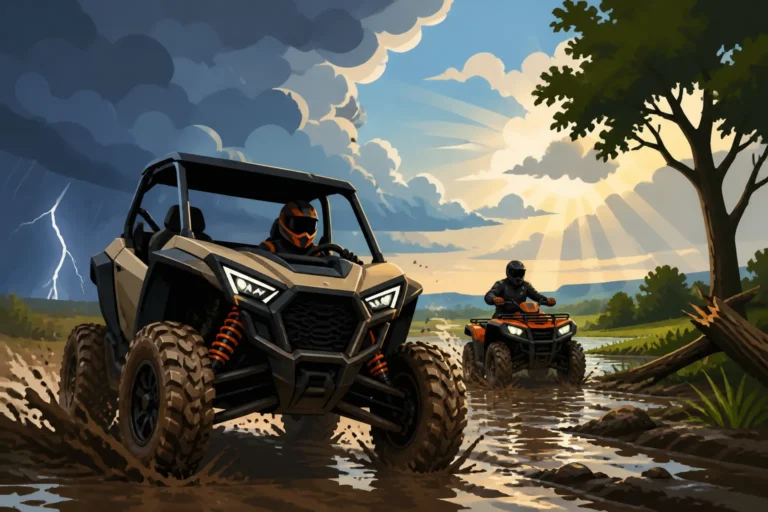
Getting to Blue Creek Off FM 1913
Blue Creek is easy to miss if you treat FM 1913 as the whole plan: the riding area sits beyond the highway, and navigation, permits, weather and machine-width rules all matter. This guide explains how to plan the approach, what to check before unloading, and how to ride responsibly near Lake Meredith without relying on guesswork at the trailhead.
Planning your route to Blue Creek
Use FM 1913 as your starting point, not your only direction
Blue Creek is an off-highway riding area associated with Lake Meredith National Recreation Area in the Texas Panhandle. FM 1913 is the key road reference for reaching the area, but the highway alone does not tell you where to turn, where to park, or which tracks are open for riding. Before leaving home, confirm the current approach and access information with official Lake Meredith visitor information.
If you are coming from Amarillo, Fritch or another Panhandle community, give yourself time to check the route before you are close to the riding area. Roads away from town may have fewer obvious signs and fewer convenient places to stop and sort out directions. It is much less stressful to review your route while parked than to pull over on an unfamiliar road with a trailer behind you.
Use more than one navigation reference. A phone map can be useful for the drive, while a dedicated off-road map can help you understand the surrounding trail network. Some riders use onX Offroad to plan a route and save map information before heading out. Treat any app as a planning aid rather than permission to ride: follow posted signs and official boundaries if a digital map and on-the-ground conditions do not agree.
Prepare for limited cell service and changing conditions
Do not assume you will have reliable mobile coverage all the way to the riding area or once you are riding. Save the route or relevant map information before you leave a town with service, and make sure your phone is charged. If you use onX Offroad, download the map information you need in advance rather than counting on a connection at the trailhead.
A simple backup helps. Write down the main road names and the turn or access point you have confirmed, and share your plan with someone who is not riding with you. If your group gets separated, a shared plan makes it easier to agree on a meeting point without everyone improvising different routes.
Check the weather and recent conditions before committing to the drive. Rain can make unpaved surfaces slippery, expose ruts, or leave sections unsuitable for riding. A map may show a route, but it cannot tell you whether a particular stretch is passable today. For a broader look at how conditions affect a Texas ride, see [Texas Trails After Heavy Rain].
Build your day around the right riding area
Blue Creek and Rosita Flats are separate Lake Meredith riding-area references, so do not assume directions or access notes for one automatically apply to the other. If you are comparing the two, review the specific information for [Riding the Rosita Flats OHV Area] as well as the Blue Creek access details before setting out.
Your choice may depend on the kind of machine you are bringing, how much time you have, and what the group wants from the day. A first-time visitor may prefer to keep the plan simple: arrive with enough daylight to find the parking and riding areas, review signs, and get everyone oriented before heading out. Avoid building a tight schedule around a long drive, unloading, riding, and packing up at the last minute.
| Before you leave | Why it matters |
|---|---|
| Confirm the Blue Creek access information | FM 1913 is a useful route reference, but you still need the correct access point |
| Save maps and directions | Cell service may not be dependable along the way |
| Check weather and area notices | Recent rain or closures can affect where riding is appropriate |
| Confirm permit and decal requirements | Local requirements and Texas OHV rules are separate questions |
| Check machine width and equipment | A route suitable for one machine may not suit another |
| Pack water, basic tools and recovery gear | Remote riding areas offer fewer chances to pick up forgotten supplies |
Permits, decals and riding rules
Separate the local permit from state requirements
A common source of confusion is treating every sticker or permit as the same thing. Lake Meredith may have its own OHV permitting or registration process, while Texas rules can impose separate requirements for riding on public land. Confirm what the recreation area requires for your machine and trip, and check whether any state decal or safety requirements apply to your circumstances.
Do this before loading up. If you arrive with the wrong paperwork or have not completed a required step, you may lose valuable riding time—or find that you cannot ride as planned. The Lake Meredith-specific information in [Why Lake Meredith's Free Permit Is Still Required] explains why a permit can matter even when it does not involve a fee. Check the official instructions for the current process rather than relying on an old sticker, another rider’s recollection or a forum post.
A Lake Meredith permit should not be confused with the Texas OHV decal. The decal has its own rules, and requirements can depend on where and how a machine is being operated. Review [The Texas OHV Decal Explained] and [Texas Rules for Riding Public Land] alongside Lake Meredith’s own guidance. If two sets of instructions appear to overlap, clarify them with the relevant land manager before your trip.
Check flags, machine width and posted boundaries
Flag requirements are easy to overlook when packing for a ride, especially if your machine is already loaded and tied down. Check the Lake Meredith rules for the required flag and how it must be displayed. The area-specific overview [Flags Required on Every Quad at Meredith] can help you understand what to verify before setting out.
Machine width is another practical issue. A trail or route shown on a map is not automatically suitable for every side-by-side or other wide machine. Look for posted width restrictions and confirm whether the route is open to your vehicle. The guide [Texas Rules for a Machine Over 50 Inches] offers useful context for riders whose machines may be wider than a typical quad.
Once you arrive, stay within signed or otherwise authorized riding areas. Do not assume that a visible track is open just because it looks established. It could be an access road, a closed route, or a track that crosses land where motorized riding is not allowed. When using onX Offroad or another mapping tool, compare the screen with signs on the ground and follow the stricter instruction when there is a conflict.
Make compliance part of the group briefing
Before anyone starts riding, take a few minutes to agree on basic expectations. Identify the riding boundary, the meeting point, and what to do if someone has a mechanical problem or loses sight of the group. Make sure everyone knows who is carrying the permit information and who has the route saved.
If your group includes children or inexperienced riders, make the plan especially clear. Set a pace that allows the least experienced rider to keep up safely, and agree that nobody rides beyond the group’s agreed limits. Texas requirements can also depend on a rider’s age, training and circumstances, so review the rules that apply rather than assuming a companion’s experience covers everyone. A relevant starting point is [Texas Rules for Riding Public Land].
Getting ready for the drive and ride
Load for a remote day, not a quick neighborhood outing
A trip to Blue Creek involves more than bringing the machine. Pack water, food, sun protection, a first-aid kit, basic tools, tire-repair supplies and any recovery gear suited to your vehicle and terrain. Keep essential items where you can reach them without unpacking the entire trailer.
Give your tow vehicle and trailer a quick check before departure. Confirm that the trailer is properly secured, the machine is tied down at suitable points, and the lights and tires are in good shape. Bring the tools needed to handle a loose tie-down or a minor issue at the parking area. Finding out that a strap is damaged after you have arrived is a frustrating way to start the day.
Think about heat as well as distance. The Texas Panhandle can feel exposed on an open ride, and the sun can take a toll even when the air does not feel especially humid. Carry more water than you think you will need, take breaks, and avoid pushing a tired rider to finish one more loop. In a group, check in with one another instead of assuming that quiet means everyone is fine.
Inspect the machine before unloading
A short pre-ride inspection can prevent a small problem from becoming a stranded-machine problem. Check tires, brakes, steering, throttle operation, fluid levels and visible fasteners. Look over the air filter if the machine has been sitting, and confirm that your lights and safety equipment are in working order where required.
For a side-by-side, make sure seat belts and doors or nets are ready for use. For a quad, check that the controls feel normal and that the tires are appropriate for the conditions you expect to encounter. If you notice a leak, a damaged tire or unusual steering before leaving home, deal with it there rather than hoping it will sort itself out on the trail.
Bring supplies that fit the machine, not just a generic tool roll. A tire plug kit is only useful if you know how to use it and have the right tools to access the tire. A small compressor, spare fuses and basic hand tools can be practical additions, depending on the vehicle. Keep your kit organized so you can find what you need without emptying every storage compartment into the dust.
Ride with a plan and leave room to turn back
At the start of the ride, take a moment to confirm where you are and which direction the group plans to travel. If you use onX Offroad, check your location against the official signs and your group’s agreed route. Do not let following a line on a screen distract you from the terrain, changing conditions or the people riding with you.
Ride at a pace that leaves room to react. Dust, uneven ground and changing visibility can make a familiar-looking track more challenging than expected. Keep a safe following distance, especially when the lead machine is climbing or slowing down. If visibility drops or the group stretches out, stop somewhere safe and regroup rather than continuing on the assumption that everyone is close behind.
Be willing to shorten the ride. A sudden change in weather, a tired child, a mechanical concern or a confusing junction is a good reason to adjust the plan. A successful day is not measured by how many trails you cover. It is the one where everyone gets back to the parking area safely, with enough daylight to load the machines and drive out without rushing.
A practical Blue Creek trip checklist
Before setting out
Confirm the current Blue Creek access route from FM 1913 and check official Lake Meredith information for closures, permits and riding-area notices. Save directions and maps while you still have service. If you are using onX Offroad, download the map details you plan to rely on and keep another navigation option available.
Then check the group and the machines. Verify that every rider understands the plan, that the vehicles are appropriate for the intended area, and that any required permit, decal or safety documentation is in order. Recheck weather and recent conditions close to departure, especially if rain has moved through the region.
At the riding area
Park only where permitted and read the signs before unloading. Confirm that the route you intend to ride is open to your machine, and make sure required flags or other equipment are correctly set up. Keep the group together while everyone gets oriented.
Before moving off, choose a meeting point and make sure each rider knows how to get back to it. If anyone is unfamiliar with the area, keep the first loop conservative. A short orientation ride is better than discovering deep into the day that the group is not comfortable with the route or conditions.
When it is time to leave
Do a headcount and a quick machine check before loading. Look for loose parts, tire damage, leaks or anything that may need attention before the drive home. Pack out trash and leave the area as you found it.
If you encountered a closure, confusing sign or access issue, make a note of it for your next visit and check official information before returning. A digital track can help you remember where you rode, but it should not replace current land-manager guidance. Good preparation makes the approach from FM 1913 less stressful and gives you more time to enjoy the ride once you reach Blue Creek.
Disclaimer
This article is for general informational purposes only and does not constitute professional advice. Laws, prices and regulations vary by location and change over time. Consult a qualified professional for guidance on your specific situation.