Helmets Required Every Minute at Barnwell
Barnwell Mountain’s helmet rule is easy to misunderstand if you’re used to riding on private land or at parks with different policies. At this East Texas off-road area, plan to wear a helmet every time you ride, even for a short trip between destinations. This guide explains how to prepare, what to check for ATV and UTV riders, and how to avoid an uncomfortable surprise at the trailhead.
What “Every Minute” Means at Barnwell
Treat the helmet rule as a park requirement
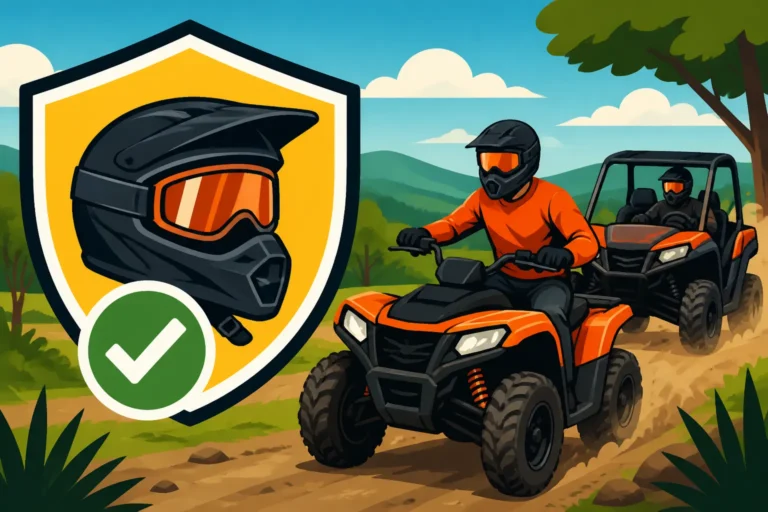
A helmet may not feel necessary for a slow ride from camp to a nearby trail, or while easing across a familiar section of terrain. But at Barnwell Mountain, riders should plan around the park’s helmet requirement rather than deciding for themselves when a ride seems risky enough to warrant one. If you’re operating or riding on an ATV or UTV, put your helmet on before the machine moves and keep it on throughout the ride.
That means not removing it for a quick connector, a brief trip between riding areas, or a slow section where you expect to stop again almost immediately. A short ride can still involve loose rock, ruts, unexpected traffic, or another rider rounding a bend. The practical rule is simple: helmet on whenever you’re riding, not just when the terrain looks challenging.
Barnwell Mountain Recreation Area is a popular place to explore varied off-road terrain, and visitors may encounter conditions that change from one trail section to another. If you’re planning a first visit, review [Barnwell Mountain Recreation Area] and the park’s current visitor rules before loading up. A rule that seems strict at first can become one less decision to make once the riding day gets busy.
Park policy can be stricter than state law
A common source of confusion is the difference between Texas helmet requirements and a riding area’s own rules. State requirements depend on the circumstances and the type of vehicle and rider involved. A private park can also set conditions for riding on its property. Visitors should follow the rule that applies at the place they’re riding, even if they believe a different rule might apply elsewhere.
That distinction matters for adults who usually ride on a ranch, family land, or a property where helmets are not required by the owner. It also matters for riders who have completed a course or have experience riding without a helmet. Those details do not give visitors permission to ignore a park’s conditions. At Barnwell, plan to comply with the park rule for the whole ride.
For a broader look at the difference between park policies and Texas requirements, see [Texas Parks That Require Helmets at All Times], [Texas Helmet Law for ATV Riders], and [Texas Helmet Law for UTV Drivers]. When planning a specific trip, check Barnwell’s own rules as well. Do not assume that a helmet policy at another Texas park carries over to this one.
Choosing Helmets for ATVs and UTVs
Fit the helmet to the rider, not just the machine
A helmet that belongs to the family but doesn’t fit the person wearing it is not a good solution. A loose helmet can shift during a ride, while one that feels painfully tight may be distracting enough that the rider keeps adjusting it. Before leaving home, have each rider try on their own helmet and check that it sits securely, feels stable, and does not obstruct their vision.
Fit is especially easy to overlook when several people share riding gear. A helmet that works for one adult may not fit another adult, a teenager, or a child. If you’re bringing young riders, confirm the fit in advance rather than hoping you can solve it at the trailhead. The same goes for guests joining your group: ask about their gear early, not after everyone has unloaded.
When shopping or packing, choose a helmet intended for off-highway riding and check its labeling and condition. Do not rely on a helmet that has been damaged, has an uncertain history, or no longer fits properly. For families comparing gear needs, [Texas ATV Gear Costs for a Family] can help you think through the broader equipment list, while [Texas ATV Safety Certificate Requirements] is useful for understanding rider preparation beyond helmets.
Account for goggles, glasses, and UTV seating
A helmet is only one part of a comfortable setup. Dust, branches, and wind can make eye protection important, particularly when the machine ahead of you is kicking up dirt. Try the helmet with the goggles or glasses you plan to wear. If the combination presses uncomfortably on your face, fogs quickly, or leaves a gap where dust can enter, adjust it before the ride rather than fighting with it on the trail.
UTV riders should also check that their helmets work comfortably with the vehicle’s seat belts and seating position. A full-face helmet or another suitable style may be preferred by some riders, but the key is to wear an appropriate, properly fitted helmet and to use the vehicle’s safety equipment as intended. A roll cage is not a reason to skip a helmet when the park requires one. Neither is a windshield, a low speed, or a passenger seat that feels protected.
Before the group heads out, check that each rider can turn their head, see clearly, and operate the vehicle without the helmet catching on the seat or interfering with a belt. If you’re bringing a wide side-by-side, confirm that the park’s access and vehicle rules suit your machine as well. [Texas Parks That Allow Full-Size Rigs] may help you think through that separate planning question.
Preparing for a Full Day of Riding
Pack for breaks without treating them as exceptions
Wearing a helmet for an entire ride can feel warm or tiring, especially during a hot East Texas day. That discomfort is real, but the answer is to plan better breaks rather than removing the helmet while the machine is moving. Park safely in an appropriate place before taking off gear, drinking water, or making adjustments. Keep helmets where riders can find them again quickly when it’s time to continue.
A useful routine is to check everyone’s gear before starting the engine: helmet secured, eye protection ready, clothing comfortable, and water packed. If a rider’s helmet feels too hot or begins to rub, stop in a safe place and address the fit. A small adjustment at the beginning can prevent a sore forehead, pressure point, or repeated distraction later in the day.
Heat and exertion can make a long ride harder than expected. Plan rests, drink water, and avoid pushing the group to continue simply because the trail plan says there are more miles ahead. [Texas Riding Seasons and Heat] offers related planning context for managing warm-weather rides. A route app such as onX Offroad can help you think through where you intend to go, but use the park’s official information for access, closures, and local rules.
Plan routes around the group’s ability
Helmet compliance is only one part of a safe day. A group can wear appropriate gear and still have a rough experience if the chosen route is too difficult for the least-experienced rider or unsuitable for one of the machines. Before setting out, talk openly about experience, comfort with obstacles, and how the group will respond if someone wants to turn around.
It helps to agree on a simple group plan: who leads, who stays at the back, where everyone should stop, and what to do if the group gets separated. Do not let a confident rider’s pace set the standard for a beginner, a child, or a passenger who is uneasy. If someone needs a break, stop in a safe location where the group can regroup without blocking other riders.
Review the trail options before riding and match them to the machines and people in your group. [Texas Trail Difficulty by Park] is useful background when comparing what different riding areas offer. You can also use a planning tool such as onX Offroad to review your intended route in advance, then confirm it against Barnwell’s posted information. Digital maps are a planning aid, not permission to enter closed trails or ride beyond your ability.
A Simple Helmet and Trailhead Checklist
Check every rider before the first move
A quick check before leaving the parking or staging area can prevent an avoidable trip back to the vehicle. Ask each person to put on their helmet, fasten it correctly, and check their eye protection. Make sure a child’s helmet is not borrowed from an adult if it does not fit, and do not let an unfamiliar passenger assume that a side-by-side’s cage replaces personal gear.
Use this checklist before starting:
- Confirm the helmet is appropriate for off-highway riding and fits the wearer.
- Check for visible damage or a loose, unreliable fastening system.
- Put on goggles or other suitable eye protection and confirm clear vision.
- Check that the helmet does not interfere with the UTV’s belt or seating position.
- Make sure every rider understands that the helmet stays on while riding at Barnwell.
- Review the planned route, group roles, and places to stop safely.
- Check park rules and trail conditions before heading out.
If a helmet is missing, damaged, or a poor fit, do not treat it as a minor inconvenience to work around. Change the plan, get suitable gear, or postpone that person’s ride. Having one rider sit out can be frustrating, especially after a long drive, but it is better than reaching the trail and discovering that the group cannot meet the park’s requirements safely.
Keep the rule easy to follow all day
The easiest way to avoid repeated arguments is to agree on the rule before anyone starts riding. Tell children and guests clearly: at Barnwell, helmets are part of the riding gear, not an optional choice for certain trails. That simple expectation prevents a rider from taking a helmet off because the group is moving slowly or because the next stop appears close.
For a family outing, adults should model the same behavior they expect from younger riders. If a parent removes a helmet during a short ride, a child may reasonably assume the rule is flexible. Keep the message consistent, take breaks in safe locations, and make sure everyone knows where their gear is stored when they are not riding.
The same preparation helps if your group visits other parks later. Policies can differ, so check the rules for each destination rather than assuming the next place will follow Barnwell’s approach. Keep helmets in good condition, confirm fit as children grow, and make gear checks part of loading up. If you use onX Offroad or another mapping tool to plan a route, pair that planning with a separate check of the park’s safety rules and posted trail notices.
Disclaimer
This article is for general informational purposes only and does not constitute professional advice. Laws, prices and regulations vary by location and change over time. Consult a qualified professional for guidance on your specific situation.