Barnwell’s Cabins and Bunkhouses
A riding weekend at Barnwell Mountain can lose its easygoing feel when the group arrives tired, the gear is scattered, and nobody knows whether a cabin or bunkhouse fits the trip. Choosing your sleeping setup before you leave helps you plan meals, packing, trail time, and check-in with fewer surprises. Here’s how to think through Barnwell’s cabins and bunkhouses and prepare for an overnight ride near Gilmer.
Choosing between a cabin and a bunkhouse
Barnwell Mountain Recreation Area is an off-highway riding destination near Gilmer in East Texas. When you’re planning to stay overnight, the best lodging choice depends less on which option sounds more comfortable and more on your group’s size, budget, privacy needs, and riding schedule. The first step is to confirm which accommodations are available for your dates and what each one includes.
When a cabin makes sense
A cabin can be a practical choice when your group wants a more private place to rest between riding days. It may suit a family, a couple, or a small group that prefers to keep belongings together and have a calmer place to unwind after a dusty day. If someone in your group needs a quieter evening or a little more personal space, cabin-style lodging may feel easier than sharing a large sleeping area.
Don’t assume that “cabin” means a fully equipped vacation rental. Before booking, ask what sleeping arrangements, furniture, linens, kitchen facilities, cooking equipment, bathroom access, and climate control are provided. The name of an accommodation alone doesn’t tell you whether you should bring bedding, towels, food-storage containers, or a cooler.
A cabin also doesn’t remove the need to plan for the riding environment. You’ll still want clothes and shoes that can handle dust, mud, and changing weather, plus a place to keep dirty gear separate from clean bedding. Bring a few large bags or storage tubs so muddy boots and riding clothes don’t end up spread across the space.
When a bunkhouse fits better
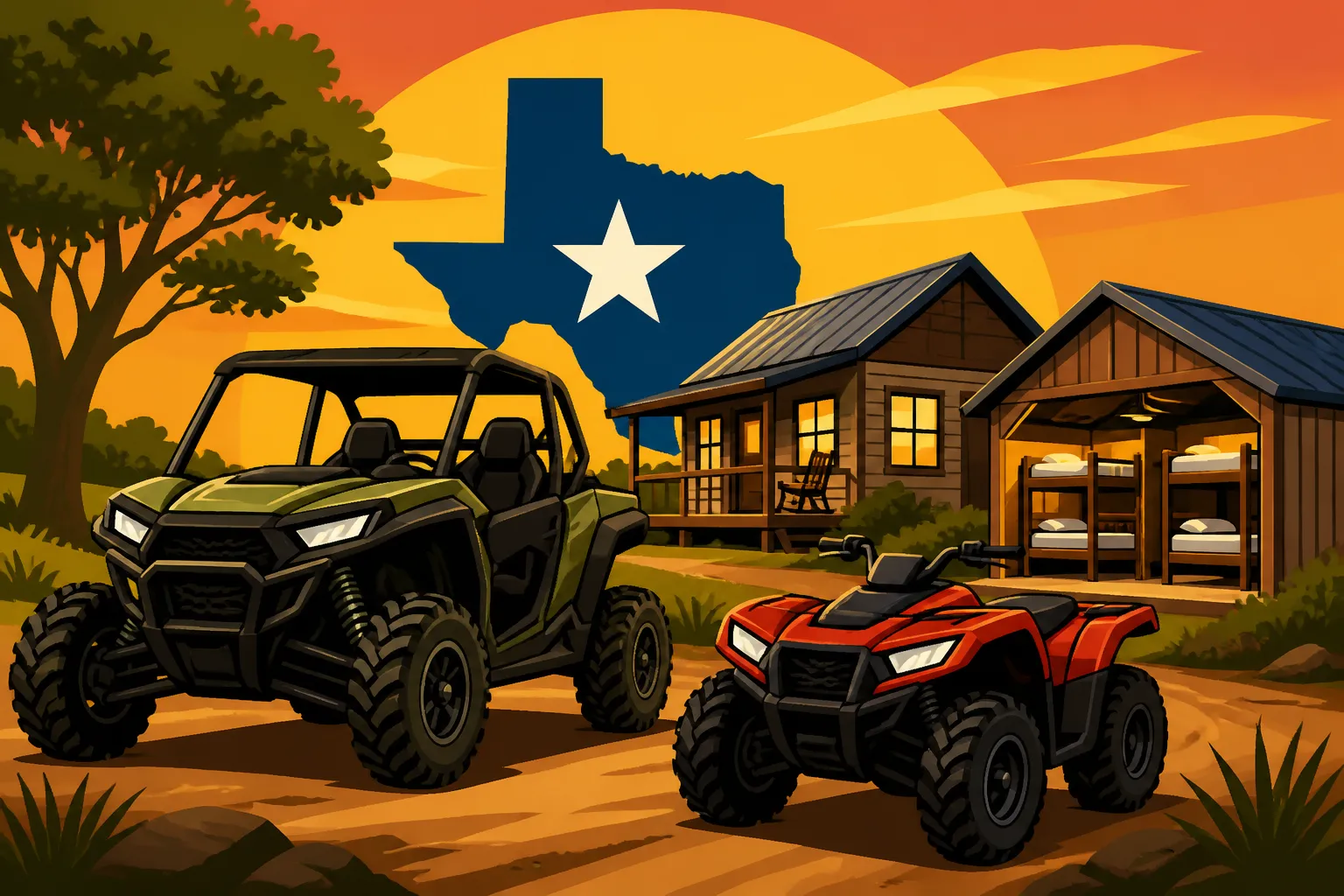
A bunkhouse may be a better match for a larger group, a club trip, or friends who are comfortable sharing common sleeping space. It can make group logistics simpler: riders can stay near one another, coordinate morning departures, and talk through the next day’s plans without arranging separate lodging.
Shared lodging asks a little more of everyone. Agree ahead of time on lights-out expectations, alarms, where gear can be stored, and how the group will keep common areas tidy. A rider who wakes early for a trail start can easily disturb others if helmets, keys, and clothing are packed noisily in the middle of the room.
Ask about the bunkhouse layout rather than relying on the label. Confirm the number and type of sleeping spaces, whether bedding is supplied, how bathroom facilities work, and what rules apply to cooking or storing food. If someone in your party has mobility, privacy, or sleep needs, make sure the arrangement will work for them before you reserve.
Compare your overnight options
Cabins and bunkhouses aren’t the only way to build an overnight trip. A tent or RV may suit riders who already have camping gear and want to bring their own setup. The right choice depends on the facilities available during your visit, so check Barnwell’s current information before planning around a particular amenity.
| Option | Often a good fit for | Questions to settle before you go |
|---|---|---|
| Cabin | A family or smaller group wanting more privacy | What furnishings and facilities are included? |
| Bunkhouse | A club, group of friends, or riders comfortable sharing | How are sleeping spaces arranged, and what shared-space rules apply? |
| Tent camping | Riders who already own suitable camping gear | Where is camping permitted, and what facilities can campers use? |
| RV or trailer setup | Travelers bringing their own sleeping and storage space | Are the required sites or hookups available for your dates and vehicle? |
For a broader look at choosing a place to stay during a riding trip, see [Camping at a Texas OHV Park] and [Texas OHV Parks With Cabins]. For details focused on the local setting, [Camping Options at Barnwell Mountain] is also a useful related read.
Planning your stay before you arrive
An overnight riding trip goes more smoothly when you treat lodging and trail planning as one plan. Your accommodation determines what you need to pack, while your intended ride affects how early you need to be up, what tools and gear should stay accessible, and whether the group can comfortably return before dark.
Verify the details for your dates
Before building an itinerary around a cabin or bunkhouse, confirm availability, check-in and check-out instructions, sleeping arrangements, included amenities, and any restrictions that affect your group. Ask whether you need to bring bedding or towels, whether food preparation is permitted, and where you’re expected to park vehicles and trailers. Clarifying these details ahead of time is much easier than discovering a missing item after the shops are closed.
Also ask what happens if weather disrupts your plans. Heavy rain can affect trail conditions, and muddy routes may be unsuitable or closed. Confirm how the park communicates changes and whether your reservation or arrival plan needs to change if riding conditions are poor. Don’t assume that having a place to sleep means every trail will be open.
Keep your booking information and the park’s contact details somewhere the group can access. If several people are arriving separately, send everyone the same check-in instructions, meeting point, and lodging expectations. A shared note can prevent the familiar problem of one rider arriving with bedding while another assumes it is provided.
Pack for lodging and riding separately
It helps to organize your gear into two categories: what you need at the accommodation and what you need on the trail. Keep sleeping clothes, toiletries, bedding if required, and food items in bags that can stay clean. Store riding boots, helmets, gloves, rain gear, and tools separately so dirt doesn’t migrate through your sleeping area.
For a cabin or bunkhouse, pack a small amount of basic cleanup gear as well. A towel for dusty hands, a bag for dirty clothing, and a pair of shoes reserved for indoors can make shared spaces more comfortable. If you’re bringing food, use containers that seal well and follow the facility’s rules for storage. Don’t leave food scraps or open packaging where they could attract pests.
Your trail kit should be ready before you head out each morning. Check that helmets, protective equipment, water, snacks, and machine-specific supplies are packed and easy to reach. For navigation, onX Offroad can help you review route information and organize a ride plan, but use the park’s current trail guidance as the authority for closures, access, and local rules. Save any information you may need before leaving areas with reliable cell service.
Make a realistic weekend schedule
Avoid planning every hour as if the group will arrive with unlimited energy. Travel, unloading, check-in, and getting machines ready all take time. If you reach the area late in the day, focus on settling in, confirming the next morning’s plan, and getting rest rather than squeezing in an ambitious ride.
For a two-day visit, agree on a meeting time and a simple plan before the first ride. Choose a route that suits the least experienced rider in the group, and decide where everyone will regroup if the group gets separated. A map app such as onX Offroad can help riders review their intended route in advance, but it’s wise to keep a clear plan for staying together and following posted park guidance.
Leave some flexibility in the schedule. A machine may need attention, a rider may want a slower pace, or weather may change the day’s conditions. Planning a less demanding first ride gives everyone a chance to learn the terrain and settle into the weekend before tackling a longer outing.
Getting ready for Barnwell’s trails
The place you sleep is only one part of the trip. Barnwell is known as a riding destination with trails and terrain that can make a day feel full even when you’re staying close to the park. Choose your route with your group’s experience, machine, and current conditions in mind rather than assuming that more hours on the trail automatically make for a better weekend.
Match trails to the group
Before setting out, talk honestly about the group’s riding ability and machines. A confident rider on familiar terrain may be comfortable with a route that feels stressful to a newcomer. If riders have different experience levels, agree on an easier shared route or divide into groups only when everyone understands the meeting plan and has a way to communicate.
Machine size and capability matter too. A route that suits a narrow ATV may not be appropriate for a wider side-by-side, and a vehicle’s tires, clearance, and turning space can affect how comfortable it feels on uneven terrain. Check current park guidance and route restrictions for your machine rather than assuming that a trail is suitable because another rider used it.
If you’re new to the area, keep the first outing conservative. Take time to notice trail markings, intersections, and the surface under your tires. Use a navigation tool such as onX Offroad as a planning aid, not a reason to leave marked routes or ignore posted rules. The park’s official guidance and signs take priority over a route displayed in an app.
Prepare for East Texas weather
Weather can change the character of a ride quickly. Rain may leave sections muddy or make trails unsuitable, while hot, humid conditions can make a long day more tiring than expected. Check the forecast shortly before leaving and again before riding, and confirm whether the park has issued any trail updates.
Pack for conditions rather than for a perfect forecast. A lightweight rain layer, spare dry clothes, and extra drinking water can make an uncomfortable day more manageable. Keep an eye on younger riders and anyone who is not used to riding in heat, and build in breaks instead of waiting until someone is already exhausted.
After a wet ride, take care with both your machine and your lodging. Mud can hide damage or collect around moving parts, so inspect the vehicle when you return. Brush off gear outdoors and keep wet clothing contained. For more seasonal planning, see [Texas Riding Seasons and Heat] and [Texas Trails After Heavy Rain].
Leave time for the non-riding parts
The practical details can take longer than expected: unloading a trailer, parking machines, finding sleeping spaces, preparing food, and cleaning up after a ride. Assigning small jobs before arrival can keep one person from doing all the work. For example, one rider can handle the lodging check-in while another organizes the machines and a third gets food ready.
Think about where your machines and riding gear will be kept overnight. Confirm any parking or storage rules with the park, and don’t leave valuables or loose equipment unattended. Bring only what you need into shared sleeping areas, especially in a bunkhouse where floor space and storage may be limited.
A tidy departure is part of a good stay. Before leaving, collect trash, check for personal items, follow the accommodation’s cleanup instructions, and make sure the group has packed all helmets, keys, tools, and chargers. A quick room check can save a frustrating return trip after you’ve already started driving home.
Making a comfortable weekend plan
Barnwell’s cabins and bunkhouses can make a riding weekend feel easier, but the experience depends on matching the accommodation to the people in your group and checking the practical details before you travel. A little preparation around bedding, food, parking, trail conditions, and group expectations can prevent the small annoyances that tend to grow when everyone is tired.
Use this booking checklist
Before you finalize your overnight plan, confirm:
- Which lodging options are available for your dates.
- How sleeping spaces are arranged and how many people the space can accommodate.
- Whether bedding, towels, cooking facilities, or other essentials are provided.
- What bathroom, parking, and storage arrangements are available.
- What check-in, check-out, and cleanup instructions apply.
- What rules affect food, pets, noise, and shared spaces.
- How the park announces weather-related trail changes or closures.
- What your group should do if arrival times differ.
These questions aren’t fussy details. They help you avoid showing up with the wrong expectations, especially when several households or riders are sharing the same accommodation. If a detail matters to your group, confirm it directly before you travel.
Build a simple itinerary
A useful itinerary doesn’t need to be complicated. Note the travel and check-in plan, the group’s first meeting time, a suitable first ride, and a backup plan if the weather interferes. Share the information with everyone, including the person towing the trailer and anyone arriving separately.
For riders making a longer trip, consider arranging supplies before reaching the park. Gilmer is the closest community to Barnwell, while Longview and Tyler are larger regional hubs for travelers coming through East Texas. Plan fuel, food, and machine supplies with your route in mind rather than assuming you’ll want to leave the area once the group is settled.
If you’re comparing this stay with other overnight riding destinations, [Texas Parks With Overnight Camping] and [Texas Riding Areas Worth a Weekend] can help you think through the broader trip. For background on the riding destination itself, see [Barnwell Mountain Recreation Area] and [Barnwell Mountain's 1,850 Acres].
Keep expectations flexible
A successful weekend doesn’t depend on riding every available hour. Sometimes the best plan is a shorter route, a relaxed meal, and an early night so everyone is ready for the next day. A cabin or bunkhouse is most useful when it supports the trip you actually want—not an overpacked itinerary that leaves the group too tired to enjoy it.
If you’re traveling with a mixed-experience group, ask what each person needs to feel comfortable. One rider may want an early trail start, while another may need a slower morning or a quieter place to rest. Clear expectations make shared lodging easier and help keep the focus on the ride rather than on avoidable disagreements.
Before departure, check the park’s current accommodation information, trail guidance, and rules directly. That final check helps align your plans with what’s available and what conditions allow, so the group can arrive prepared and enjoy the time it has together.
Disclaimer
This article is for general informational purposes only and does not constitute professional advice. Laws, prices and regulations vary by location and change over time. Consult a qualified professional for guidance on your specific situation.