Texas Riding Areas Within Two Hours of a City
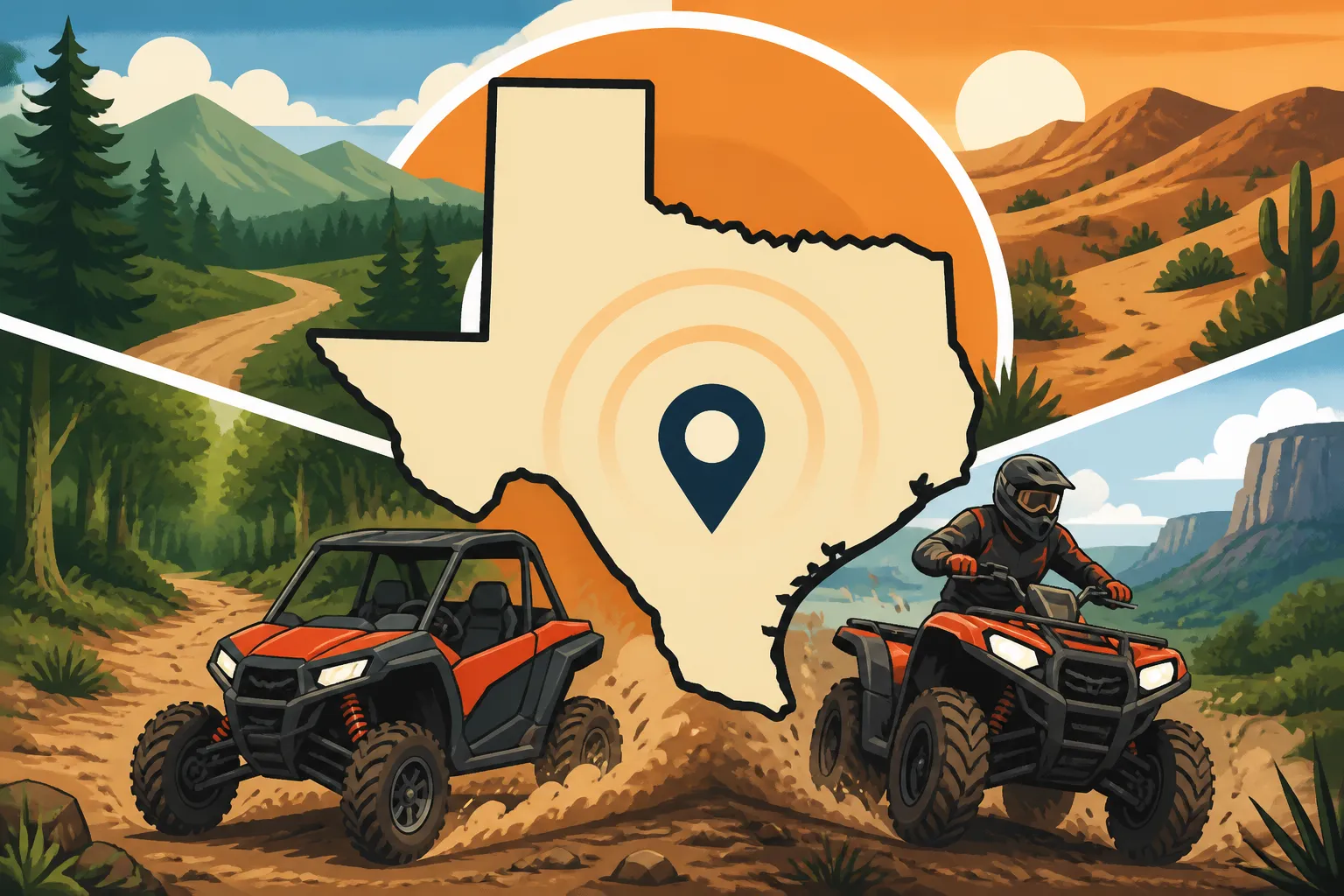
A two-hour drive can feel like a small ask until you add a trailer, weekend traffic, park hours, and a trail that turns out to be too narrow for your UTV. This guide matches Texas cities with nearby riding areas, explains what kinds of machines and terrain to look for, and helps you check access details before you load up.
How to Choose a Texas Riding Area Within Two Hours
Treat the drive time as a planning range
“Within two hours” depends on where you start, not just which city is on the map. A ride near downtown Austin may be a very different trip from the same park if you’re leaving from Georgetown or Bastrop. Add a trailer, traffic, fuel stops, and a slower final stretch on rural roads, and a route that looks easy online can take longer than expected.
It also helps to distinguish between reaching a park and reaching a usable trail. Some places are managed riding parks with defined entry procedures; others are public-land trail systems with specific permits, closures, or machine-width limits. Before committing, confirm that the area is open to your type of vehicle and that the trailhead you plan to use is accessible.
Use a map app for the drive, then check the park or land manager’s current rules separately. Tools such as onX Offroad can help you explore routes and understand the surrounding terrain, but a mapped line is not permission to ride. For a broader look at destinations, start with [Texas OHV Parks by Region] and [Texas Riding Areas Within Two Hours of a City].
Match the destination to your machine
A sport quad, youth ATV, and full-size side-by-side do not have the same trail options. A trail network may welcome motorcycles and ATVs but restrict wider machines, while a managed park may offer a mix of narrow wooded paths, open areas, and routes for larger rigs. Check the specific vehicle rules rather than assuming that “OHV trails” means every off-road vehicle is allowed.
Width matters especially on public-land trails. The Sam Houston National Forest trail system, for example, has a 50-inch width limit on its OHV trail. That can rule out many side-by-sides even when the location is otherwise close and appealing. If you ride a wider UTV, look for a park that explicitly accommodates full-size machines. [Texas Rules for a Machine Over 50 Inches] explains why checking this detail early can save a frustrating drive.
Riding Areas Near Dallas and Houston
Dallas-Fort Worth options
Northwest OHV Park near Bridgeport is one of the more practical choices for riders coming from the western side of the Dallas-Fort Worth area. It is a managed riding destination, which can make it easier to plan around a particular outing than a less developed area. Check its current operating information and vehicle rules before leaving, especially if you are bringing a side-by-side or riding with children.
Trophy Club Park, near Grapevine Lake, offers another option within the metro area. Its location can suit riders who want a shorter outing rather than a long weekend expedition. As with any park close to a large city, don’t assume that proximity means unrestricted access: confirm which vehicles are permitted, where riding is allowed, and whether the trails are open on your intended day. The related guide [Texas OHV Parks Near Dallas] can help you compare more local possibilities.
If you are willing to extend the drive beyond the strict two-hour window, a larger destination farther east may be worth considering for a full weekend. Don’t squeeze a distant park into a short day just because the map’s estimate looks manageable; a late arrival can leave you with little time to ride.
Houston-area options
For riders north of Houston, the Sam Houston National Forest OHV trail near New Waverly is a notable public-land choice. It offers a different feel from a privately managed park: the forest setting and trail network are the attraction, but riders need to pay attention to access requirements, trail conditions, and vehicle limits. The trail system is not a universal fit for every UTV, so measure your machine before making the drive.
The forest trail is particularly appealing to riders whose machines meet the width restriction and who enjoy a wooded route rather than a wide-open riding area. Check trail status before departure, since wet soil can affect whether riding is allowed. For practical details on getting there and preparing, see [Riding the Sam Houston Trail] and [Texas National Forest Permits].
| Starting area | Nearby riding option | Best fit to investigate | Important check before leaving |
|---|---|---|---|
| Dallas-Fort Worth | Northwest OHV Park near Bridgeport | Riders looking for a managed riding park | Current access, vehicle rules, and operating details |
| Dallas-Fort Worth | Trophy Club Park near Grapevine Lake | A shorter metro-area outing | Permitted vehicle types and which areas are open |
| North Houston | Sam Houston National Forest OHV trail near New Waverly | Riders with machines that meet trail limits | Trail status, permits, and the 50-inch width limit |
| Austin or San Antonio | Hidden Falls Adventure Park near Marble Falls | Riders seeking a managed park with varied terrain | Current trail access and rules for your machine |
| El Paso area | San Felipe Park near Fabens | Riders looking for a nearby regional option | Entry requirements, riding zones, and machine eligibility |
Riding Areas Near Austin, San Antonio, and West Texas
Austin and San Antonio
Hidden Falls Adventure Park near Marble Falls is a strong option to investigate if you are based in Austin. It is a managed off-road park with varied terrain, so riders can plan around more than one style of outing. Before booking or loading up, check which areas are open and whether the routes you want suit your vehicle’s width, ground clearance, and experience level.
For San Antonio riders, Hidden Falls may also be reachable as a longer day trip, although the actual drive depends on your starting point and traffic. If you are near the outer edges of the metro area, compare the full route against your expected ride time rather than treating the city-to-city estimate as exact. The guides [Hidden Falls Adventure Park at Marble Falls] and [Texas OHV Parks Near Austin] are useful starting points when comparing a park day with a weekend visit.
When you’re bringing a newer rider, avoid choosing a destination solely because it has the biggest trail network. A manageable route, easy breaks, and an area where your group can stop without blocking traffic can make the day more enjoyable than a difficult trail that stretches a beginner’s confidence.
El Paso and the Panhandle
San Felipe Park near Fabens gives El Paso-area riders a closer option to investigate than many of the state’s better-known destinations. West Texas distances can make even a nearby outing feel substantial, so check the route, fuel stops, and the park’s entry details before you set out. Confirm that the site allows your specific vehicle; the word “park” alone doesn’t tell you whether a location is open to ATVs or UTVs.
For Lubbock-area riders, Lake Mackenzie is another regional destination to research. It can offer a useful alternative to driving across the state, but the exact riding access and permitted areas should be confirmed with the local land manager before the trip. Use [Riding San Felipe Park at Fabens] and [Riding the Lake Mackenzie Trail System] as starting points for planning.
Regional options are especially worth checking for local restrictions. A road leading toward a lake, river, or recreation area is not automatically an OHV trail, and access may vary by section. onX Offroad can help you study the approach and nearby terrain, but use official park or land-manager information to confirm where riding is allowed.
Plan the Ride Before You Load the Trailer
Confirm access, permits, and trail conditions
Make a short pre-trip checklist and work through it a day or two before you leave. Confirm that the riding area is open, that your vehicle type is allowed, and that any permits or decals required for the land are handled. Public-land trails and managed parks may have different rules, so don’t carry assumptions from one destination to another.
Ask specific questions if the published information is unclear: Are UTVs allowed, or only motorcycles and ATVs? Is there a width limit? Are there separate rules for youth riders? Do riders need to stay on marked trails? Are there wet-weather closures? A quick check can prevent a long drive ending at a closed gate or a trailhead your machine cannot use. For public-land basics, see [Texas Rules for Riding Public Land] and [Texas Rules for Riding a Closed Trail].
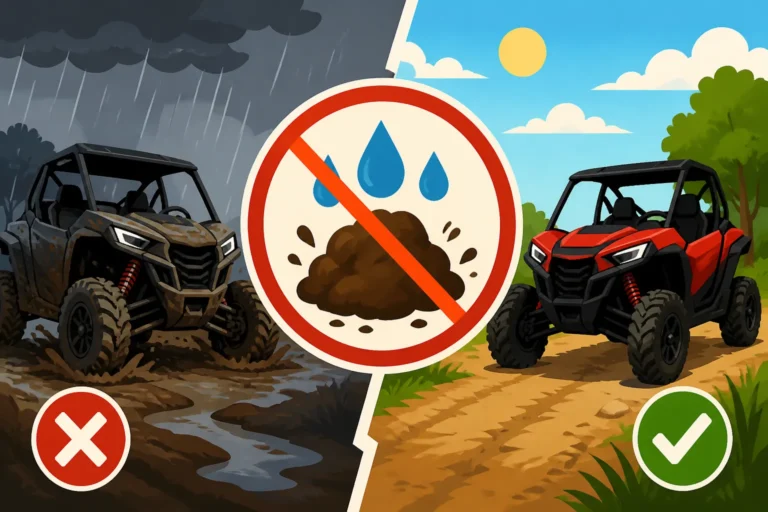
Trail conditions deserve their own check, particularly after heavy rain. Clay soil can become slippery or vulnerable to damage, while a dry route may be dusty and rough. Park staff or land managers can often clarify what conditions to expect. Bring enough water, basic recovery gear, and a way to contact your group if riders get separated.
Make the outing work for your group
Think through the people as carefully as the machines. A family with young riders may need shorter loops, frequent stops, and a place to take a break away from moving traffic. A group with mixed experience can agree on a pace and route before setting off, rather than discovering halfway through that one rider is uncomfortable with the terrain.
For a longer day, plan a realistic arrival time. Unloading, checking in, preparing gear, and airing down tires all take time. If you’re driving from a major city on a weekend, leave room for congestion and avoid building your schedule around the best-case map estimate. Keep an alternate destination or non-riding plan in mind if the park is closed or the trail conditions are unsuitable.
onX Offroad can be useful for reviewing route context and keeping a group oriented, especially when you are comparing areas before a trip. Treat any digital route as a planning aid, not a substitute for signs, closures, property boundaries, or staff instructions. The safest plan is one that matches your machine, your group’s skill level, and the rules of the land you’re visiting.
Use a simple comparison before choosing
When two destinations seem equally convenient, compare the details that affect your actual day rather than focusing only on distance. A closer trail may have a width restriction that excludes your UTV. A farther managed park may offer a better fit for a mixed group. A public forest trail may appeal to experienced riders, while a first-time family may prefer clear check-in procedures and a defined riding area.
| Planning question | Why it matters |
|---|---|
| Is my ATV or UTV explicitly allowed? | Some areas restrict vehicle types or machine dimensions. |
| Is there a width limit? | A machine that is too wide may not fit a trail even if it is otherwise permitted. |
| Is the site open and are trails usable? | Closures, weather, and maintenance can change access. |
| Are permits, decals, or passes required? | Requirements can differ between public land and managed parks. |
| Does the terrain match our experience? | A challenging route can turn a fun outing into a stressful one. |
| How much riding time remains after the drive? | A long round trip may make an overnight stay more practical. |
Choosing a Texas riding area within two hours is less about finding the closest pin on a map and more about finding a place that fits your vehicle, your riders, and your plans for the day. Check access directly, verify machine limits, and leave enough room in the schedule for the drive and the trail.
Disclaimer
This article is for general informational purposes only and does not constitute professional advice. Laws, prices and regulations vary by location and change over time. Consult a qualified professional for guidance on your specific situation.