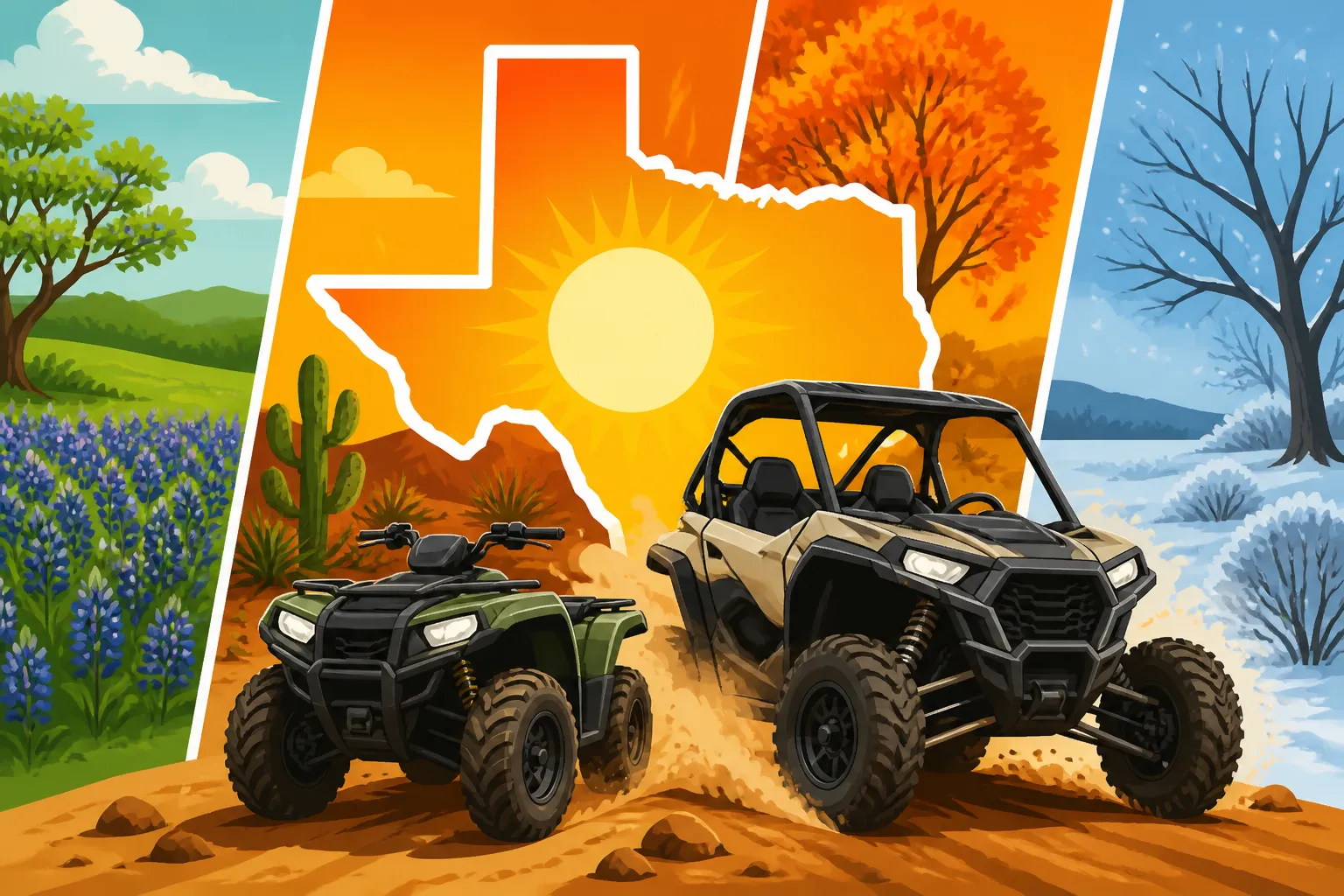
Texas Riding Seasons and Heat
Texas riding conditions can change from comfortable to punishing in a single afternoon, and a trail that looked manageable on a map may be muddy, dusty, or closed when you arrive. This guide explains what each season tends to bring, how heat affects riders and machines, and how to plan a safer Texas ATV or UTV ride without letting weather ruin the day.
How Texas Riding Seasons Shape Trail Conditions
Expect different weather across a very large state
Texas does not have one dependable riding season. A cool, dry morning in the Panhandle can feel nothing like a humid afternoon in the Piney Woods, while the Hill Country may be dry even when parts of East Texas have had recent rain. A seasonal plan is useful, but the conditions at your specific park or riding area matter more than the calendar.
Broadly, fall, winter, and spring can offer more comfortable temperatures than summer, but none guarantees perfect trail conditions. Cold snaps can make exposed rides uncomfortable, spring storms can turn dirt into slick mud, and warm days can arrive early in the year. Even in winter, sun exposure and physical effort can make a long ride feel hotter than expected.
The terrain changes the experience, too. Rocky trails around the Hill Country may remain rideable after conditions that would make a clay-heavy trail difficult. Sandy areas can be tiring in hot weather, while wooded trails may offer shade but also more humidity. In the Panhandle, wind and sun exposure can make a mild temperature feel much harsher.
Instead of asking only, “What season is best?” ask what kind of terrain you want, how much heat your group can handle, and whether recent weather has affected the route. For broader destination ideas, [Texas OHV Parks by Region] can help you think about how different parts of the state fit your riding plans.
Use the season as a starting point, not a forecast
A seasonal pattern is helpful for packing and scheduling, but it is not a substitute for checking the forecast close to departure. Look at temperatures for the hours you will actually be riding, not just the daily high. A ride that begins early may still end during the hottest part of the day, especially if your group is slow-moving or takes frequent breaks.
Check for more than air temperature. Rainfall in the days before your trip can affect trail grip, creek crossings, low-lying sections, and park access roads. Wind can increase dust or chill riders on exposed routes. Cloud cover may reduce direct sun, but it does not remove the risks of exertion, dehydration, or humid conditions.
Before leaving home, confirm that the riding area is open and that the specific trails or facilities you intend to use are available. Public-land routes and privately operated parks can have different closures, rules, and notification channels. A trail shown on a map is not necessarily open for riding on the day you visit.
| Season | Common planning concern | Helpful approach |
|---|---|---|
| Spring | Rapid weather changes, storms, and soft trails | Check recent rain and trail status before driving |
| Summer | Heat, sun exposure, and demanding exertion | Ride early, plan shaded breaks, and carry water |
| Fall | Changing temperatures and busier weekends | Pack layers and confirm park access |
| Winter | Cold starts, wind, and shorter daylight | Dress for the morning and allow time to finish before dark |
Keep the table in perspective: Texas conditions vary widely, and local trail status is more useful than a general seasonal description. For a practical overview of heat-specific concerns, see [Heat Risk on a Summer Ride].
Spring Riding in Texas
Plan around storms and wet ground
Spring can bring comfortable riding temperatures, but it can also bring fast-changing weather. A sunny morning does not guarantee a clear afternoon, and a storm can change the surface of a trail before your group has finished its route. Check the forecast for the riding area itself, particularly if you are traveling from a different part of the state.
Rain does not affect every riding area in the same way. Rocky ground may drain differently from clay or compacted dirt, and shaded low spots can remain wet after open areas appear dry. Mud can hide ruts, reduce traction, and make it harder to stop or steer. On a side-by-side, a slick slope or deeply rutted track can create problems even for a driver who is comfortable in dry conditions.
Do not assume that a park is rideable just because it has reopened after rain. Some managers close trails to protect the surface, and a route that is technically accessible may still be inappropriate for your machine or skill level. Check official updates before loading the trailer, and respect posted barriers if you arrive to find a closure.
If you are unsure how much rain is too much, use the park’s guidance rather than trying to judge from a nearby town’s weather report. A few miles can make a difference, especially in wooded or hilly terrain. These related guides explain why conditions matter: [Texas Riding After a Storm] and [Texas Trails After Heavy Rain].
Take advantage of mild days without overpacking
Spring’s milder weather can make it tempting to ride from morning until late afternoon. That can work well when conditions are stable, but it is still wise to plan a clear turnaround time. Clouds, wind, or a passing shower can make the return trip less comfortable than the ride out, and daylight hours may feel shorter when a route takes longer than expected.
Dress in layers that can be adjusted as the day warms up. A light outer layer can help with wind or a brief shower, while breathable clothing is more comfortable once the sun comes out. Eye protection is useful when trails are dusty, and sturdy footwear helps with walking around a machine or helping a riding partner through a difficult section.
Spring weekends can also bring more visitors to popular parks. That can mean longer waits at check-in, busier trail junctions, and more dust behind other vehicles. Arrive with enough time to handle parking, unload safely, and review the park map before riding rather than rushing straight onto the trail.
If your group includes new riders, choose a route that leaves room to adjust the plan. A shorter loop gives everyone the option to stop if the weather turns or someone becomes tired. For help thinking through difficulty, [Texas Trail Difficulty by Park] can support your park selection, but always compare that general guidance with the park’s current trail markings and rules.
Summer Riding and Texas Heat
Treat heat as a route-planning factor
Summer heat affects much more than comfort. It can make a familiar trail feel harder, reduce concentration, and leave a rider less capable of responding quickly to uneven ground or another vehicle. Heat also builds over time. A person who feels fine while unloading may feel very different after hours of riding, especially when the route offers little shade.
Plan the day around the cooler part of the morning whenever the park’s hours and rules allow. Starting early can shorten the time you spend riding through peak afternoon heat, but it is not a complete solution. A long route, repeated stops, or a mechanical problem can keep the group out longer than planned, so set a turnaround point and leave a margin for delays.
Consider how exposed your route will be. An open sandy area or broad ridge may have little shelter, while a wooded route may provide shade but trap humid air. A UTV’s roof can block direct sun, but it does not make a hot cabin cool. The machine’s shade should not lead anyone to skip water, breaks, or a realistic assessment of how they feel.
Have a plan for cutting the ride short. Before setting out, agree that anyone can ask for a break or return to the staging area without being pressured to continue. If one person begins feeling unwell, the group should take that seriously rather than treating it as a minor inconvenience. [Texas Riding in Summer Heat] and [Riding Early to Beat the Heat] offer additional planning angles for hot-weather trips.
Prepare riders, not just machines
Bring more water than you think you will need, and keep it somewhere accessible rather than buried beneath gear. Make sure everyone knows where the water is and that riders can stop to drink without feeling they are slowing the group down. A cooler left at the vehicle is useful at the staging area, but it does not help much if the group has a long stretch of trail between breaks.
Wear protective gear that fits the conditions and the park’s requirements. A helmet, eye protection, gloves, and appropriate clothing protect against impacts, dust, and brush, but overly heavy or poorly ventilated gear can add discomfort. Do not solve that problem by skipping required protective equipment. Instead, choose gear suited to the ride and take breaks somewhere safe and shaded when available.
Watch for changes in how people are acting, not just what they say. A rider who becomes unusually quiet, confused, unsteady, or less coordinated may need immediate attention. Stop the ride, get the person out of direct sun if it is safe to do so, and seek emergency help for severe symptoms. Do not ask someone who feels impaired to drive or operate a machine back alone.
Plan with the least heat-tolerant person in the group in mind. Children, older adults, riders who are new to the activity, and anyone who is feeling unwell may need shorter outings or more frequent rest. For practical ways to organize supplies, see [Carrying Water in Texas Summer]. If anyone in the group has a medical condition that affects heat tolerance, plan with their clinician’s advice rather than relying on a generic packing list.
Give the machine a heat-aware check
Hot weather can make an existing maintenance problem harder to ignore. Before leaving, inspect the machine according to its owner’s manual, paying attention to tires, fluids, belts where applicable, cooling components, and any warning indicators. A ride that includes slow, technical terrain may put different demands on the machine than one on a faster, open route.
Dust and vegetation can obstruct cooling airflow, and mud can accumulate where it interferes with components. Check for debris during breaks if conditions are especially dusty or muddy, and address any warning light or unusual noise promptly. Do not keep pushing a machine that is overheating or behaving unpredictably just to complete the loop.
Carry the basic equipment suited to the machine and the trip, such as a tire repair kit, tool kit, and recovery equipment appropriate for your vehicle and terrain. A winch or tow strap is not a substitute for knowing how to use it safely. If the group is riding remote trails, decide in advance who can help with recovery and how you will communicate if riders become separated.
Heat also changes how a ride feels to the people operating the machine. A driver who is tired and uncomfortable may make slower decisions, while a passenger may become restless or distracted. Build in reasonable rest stops, check on passengers, and stop to reassess if the group’s energy drops. The goal is not just to keep the machine running; it is to finish the ride with everyone able to travel home safely.
Fall Riding Across Texas
Enjoy cooler weather while preparing for temperature swings
Fall often brings relief from the hardest summer conditions, but temperatures can still rise during the day. A cool start can turn into a warm afternoon, particularly on open trails. Check the hourly forecast and pack clothing that can be adjusted rather than relying on what the morning feels like at home.
Wind can make the ride feel cooler than the forecast suggests, especially on a moving vehicle or exposed terrain. A light layer can be useful for the first part of the day, while breathable clothing helps later. Keep rain protection available if the forecast calls for showers, and store it so that it can be reached without unloading the whole vehicle.
The fall season can also coincide with changing vegetation, hunting activity, or different land-use patterns depending on the location. Rules are not identical across public land, private land, parks, and hunting leases. Confirm where riding is allowed, avoid closed routes, and make sure anyone in the group understands the boundaries before leaving the staging area.
If you are riding near a hunting area or on a property used for multiple purposes, make a direct plan with the land manager or property owner. Do not assume that a familiar trail is open simply because you have ridden it before. A seasonal change in access can affect the entire route, including the way you enter or exit the property.
Plan for busy trail days
Comfortable weather can draw more riders to popular destinations. That can mean fuller parking areas, more activity at trail crossings, and a greater chance of meeting another group around a blind corner. Ride at a speed that lets you stop within the visible trail, use designated routes, and keep the group together without crowding other visitors.
Before choosing a destination, think about the whole trip rather than only the riding time. Check the park’s operating information, camping availability if needed, and the drive from your home or lodging. A destination that looks close on a map can still involve a long haul on rural roads, so make sure the driver is rested and the trailer is properly prepared.
If you want to make a weekend of it, confirm whether camping is available and what facilities are offered. Do not assume a park allows overnight stays just because it has a large riding area. [Texas OHV Parks With Camping] can help you narrow down possibilities, but verify the details with the specific park before making plans.
Mapping apps can help you understand the area and keep a group oriented, especially when riders are unfamiliar with a trail system. onX Offroad can be useful for reviewing routes and saving maps before a trip, but use it as a navigation aid rather than proof that a route is currently open. Match what you see on a screen with posted signs, park rules, and current information from the land manager.
Winter Riding in Texas
Prepare for cold starts and exposed rides
Winter riding can be comfortable on clear, mild days, but cold mornings and strong wind can make the first part of a trip unpleasant. Wind chill matters when you are moving, and riders may cool down during stops even if the afternoon eventually warms up. Dress for the conditions you expect at the start, then bring a layer you can remove later.
Cold fingers can make it harder to operate controls confidently. Wear gloves that preserve enough dexterity for safe riding, and check that each rider can use their controls before setting off. If anyone’s hands become numb or clumsy, stop and warm up somewhere safe rather than asking them to keep operating the machine.
Shorter daylight can affect how much distance you can cover. Set a realistic turnaround time and carry a light source in case the trip takes longer than planned. A late start, slow trail, or recovery delay can push the group past its intended finish, especially if the route is unfamiliar.
Winter does not eliminate the need to check weather conditions. A cold front, rain, or strong wind can change the feel of the outing quickly, and wet cold can be particularly uncomfortable. Review the forecast for the trail area, not just the town where you live, and be willing to reschedule if the expected conditions exceed what your group or equipment can handle.
Check for wet trails, mud, and access changes
A winter day can be dry and pleasant, but recent rain may leave some trails soft or slippery. Shaded sections and low areas can stay wet after sunny parts have dried, and a muddy approach road can make parking or unloading difficult. Check current trail status before you travel, especially if you are heading to a location where wet-ground closures are common.
Avoid riding around a closure or making a new path beside a muddy trail. Doing so can damage the land, widen the route, and create additional hazards for other riders. If the park closes a trail, treat that as a real condition of access rather than an inconvenience to work around.
Winter can also offer a quieter experience at some destinations, but that does not mean you should rely on cell coverage or assume help is close by. Tell someone where you are going and when you expect to return. For a longer or more remote ride, travel with a group, carry communication equipment suited to the area, and leave a clear plan with someone who is not on the trip.
A paper or saved offline map can be especially helpful if weather or terrain makes it difficult to follow the route. onX Offroad may help with offline navigation preparation where its features and map coverage suit your trip, but carry a backup plan and confirm access with the land manager. For seasonal packing ideas, [Texas Riding in Winter] covers the cold-weather side of trail planning.
Plan Around Local Terrain and Trail Access
Match the destination to the day
A comfortable temperature does not automatically mean a trail is suitable for every machine or rider. Consider trail width, surface, difficulty, shade, and the time needed to reach the staging area. A route that is enjoyable for an experienced rider on a suitable machine may be a poor fit for a family group or a driver who is new to off-road terrain.
Conditions also vary within a park. A wooded loop may be shaded and damp while an exposed section is hot and dusty. A rocky trail can be demanding even when the weather is pleasant, and a sandy route can require more effort from both rider and machine. Choose a route based on the people who are actually coming, not only on the most challenging trail shown on a map.
If you are visiting a new area, ask park staff about current conditions and any trail-specific restrictions. They can clarify whether a route is open, whether recent rain has affected it, and whether your machine is suitable for the terrain. Pay attention to signs and posted route markings once you are there, even if your map suggests another path.
Use onX Offroad or another mapping tool to understand the area before you arrive, save information you may need without cell service, and help keep the group oriented. However, a digital route does not grant permission to cross private property or override a closure. When map information and signs conflict, stop and check with the relevant land manager instead of guessing.
Check access information before you load
The most frustrating trip is often the one that ends before it begins: you drive across the state, arrive at the entrance, and discover that the trail is closed, the conditions are unsuitable, or your group did not bring what the area requires. A few pre-trip checks can prevent much of that disappointment. Confirm the park’s hours, entry process, vehicle rules, and any current alerts before loading the trailer.
For public-land riding, check the managing agency’s information and understand any permits, fees, equipment limits, or trail restrictions. Rules can differ between a national forest trail, a park managed by a local organization, and a privately operated riding area. Do not assume a state decal or permit automatically covers every fee or requirement.
Have a backup plan for weather-related closures. Pick another activity or a second riding area only if it is genuinely open and suitable for your group. If the alternative requires a long drive, check its conditions too rather than assuming that a nearby destination escaped the same storm or heat.
A helpful pre-trip routine is to check the forecast, review recent rain, confirm the official trail status, and tell someone outside your group where you will be. Then make sure each rider understands the route, meeting points, and turnaround time. For additional planning guidance, see [Texas Trail Closures to Check First] and [Texas Riding Areas Within Two Hours of a City].
Build a Practical Texas Ride Plan
Make a simple pre-ride checklist
A short checklist can prevent avoidable problems without turning a recreational day into a complicated expedition. Start by confirming that the destination is open and that your chosen trails suit the group. Check the weather for both the ride area and the drive, then adjust your start time or route if heat, rain, wind, or cold could make the original plan uncomfortable.
Before loading, inspect the machine and trailer. Confirm that tires are in suitable condition, tie-downs are secure, and fuel is adequate for the expected outing. Bring the tools and recovery equipment that match your machine and your level of experience using them. If something on the machine appears unsafe, do not try to fix it hurriedly in the parking lot and then ride as if nothing happened.
Pack for the conditions rather than for an ideal forecast. Useful basics can include drinking water, food, protective gear, a first-aid kit, communication equipment, sun protection, and an extra layer. Store important items where they can be reached on the trail. A supply that is packed under other cargo may as well be unavailable when someone needs it.
Before departing the staging area, tell everyone the route and the turnaround time. Agree on what to do if the group becomes separated, a machine breaks down, or a rider wants to stop. These conversations can feel unnecessary on an easy outing, but they reduce confusion if plans change in the middle of a trail.
Know when to shorten or cancel the ride
A good riding plan includes permission to change it. If the heat is worse than expected, a rider is becoming fatigued, or the trail surface is unsafe, turn around or choose a shorter route. Continuing because the group has already driven a long way is not a good reason to ignore a developing problem.
Use clear, practical decision points. For example, decide in advance that the group will head back if a storm approaches, if a machine shows signs of a problem, or if the route is taking longer than expected. A set turnaround time is particularly useful on unfamiliar trails because it prevents a casual detour from becoming an after-dark return.
Do not confuse finishing the route with having a successful day. Turning back before a minor issue becomes serious is good judgment, not failure. If conditions are poor, a rescheduled trip is often better than damaging trails, getting stuck, or exhausting the group.
After the ride, check on everyone and inspect the machines before loading for the return trip. Remove mud or debris that could cause damage, note any maintenance issues, and make sure no rider is too tired to travel safely. Texas riding can be rewarding in every season, but the most memorable outings are usually the ones planned with enough flexibility to respond to the day as it really unfolds.
Disclaimer
This article is for general informational purposes only and does not constitute professional advice. Laws, prices and regulations vary by location and change over time. Consult a qualified professional for guidance on your specific situation.