Texas ATV Title for an Inherited Machine
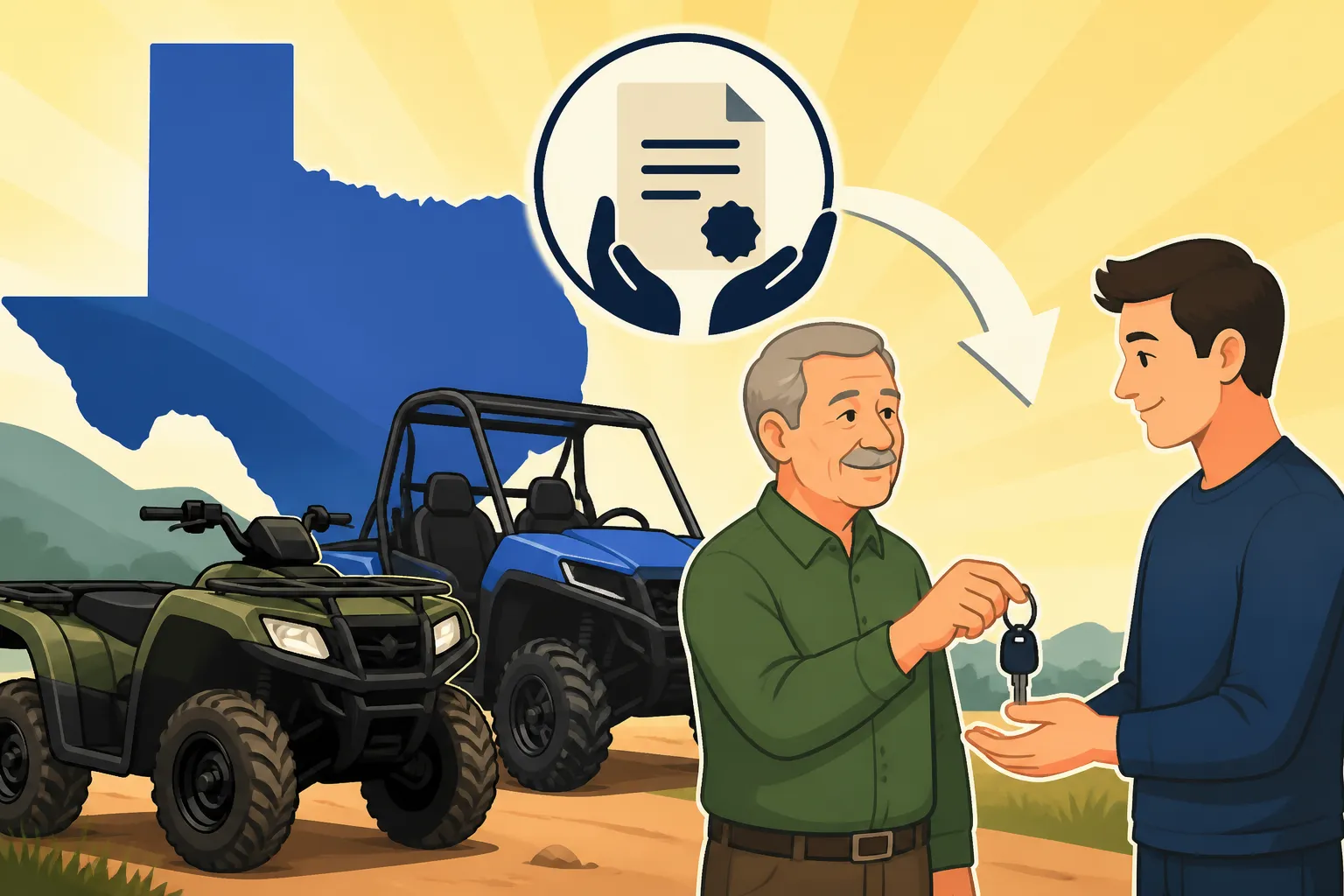
Losing a loved one is incredibly difficult, and the last thing you want to deal with amidst grief is confusing paperwork for their belongings. If you've inherited an ATV, UTV, or any other off-highway vehicle (OHV) in Texas, you might be feeling overwhelmed trying to figure out how to transfer the title into your name. This guide is here to walk you through the often-baffling process, explaining the specific steps and documents needed to successfully title your inherited machine in the Lone Star State, so you can focus on healing and honoring your loved one's memory.
The Unique Challenges of Titling an Inherited Texas OHV
Inheriting an off-highway vehicle isn't always as straightforward as receiving a gift or buying a machine from a private seller. There's an extra layer of legal process involved, primarily because the previous owner is no longer there to sign off on the transfer directly. The State of Texas wants to ensure that the machine is legitimately passing to the rightful heir, and that means following specific procedures, which can differ significantly depending on whether the deceased left a will, the value of their estate, and other factors. It’s not just about filling out a form; it’s about proving your legal right to the asset.
Why an Inherited ATV or UTV Isn't Just a Simple Transfer
When you buy a used ATV in Texas from a living seller, the process is usually pretty clear-cut: the seller signs the back of the title, you fill out a [Texas Bill of Sale for an ATV], and then you head to the county tax office with Form 130-U. However, with an inherited machine, that crucial signature from the previous owner isn't possible. Instead, you'll need legal documentation proving you are the rightful owner through inheritance. This can involve court orders, affidavits, or a certified copy of a will, all of which take time and careful attention to detail.
Think of it this way: the state needs to be absolutely certain that the person claiming the OHV is legally entitled to it, preventing potential fraud or disputes among family members. This safeguard is why the process feels more involved. You're not just proving ownership; you're proving legal succession. It's a common frustration, especially when dealing with smaller assets like an ATV that might seem insignificant compared to other estate matters. But for the county tax office, an OHV title transfer is a legal transaction that requires adherence to specific protocols.
The Basics of Texas OHV Titling You Need to Know
Before diving into the inheritance specifics, it’s helpful to understand the general framework for [Titling an ATV in Texas]. Texas requires all off-highway vehicles to be titled. This includes ATVs, UTVs, side-by-sides, and even some sand rails. The title is essentially the proof of ownership document. Unlike cars or trucks, OHVs are generally never registered for road use in Texas; instead, they receive an OHV title and, if requested, a special off-highway license plate. This distinction is vital because it means you won't be dealing with annual registration renewals or inspections like you would for a street-legal vehicle.
The primary document for transferring ownership, regardless of how it's acquired, is Texas Department of Motor Vehicles Form 130-U, "Application for Texas Title and/or Registration." Even though OHVs aren't "registered" in the typical sense, this form is still the vehicle for the title transfer. Understanding how to navigate [Filling Out Texas Form 130-U for an OHV] is critical, as any errors can lead to rejection and delays at the county tax office. The fees involved also vary, with a state title fee, potentially a local processing fee, and any applicable sales or use tax, though inherited property is often exempt from sales tax if it wasn't a direct sale.
Deciphering the Legal Maze: Wills, Probate, and Affidavits
The biggest factor dictating your path to titling an inherited ATV or UTV in Texas is whether the deceased left a valid will. A will clearly outlines their wishes for their property, including their OHVs. Without a will, the process defaults to Texas's laws of intestate succession, which are designed to distribute assets fairly but can introduce additional complexities and potentially require court intervention. It’s crucial to understand these distinctions from the outset, as they guide the type of documentation you'll need.
Navigating Probate When There's a Will
If your loved one left a valid will, it generally needs to go through probate. Probate is the legal process where a court validates the will, confirms the executor (the person named in the will to manage the estate), and oversees the distribution of assets according to the will's instructions. While probate can sometimes seem like a daunting, lengthy, and expensive process, especially for larger estates, it's often the clearest path to legally transferring an inherited OHV title.
Once the will is probated and the court issues an order confirming you as the beneficiary of the ATV or UTV, or confirming the executor's authority to transfer the asset, you'll have the necessary legal proof. The executor can then sign off on the title application, usually with a certified copy of the Letters Testamentary (the court document proving the executor's authority) accompanying the title transfer paperwork. This certified documentation, combined with the original title (if available), provides the county tax office with everything they need to process the new title in your name. You might even find LawDepot or similar online legal document services offer templates for executor letters or other probate-related documents that can help streamline some of the initial paperwork.
When No Will Exists: Understanding Intestate Succession
When someone passes away without a will, they are said to have died "intestate." In this scenario, Texas law dictates how their assets are distributed. This is known as intestate succession, and it follows a specific hierarchy of heirs, typically starting with a surviving spouse and children, then parents, siblings, and so on. The challenge here is that without a will, there's no official executor named, and no direct instructions on who gets what. This often necessitates a court process to determine heirship.
For larger estates, this can mean full probate proceedings where the court officially declares who the legal heirs are. For smaller estates, however, Texas offers more streamlined options. It's often this "no will" situation that causes the most head-scratching for heirs trying to title an OHV. Without clear direction, you might need to prove your relationship to the deceased and your legal standing as an heir through additional affidavits or court orders. This is a common point of frustration for many, as it requires navigating legal terms and procedures they might not be familiar with.
Small Estates and Affidavits of Heirship
For estates that are considered "small" under Texas law – typically those with a total value (excluding homestead and exempt property) below a certain threshold – there's often a shortcut around full probate called a Small Estate Affidavit. This affidavit is a sworn statement filed with the court by the heirs, identifying themselves and listing the assets of the deceased. If approved by the court, this affidavit can serve as legal proof of heirship, allowing you to transfer titles for assets like an OHV.
To qualify for a Small Estate Affidavit, several conditions must be met, including that there must be no will (or if there is one, it must not be probated), and the value of the estate must be below the statutory limit. Many folks find templates for these affidavits and letters online, sometimes from services like LawDepot, which can be a good starting point. However, it's crucial to understand that these are legal documents and must be completed accurately and truthfully. Once the court signs off on the Small Estate Affidavit, a certified copy can be presented to the county tax office to prove your legal right to the ATV or UTV.
Your Step-by-Step Guide to Transferring the Title
Once you've navigated the initial legal hurdles of probate or heirship determination, you're ready for the practical steps of transferring the OHV title. This part of the process is similar to a regular title transfer, but with your specific inheritance documents replacing the seller's signature. Getting all your ducks in a row before heading to the county tax office will save you immense time and potential frustration.
Gathering All Your Necessary Documents
Preparation is key. Before you even think about stepping foot in a county tax office, you need to assemble a comprehensive packet of documents. Here’s a checklist of what you’ll likely need:
- Original Texas OHV Title: If available, this is your primary document. Look for it in the deceased's important papers. If it's lost, don't despair – it's a common issue, and we'll cover that solution next.
- Certified Copy of Letters Testamentary or Order Admitting Will to Probate: If there was a will and it went through probate. This proves the executor's authority.
- Certified Copy of Order Declaring Heirship or Small Estate Affidavit (with court approval): If there was no will and you went through an heirship determination. This proves your legal right as an heir.
- Texas Form 130-U, Application for Texas Title and/or Registration: You'll need to fill this out completely. Make sure to indicate that the transfer is due to inheritance.
- Valid Photo ID: Your own driver's license or state ID.
- Proof of Insurance: While Texas doesn't mandate liability insurance for off-road use, some county offices might still request it for titling purposes, especially if there's any confusion. It's always a good idea to have it, especially if you plan to ride on public lands.
- Payment for Fees: Be prepared for the state title fee, potentially a small local fee, and any other charges. Inherited vehicles are typically exempt from sales tax, but confirm this with your county office.
- Death Certificate: A certified copy of the deceased's death certificate. This is fundamental proof.
Having every single one of these documents organized and ready will make your visit to the county office much smoother. It also helps to keep copies of everything for your own records.
Completing Texas Form 130-U Correctly
Form 130-U is your official request to the Texas Department of Motor Vehicles to issue a new title. When filling it out for an inherited machine, specific sections need careful attention:
- Section 1 (New Owner Information): This is where your information goes.
- Section 2 (Vehicle Information): Copy the VIN, make, model, and year exactly as they appear on the original title or proof of ownership. Make sure you know [What Texas Counts as an Off-Highway Vehicle] to ensure proper classification.
- Section 3 (Previous Owner Information): Enter the deceased's name and address as they appear on the previous title.
- Section 4 (Sales and Use Tax): This is crucial. For an inherited vehicle, you will typically claim an exemption from sales tax. There's usually a specific exemption code or box to check for inherited property. If there was no actual "sale," you shouldn't owe sales tax. Double-check with the county tax office on the exact wording or code for inherited assets.
- Section 5 (Odometer Reading): This still needs to be completed, even for an OHV. If you can reasonably estimate, do so, or mark "not actual" if impossible to ascertain accurately.
- Section 6 (Lien Information): If there was a lien on the machine, this needs to be addressed. We'll discuss this shortly.
- Section 7 (Certification): Sign and date this section as the new owner.
Do not fill out the "Seller's Signature" block on the back of the title or Form 130-U. Your court documents or affidavits serve as the "signature" for the deceased owner. Any misstep here can send you back to square one, which is exactly the kind of hassle you're trying to avoid during a difficult time.
What to Expect at Your County Tax Office
Once you have all your documents ready, your next step is to visit your local county tax assessor-collector's office. This is where [Titling at a Texas County Tax Office] happens. It’s always a good idea to call ahead or check their website for specific hours, required appointment booking, and any local variations in document requirements or fees. Some counties are busier than others, and knowing their specific procedures can save you a long wait.
When you arrive, present your complete packet of documents to the clerk. They will review everything carefully to ensure it's all in order and that the legal transfer of ownership is clearly established. They'll verify the VIN, check your identification, and process the application. If everything is correct, they will accept your payment for the title fees and issue you a receipt. The new Texas OHV title won't be issued on the spot; instead, it will typically be mailed to you within a few weeks. In some cases, you might be offered the chance to purchase a [Texas OHV Plate Application] for your machine, which is optional but can be useful for certain types of riding.
Overcoming Common Hurdles in the Inheritance Process
Even with all the preparation, transferring an inherited OHV title can hit snags. It’s important to anticipate these potential issues and know how to address them, rather than letting them derail your efforts.
When the Original Title is Missing
One of the most common issues when inheriting any vehicle is that the original title cannot be found. This happens more often than you might think, as titles can be misplaced over the years or simply not found among a deceased person's belongings. Don't let this stop you. Texas has a process for [Replacing a Lost Texas OHV Title], and it can be integrated into the inheritance process.
If the original title is missing, you'll generally need to file an application for a "Certified Copy of Title" (often Form VTR-34) in addition to your other inheritance documents. The key is that the previous owner on record (the deceased) must be proven to be the same person as the deceased listed on your death certificate and probate/heirship documents. The county clerk will often process the lost title request concurrently with your inheritance transfer, effectively issuing a duplicate title in the deceased's name first, and then immediately transferring it into your name. This adds a step and potentially an extra fee, but it's a solvable problem. Ensure you have all the identifying information for the OHV, especially the Vehicle Identification Number (VIN), which can usually be found stamped on the machine's frame.
Resolving Complex Ownership Scenarios
Sometimes, the inheritance situation is more complex than a single heir. Perhaps there are multiple heirs, or the OHV was owned jointly by the deceased and another person. These situations require careful handling:
- Multiple Heirs: If the will or intestate succession laws designate multiple people as co-owners of the OHV, all heirs typically need to agree on the transfer. They can choose to have the title issued in all their names (e.g., "John Doe AND Jane Smith"), or they can formally relinquish their interest to one primary owner. This usually requires signed affidavits or assignments of interest from all other heirs, ensuring everyone agrees to the new title holder(s). Getting legal advice, even from an online service like LawDepot, on how to structure these agreements can be invaluable.
- Joint Ownership with Survivorship Rights: If the deceased owned the OHV jointly with another person with "right of survivorship" (e.g., "John Doe OR Jane Smith"), then the surviving owner automatically becomes the sole owner upon the death of the other, often without needing full probate. A certified copy of the death certificate and the original title (showing the "OR" conjunction) are usually sufficient to transfer the title solely into the survivor's name.
- Lien on the Machine: If the ATV or UTV has a lien on it (meaning there's still a loan outstanding), the lienholder must be satisfied before a clean title can be issued to you. This means the outstanding debt either needs to be paid off by the estate or by the heir. The lienholder will then provide a [Texas ATV Title Lien Release] document, which is essential for the county tax office to issue a title without the lien recorded. Until the lien is released, the bank or lender still has a legal claim to the machine.
Successfully navigating these complex scenarios often involves clear communication among family members and sometimes the assistance of an attorney to ensure all legal requirements are met. The county tax office clerks are there to process the paperwork, but they cannot give legal advice on family disputes or estate distribution.
Here's a quick reference table to help visualize the main document requirements based on common inheritance scenarios:
| Scenario | Key Legal Document Needed | Accompanying Documents |
|---|---|---|
| Deceased Left a Will (Probated) | Certified Letters Testamentary (or Order Admitting Will) | Original Title, Death Cert, Form 130-U, Your ID |
| No Will (Small Estate Affidavit) | Certified Small Estate Affidavit (Court Approved) | Original Title, Death Cert, Form 130-U, Your ID |
| No Will (Heirship Determination) | Certified Order Declaring Heirship (Court Approved) | Original Title, Death Cert, Form 130-U, Your ID |
| Joint Ownership (with "OR") | Certified Death Certificate (of deceased joint owner) | Original Title, Form 130-U, Your ID |
| Lost Original Title | Affidavit of Fact for Missing Title (or VTR-34) | All other relevant legal/inheritance documents, Form 130-U, Your ID |
Remember, this process is about careful documentation and adherence to Texas law. Take your time, gather everything you need, and don't hesitate to ask questions at your county tax office if something isn't clear. With patience, you'll soon have that inherited ATV or UTV titled in your name, ready for new adventures.
Disclaimer
This article is for general informational purposes only and does not constitute professional advice. Laws, prices and regulations vary by location and change over time. Consult a qualified professional for guidance on your specific situation.